Work truck gear, ranked for the people who load it every morning.
Guides
Spray-in vs drop-in bed liner
One bonds to the bed and one sits in it, and that single difference decides almost everything else — including what happens to the paint you cannot see.
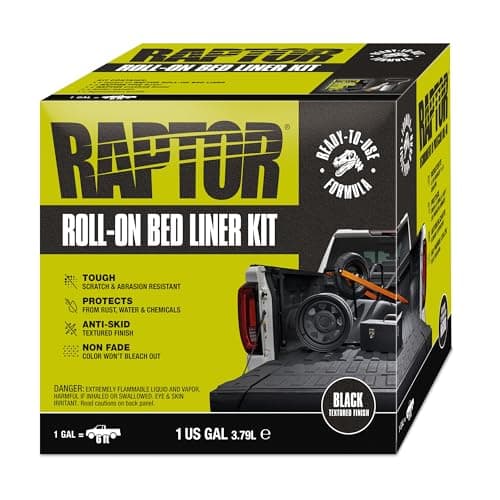
Featured here: the RAPTOR RAPTOR Roll-On Bed Liner Kit, 1 gallon.
Heads up: we earn an Amazon commission when you buy through our links, at no extra cost to you. Prices are pulled live from Amazon and were last checked October 5, 2026; when we cannot verify a price we say so rather than print an old one. How this site is funded.
How we know:Owner-report-verifiedSpec-verifiedWhat these mean
A spray-in liner bonds to the bed. A drop-in liner sits in it. Every other difference between them follows from that one, including the objection that decides the argument for most people.
If the truck's condition will matter at resale, bonded — spray-in, or a roll-on done properly. If you want protection that is replaceable when destroyed and reversible when you sell, drop-in.
The grit problem
This is the real argument against drop-in liners and it is worth understanding properly rather than dismissing. Sand and grit migrate between the liner and the bed. The bed flexes constantly as you drive. Every flex grinds that grit against the paint.
Over years that polishes through the finish in exactly the place you never inspect, and the first you know is when you lift the liner out before selling the truck. A bonded liner has nothing behind it and cannot do this at all.
Two things mitigate it on a drop-in: lift the liner out annually and hose both surfaces, which is twenty minutes and largely eliminates the problem; and buy a liner that is a genuinely tight fit, because the loose ones trap the most.
A one-gallon roll-on kit that gives you a textured permanent liner without a booking at a franchise shop. On an older truck with a bed that already has damage, this is the economically rational choice.
Who should skip it. Preparation is the entire job. If you will not sand, degrease and mask properly, it will peel, and a peeling roll-on liner is worse than no liner at all.
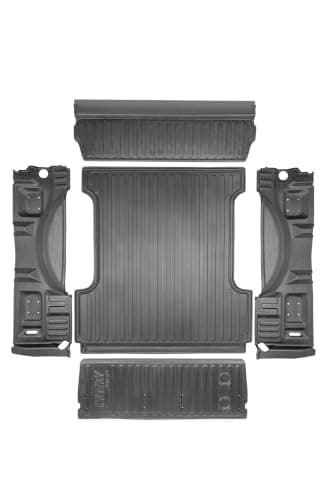
A five-piece drop-in that covers floor and sides. Drop-ins are unfashionable and they still make sense: the bed sheet metal never gets touched, and when the liner is destroyed you replace the liner instead of repainting the truck.
Who should skip it. Grit gets between a drop-in and the bed and sands the paint. If the truck is going to be sold on condition, a spray-in is the safer choice.
Protection
8.8
Weather seal
7.0
Install
8.6
Durability
8.6
Value
8.0
What works
+Sheet metal never contacts cargo
+Replaceable when destroyed — the truck is not
+Five pieces means it goes in without removing the bed
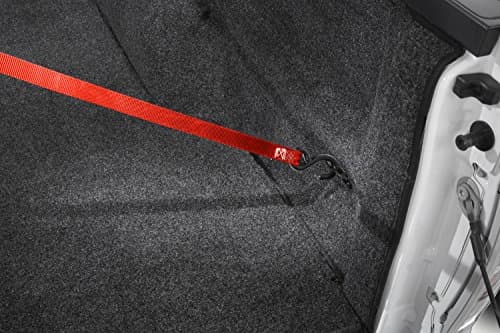
A carpeted composite liner rather than a plastic tub. It is warmer to kneel on, it does not let cargo slide, and it does not drum on the highway. If you spend time working in the bed rather than just loading it, this is the liner that changes the experience.
Who should skip it. It is not the liner for shovelling gravel out of. Abrasive bulk material and a carpet surface are a poor match — a drop-in tub or a spray-in is the answer there.
Protection
8.6
Weather seal
7.6
Install
8.0
Durability
8.4
Value
7.6
What works
+Comfortable to kneel and work on
+Cargo does not slide the way it does on plastic
+No drumming or resonance at speed
+Does not trap grit against the paint the way a loose tub can
What does not
−Poor choice for abrasive bulk material
−Needs an additional kit if installing over spray-in
−Holds water longer than a drained plastic tub
Published specifications
Fitment
Ford F-150 2015-2024, 6.7 ft bed
Type
Carpeted composite liner
Install note
BRZSPRAYON kit required for install over a spray-in liner
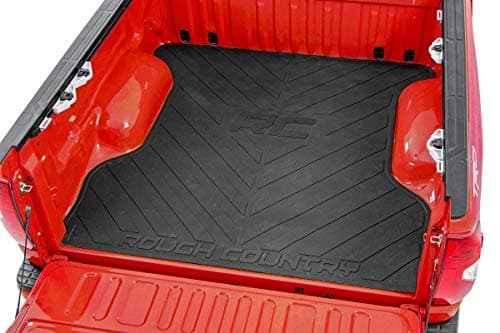
A tear-resistant rubber mat cut for the 5'10" GM bed. A mat is not a liner and does not pretend to be — it protects the floor, which is where 90% of the damage happens, and it stops cargo sliding, which a plastic tub does not.
Who should skip it. The bed sides stay exposed. If you load with a machine or throw scrap in, you need the sides covered too.
Protection
7.6
Weather seal
7.0
Install
9.8
Durability
8.4
Value
9.4
What works
+High-friction surface keeps a load put
+Rolls up and comes out in seconds for cleaning
+Cheapest meaningful bed protection
What does not
−Floor only — sides unprotected
−Heavy to handle when wet
−Traps grit underneath if never lifted
Published specifications
Fitment
Chevy Silverado / GMC Sierra 1500, 2019-2026, 5'10" bed
Chevrolet Silverado 1500 and GMC Sierra 1500, 2019-2026, 5'10" bed
✗ Does not fit
Other bed lengths and trucks
Trucks needing side protection
The roll-on middle ground
A one-gallon roll-on kit gives you a bonded textured liner for a fraction of a professional spray-in. On an older truck with a bed that already has damage, it is the economically rational choice.
It also gives you exactly the result your preparation deserves, and a peeling roll-on liner is worse than no liner at all.
Sand everything. Scuff the whole surface. Gloss paint gives the coating nothing to key into.
Degrease twice. Once to remove the obvious, once to remove what the first pass smeared around.
Mask properly. The line between coated and uncoated is what people will look at.
Work warm and dry. Temperature and humidity both affect cure.
Two thin coats, not one thick one. Thick coats sag and skin over.
If you will not do those five things properly, buy a drop-in tub. There is no shame in it and the result will be better.
The fourth option: a carpeted composite liner
Often the right answer and rarely considered. A carpeted composite liner is not soft-touch frippery — cargo does not slide on it, it is warm to kneel on, and it does not drum on the highway.
Its limit is specific: abrasive bulk material — gravel, sand, scrap steel — is a poor match for a carpeted surface. For tools, boxes, bags and sheet goods it is quietly the nicest bed to work in. Bed liners, ranked.
What your cargo says about the answer
You mostly carry
Buy
Gravel, sand, scrap
Spray-in or a drop-in tub — full coverage, abrasion-tolerant
Tools, boxes, bags
A carpeted composite liner, or a mat if the budget is tight
Sheet goods and lumber
Spray-in, for the grip and because the sides take hits
Occasional light loads
A bed mat — the floor takes nearly all of it
Anything, and you will sell the truck
Spray-in or a well-done roll-on
The cheapest useful answer
A rubber bed mat. It covers the floor, which is where nearly all bed damage happens, it grips cargo better than any hard liner, and it rolls out in thirty seconds for cleaning. What it does not do is protect the bed sides. Bed mats, ranked.
Questions people actually ask
Is a spray-in or drop-in bed liner better?
Spray-in if the truck's condition will matter at resale, because nothing gets behind a bonded liner to abrade the paint. Drop-in if you want protection that is cheaply replaceable when destroyed and completely reversible when you sell.
Do drop-in bed liners ruin the paint?
They can. Grit migrates between the liner and the bed and gets ground against the finish every time the bed flexes, in the place you never inspect. Lifting the liner out annually and hosing both surfaces largely eliminates it — twenty minutes a year.
Is a roll-on bed liner as good as a professional spray-in?
It is thinner than a high-build professional spray and the result depends entirely on your preparation — sanding, degreasing twice, masking properly and two thin coats. Done properly it is a genuine bonded liner for a fraction of the price. Done badly it peels.
What about a carpeted bed liner?
Often the right answer and rarely considered: cargo does not slide on it, it is warm to kneel on, and it does not drum on the highway. Its limit is abrasive bulk material — gravel, sand and scrap are a poor match for a carpeted surface.
What is the cheapest bed protection that actually works?
A rubber bed mat. It covers the floor, which takes nearly all the damage, and it grips cargo better than any hard liner. What it does not do is protect the bed sides, which matters if you load with a machine or carry scrap.
Last reviewed October 5, 2026. Think a figure here is wrong? Tell us at contact@toolboxandtruck.com and we will check it, fix it and date the correction — see our editorial policy.