Work truck gear, ranked for the people who load it every morning.
Tool boxes
The best underbody truck tool boxes
The format that uses no bed at all. It is the right answer on a flatbed and the wrong answer on a standard pickup, and the difference is the frame rail.
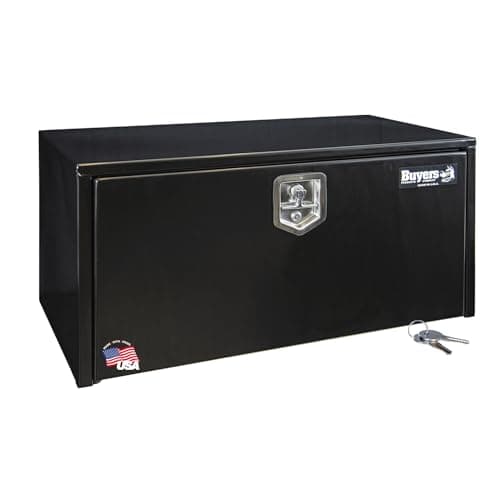
Our top pick: the Buyers Products Buyers Products 1702305 Steel Underbody Box, 36 x 18 x 18 in.
Heads up: we earn an Amazon commission when you buy through our links, at no extra cost to you. Prices are pulled live from Amazon and were last checked October 5, 2026; when we cannot verify a price we say so rather than print an old one. How this site is funded.
How we know:Spec-verifiedOwner-report-verifiedWhat these mean
Quick picks — Underbody tool boxes
#
Product
Best for
Material
Price
1
Buyers Products 1702305 Steel Underbody Box, 36 x 18 x 18 in
Tap any row for the full write-up. Prices come straight from Amazon and are never typed in by hand.
An underbody box hangs off the frame rail beneath the body and never touches the bed. On a flatbed, a utility body or a service truck it is simply the correct tool box, and nothing in the bed-mount world competes with it — the bed stays completely free for the thing the truck is actually for.
On a standard pickup with factory bed sides, it is usually the wrong answer. There is rarely accessible frame rail of the right length in the right place, which means brackets, drilling and a result that hangs lower than you would like. Before you read any further: look under your truck and see whether there is a straight clear run of rail between the cab and the rear axle. If there is not, go back to the tool box hub.
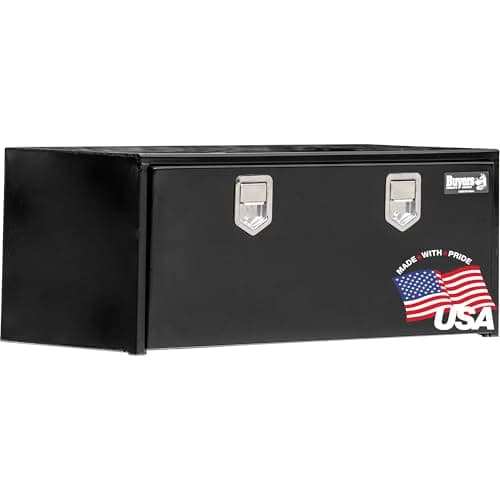
Buyers Products makes the boxes fleets actually run, in the three lengths that matter. The 48-inch is the one worth stretching for, because it is the one that takes long-handled tools.
How we ranked these
The criteria shift for this format. Install difficulty matters enormously because it is genuinely hard, and day-to-day access matters because an underbody box is lower and dirtier than anything mounted in a bed.
Build. Weld quality and wall thickness. These boxes take road debris, salt spray and the occasional curb.
Capacity. Not just volume — whether the length takes shovels, bars and long levels, which is the main reason to buy one.
Install. Honestly scored low across the category. Frame-rail access, bracket kits and the weight of a loaded box make this a two-person job.
Day-to-day access. Height off the ground, latch type and whether you can work it in gloves.
Value. Against the live Amazon price, including the bracket kit you will probably also need.
The picks, ranked
No. 1Buyers ProductsSpec-verified
Buyers Products 1702305 Steel Underbody Box, 36 x 18 x 18 in
36 x 18 x 18 in of welded steel that hangs off the frame rail and never touches the bed. On a flatbed or utility body this is the correct tool box, and nothing in the bed-mount world competes.
Who should skip it. It needs frame rail to hang from. On a standard pickup bed with factory sides there is usually nowhere to mount it without a bracket kit and a drill.
Build
9.2
Capacity
7.8
Install
6.0
Day-to-day access
8.0
Value
8.2
What works
+Bed and rails stay completely free
+Welded steel body takes genuine abuse
+Buyers latch and hinge hardware is replaceable off the shelf
What does not
−Needs frame rail access and usually a bracket kit
−Steel in the spray zone — the finish is the whole defense
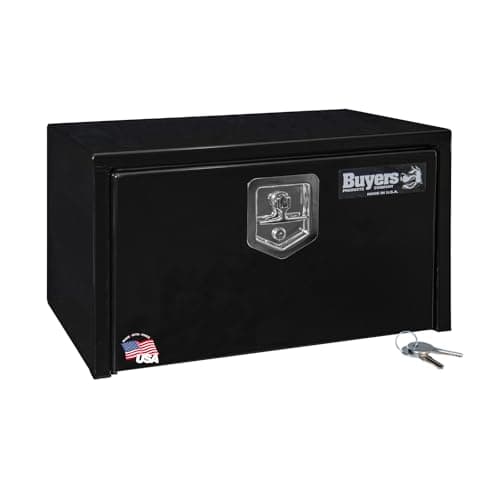
14 x 16 x 24 in — the one that fits where the bigger boxes do not. On a short-wheelbase truck or alongside an auxiliary tank this is often the only underbody box that will physically go on.
Who should skip it. It is small. If you have the rail length for a 36 or 48 in box, take it; the cost difference is not proportional to the volume difference.
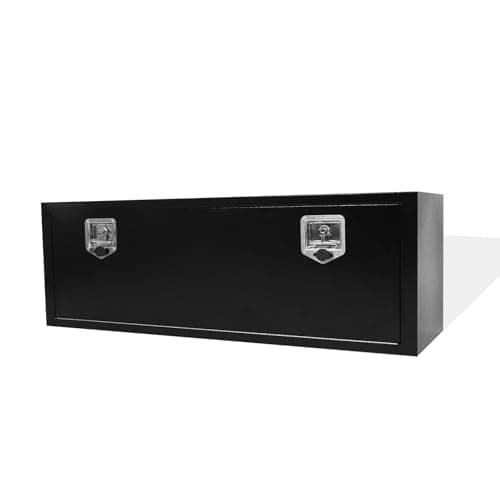
48 x 14 x 16 in with a T-handle latch at roughly half the price of the fleet brands. For a trailer, a tractor or a second truck, the trade is a fair one.
Who should skip it. A T-handle latch on a budget box is the part that will fail first, and it is the part keeping your tools in. Not for a truck that parks on the street.
This is the one category where the length of the box changes the job it does rather than just how much it holds.
Length
What goes in
Needs
24 in
Hand tools, fittings, a jack
A short clear rail run — fits almost any truck with rail access
36 in
Hand tools plus a small power tool
A moderate run — the general-purpose size
48 in
Shovels, bars, long levels, pipe wrenches
48 in of clear rail, which is the limiting factor
60 in and up
Everything long
A flatbed or a service body, realistically
The single biggest tidiness win on a utility truck is getting long-handled tools out of the bed, and that needs 48 inches. If you have the rail for it, buy it — the cost difference between 36 and 48 inches is small compared with the difference in what it solves.
The install is the real cost
Be clear-eyed about this. An underbody box is heavy empty, awkward to hold at the right height, and usually needs a bracket kit sold separately. Doing it alone is unpleasant and doing it badly puts an unsupported load on a frame rail.
Measure the clear rail run. Between the cab mount and the rear axle, allowing for the exhaust, the fuel tank, air lines and the spare tire carrier.
Check the drop. The box hangs below the rail. Measure your clearance at the lowest point and then imagine a driveway apron or a rutted site entrance.
Buy the matching bracket kit. Buyers and the other fleet brands sell these per box size. A generic strap is not a bracket.
Get a second person. Or a jack and a block. The box has to be held level while the first bolts go in.
Seal and protect. Every drilled hole, every bare edge. These boxes live in the spray zone and the finish is the entire defense.
Steel, and why nobody makes these in aluminum
Almost every underbody box is welded steel, and the reason is impact rather than cost. A box in this position takes stone strikes, curb contact and whatever the rear wheel throws at it. Thin-wall aluminum does not survive that; welded steel does, and its vulnerability — rust — is manageable if the finish is kept intact.
Which means the maintenance obligation is real and specific: inspect the box for finish damage annually, touch up anything down to bare metal, and pay particular attention to the mounting holes and the lower edges where water sits.
What we would actually buy
On a flatbed or service body: the 48-inch Buyers box on one side for long-handled tools, and a 36-inch on the other for everything else. That is the setup that keeps the deck clear, which is the whole point of having a flatbed.
On a short-wheelbase truck or alongside an auxiliary tank: the 24-inch, because it is often the only one that physically goes on. On a trailer or a tractor where the contents are not valuable: the budget box, accepting that the T-handle latch is the thing that will fail first.
Questions people actually ask
Can you fit an underbody tool box to a standard pickup?
Sometimes, with a bracket kit and drilling, but there is often no clear frame-rail run of the right length in the right place once the exhaust, fuel tank and spare tire carrier are accounted for. Look under the truck before you order. On a flatbed or utility body it is straightforward and it is the correct tool box.
How much ground clearance does an underbody box cost?
The box hangs below the frame rail by most of its own height, so a 18 in tall box lowers your effective clearance at that point substantially. Measure your current lowest point and then think about driveway aprons and rutted site entrances — this is the constraint people discover after fitting rather than before.
Do underbody boxes come with mounting brackets?
Usually not. Buyers and the other fleet brands sell bracket kits per box size as separate items, and a generic strap is not a substitute. Budget for the kit when you compare prices, because it is a meaningful fraction of the box cost on the smaller sizes.
Why are underbody boxes always steel?
Impact resistance. A box in that position takes stone strikes, curb contact and whatever the rear wheel throws at it, and thin-wall aluminum does not survive it. Steel does, at the cost of a real maintenance obligation — keep the finish intact, especially at the mounting holes and lower edges.
What length underbody box should I buy?
48 inches if you have the rail for it, because that is the length that takes shovels, bars and long levels — which is the biggest single tidiness win on a utility truck. 36 in is the general-purpose size, and 24 in is the one that fits where nothing else will.
Last reviewed October 5, 2026. Think a figure here is wrong? Tell us at contact@toolboxandtruck.com and we will check it, fix it and date the correction — see our editorial policy.