Work truck gear, ranked for the people who load it every morning.
Floor liners
Truck floor liners: the wall height is the whole product
Every liner catches mud. The difference between a good one and a cheap one shows up in March, at the door sill, when the meltwater has to go somewhere.
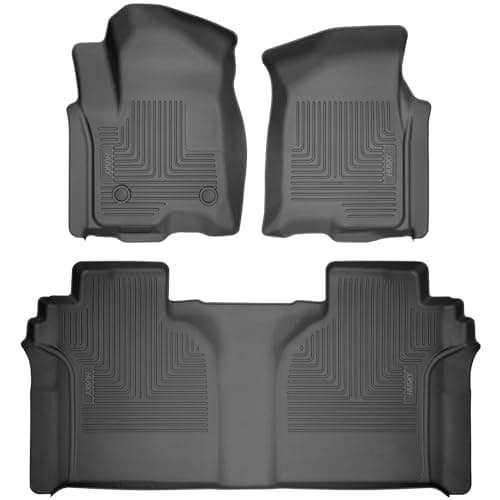
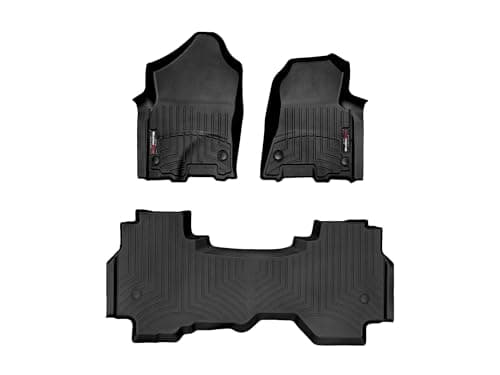
Our top pick in this section: the WeatherTech FloorLiner — Ram 1500, 1st and 2nd Row.
Heads up: we earn a commission when you buy through our links, at no extra cost to you — from Amazon Associates, and from brand partner programs we have joined directly through the Impact network. Amazon prices are pulled live and were last checked November 28, 2026; a brand list price carries the date we read it off the maker’s own page. When we cannot verify a price we say so rather than print an old one. How this site is funded.
Top pick9.6/10★★★★★
WeatherTech
WeatherTech FloorLiner — Ram 1500, 1st and 2nd Row
Laser-measured, high-wall liners for the Ram 1500 in a first and second row set.
Tap any row for the full write-up. Prices come straight from Amazon and are never typed in by hand.
Factory carpet in a work truck has a lifespan measured in winters. Boots bring in grit, salt and water; the water goes into the carpet, the carpet holds it against the floor pan, and the floor pan is steel. A set of liners is the cheapest insurance in the whole cab, and it is the one accessory that a used-truck buyer visibly notices.
The marketing in this category is about laser measurement and material science. The thing that actually separates liners in daily use is simpler and it is the one specification nobody puts in the headline: how high the wall is at the door sill.
Why the sill wall is the specification that matters
Picture the end of a wet February day. There is a quarter inch of meltwater in the driver's footwell. If the liner's outboard wall stands proud of the sill, that water stays in the tray and you tip it into a drain. If the wall is flush or low, the water runs over the edge the first time you corner, straight onto the carpet under the sill plate — which is precisely the place you cannot reach to dry.
That is the entire practical difference between the premium liners and the mid-range ones. It shows up a handful of times a winter, and if you live somewhere it never snows, it may genuinely never show up at all. Which is why the honest recommendation here depends on your climate rather than on a ranking.
Tier
What you get
Who should buy it
Premium laser-measured
Highest sill walls, tightest fit around every bracket
Snow belt, or a truck you want to look new at resale
Mid-range molded
Good fit, lower walls, softer and quieter underfoot
Rigid TPO / high-density compounds. The premium liners. Hold a tall wall shape, hose out cleanly, and are noisier and harder underfoot.
Softer molded compounds. The mid-range. Quieter and warmer to stand on, scuff more visibly, slightly lower walls.
TPE. Stays flexible well below freezing, which matters because a stiff liner cracks at the heel pad in cold. Also odor-free, unlike cheap rubber.
Cheap rubber. Smells for weeks, goes board-stiff in the cold, cracks. Avoid.
If your winters are genuinely cold, flexibility at low temperature matters more than wall height, because a cracked liner has no wall at all. That is the one case where a mid-priced TPE liner beats a premium rigid one.
Getting the fitment right, which is where the money gets wasted
Floor liners are sold by vehicle, cab configuration and sometimes by option code. The variations that catch people out are specific and worth checking before you order:
Cab configuration. Crew, double, extended and regular cabs have different rear footwells and different part numbers.
Fold-flat rear floor storage. A common option, and some liners explicitly exclude trucks that have it.
Factory retention posts. Trucks with floor hooks need liners with matching holes, or the liner slides — which is a safety issue at the pedals, not a cosmetic one.
Front and rear sold separately. Plenty of listings are first-row only. Check what is in the box.
Liners or mats?
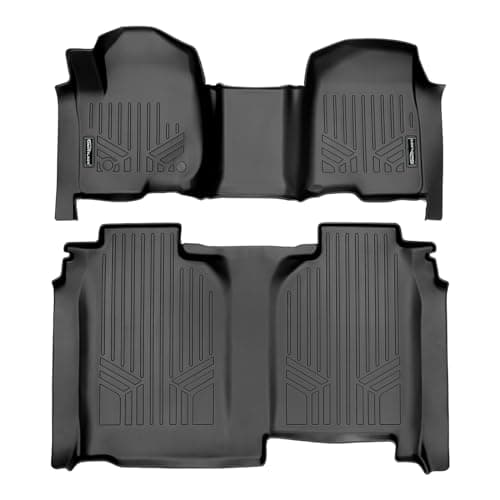
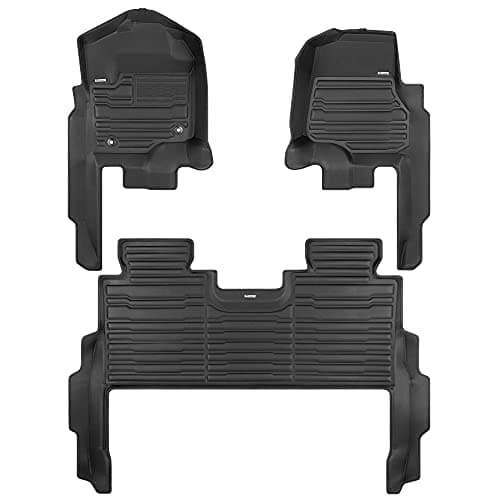
A mat is flat and covers the middle of the floor. A liner is a molded tray with walls that covers the footwell including the sides and the sill. For a work truck the answer is almost always a liner, because the mess arrives at the edges — it falls off the sides of your boots, not off the soles. A mat catches what lands square in the middle, which is the smaller share of it.
The one case for a mat is a truck that only needs the carpet protected from dry dirt, where a cheap trim-to-fit mat genuinely does the job. Floor mats vs floor liners walks the comparison properly, and are floor liners worth it is the cost argument.
Everything in this section
All of our floor liners and mats pages
Each one carries its own picks, live prices and a plain statement of what does not fit.
The laser-measured liner assessed honestly: what the high sill wall genuinely prevents, what it costs in noise and money, and the cheaper liner that covers most of the same ground.
Updated October 2026
Questions people actually ask
Are floor liners worth it in a work truck?
Yes, and they are among the cheapest items that measurably protect resale value. Factory carpet in a truck that sees work boots has a lifespan measured in winters, and water held against the floor pan is a rust problem rather than a cosmetic one. The cost argument in full.
WeatherTech or Husky WeatherBeater?
WeatherTech has higher sill walls and a tighter fit; Husky WeatherBeater costs substantially less and is softer and quieter underfoot. The wall height difference shows up a handful of times a winter. If you are in the snow belt, pay for the walls; most other people should buy the Husky and spend the difference elsewhere. Side by side.
What is the difference between floor mats and floor liners?
A mat is flat and protects the middle of the floor. A liner is a molded tray with raised walls that protects the footwell including the sides and the door sill. Work-truck mess arrives at the edges, which is why a liner is almost always the right answer. Full comparison.
Do floor liners fit every cab configuration?
No. Crew, double, extended and regular cabs have different rear footwells and different part numbers, and some liners exclude trucks fitted with fold-flat rear floor storage. Check your cab and your options against the listing before ordering — this is the single most common cause of a returned set.
Can a floor liner interfere with the pedals?
A liner that is not retained can slide, and anything that can move under the pedals is a safety hazard rather than an inconvenience. Use your truck's factory retention posts, and never put an unanchored universal mat in the driver's footwell.
$169.9912% off · Price as of November 28, 2026. #ad
Last reviewed October 5, 2026. Think a figure here is wrong? Tell us at contact@toolboxandtruck.com and we will check it, fix it and date the correction — see our editorial policy.