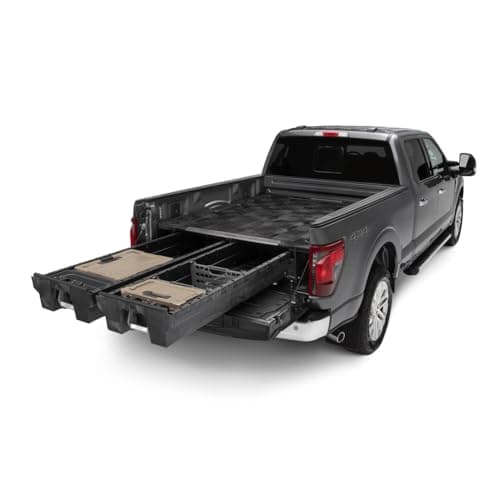
Our top pick: the DECKED DECKED Drawer System — Ford F-150 (2015-current) 5'6" bed.
Heads up: we earn an Amazon commission when you buy through our links, at no extra cost to you. Prices are pulled live from Amazon and were last checked October 5, 2026; when we cannot verify a price we say so rather than print an old one. How this site is funded.
How we know:Spec-verifiedOwner-report-verifiedWhat these mean
Quick picks — Storage for contractors
#
Product
Best for
Material
Price
1
DECKED Drawer System — Ford F-150 (2015-current) 5'6" bed
Tap any row for the full write-up. Prices come straight from Amazon and are never typed in by hand.
A hobby bed and a trade bed are different problems. The hobby bed gets loaded for a weekend and emptied on Sunday night; what matters is that the gear fits. The trade bed gets loaded and emptied every working day for five years, which means what matters is the number of seconds each operation takes and how many of those operations involve climbing into the bed.
That shift changes almost every recommendation. Hardware that is adequate at ten cycles a year is a wear item at a thousand. Organization that is tidy enough when you have time to look is useless at six in the morning in the rain.
The trade setup that works is: drawers for the hand tools, a locking box for the expensive things, anchors and straps for the load, a bar to stop the slide, and light so you can see all of it. In that order.
The six things, in the order we would buy them
You do not need all of this at once, and the order matters more than the specific products. Each item below assumes the ones above it.
A ratcheting cargo bar. Cheapest, immediate, stops the daily migration to the bulkhead. See bed dividers.
Two rated anchor points mid-bed. The factory gives you corners. You strap in the middle. See tie-downs.
A locking tool box. For the things that cannot be left in an open bed. See crossover boxes.
Bed lighting. A wired strip kit. Removes a daily irritation permanently. See bed lighting.
Drawers. The big one. Ends the climbing and the digging. See drawer systems.
A rack, if you carry long material. Last, because it constrains everything above it. See ladder racks.
The full build sequence for a truck being set up from nothing, including the decisions that lock each other out, is in contractor truck setup.
The six items, with live prices
No. 1DECKEDSpec-verified
DECKED Drawer System — Ford F-150 (2015-current) 5'6" bed
Two full-length weather-sealed drawers under a load-bearing deck. You keep the whole bed floor on top and gain two drawers you can reach from the tailgate without climbing in, which is the single biggest day-to-day change you can make to a work truck.
Who should skip it. It raises your bed floor by the height of the drawer module, so you lose vertical space and the ability to carry a full-height pallet. If you haul bulk more than tools, this is the wrong buy.
Build
9.4
Capacity
8.2
Install
8.8
Day-to-day access
9.8
Value
7.0
What works
+Drawers are reachable from the tailgate — no climbing into the bed
+Deck surface stays usable for cargo on top
+Weather-sealed drawers keep tools dry in an open bed
+No-drill installation on the factory cleat system
What does not
−The most expensive item in this category by a wide margin
−Raises the bed floor and costs you vertical capacity
−Very heavy — payload matters if you also tow
−Sold per bed length; ordering the wrong one means a return freight bill
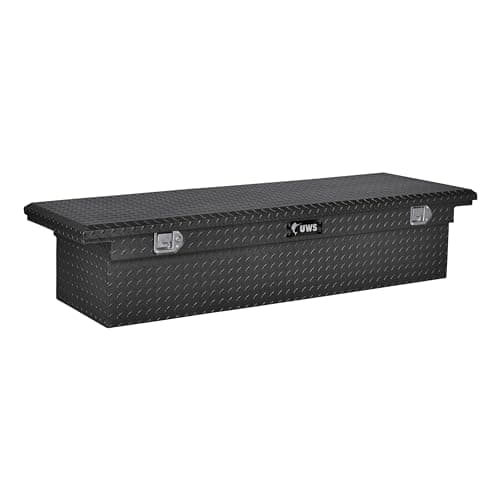
Heavy-wall aluminum, a foam-filled RigidCore lid that does not flex when you sit on it, and a low profile that still clears most rear glass. This is the crossover to buy if you intend to keep the truck.
Who should skip it. Skip it on a 5'5" short bed. At 69 inches it will sit on the rails, but you lose a disproportionate share of a short bed and the money is better spent on a side-mount pair.
Build
9.4
Weather seal
8.8
Security
8.6
Bed usability
8.0
Value
7.4
What works
+Foam-filled lid does not oil-can under body weight
+Low profile clears rear glass on most full-size crew cabs
+Heavy-wall extrusion survives being used as a step
+Gas struts are serviceable rather than sealed units
What does not
−Among the most expensive aluminum crossovers on the shelf
−69 in is a full-size length — not a mid-size answer
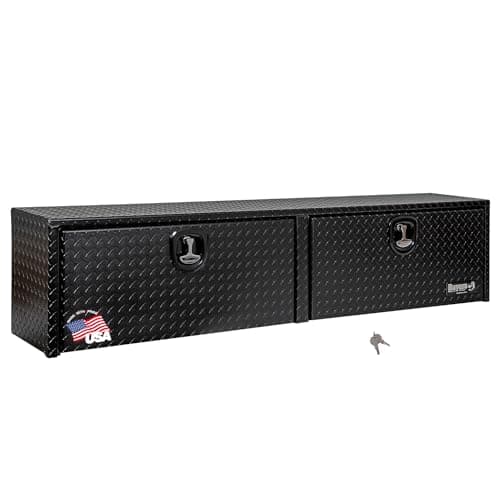
A 72 x 13 x 16 in aluminum topsider that bolts along the bed rail and leaves the floor completely clear. For anyone who hauls sheet goods or a pallet, this is the right shape of tool box and a crossover is the wrong one.
Who should skip it. It consumes rail space, so a tonneau cover and a bed rack both get complicated. If a cover is non-negotiable, go crossover and give up the floor instead.
Build
9.0
Weather seal
8.4
Security
8.2
Bed usability
9.6
Value
7.6
What works
+Bed floor stays completely usable
+Long and shallow suits hand tools and cordless kits better than a deep well
+Buyers parts and latches are stocked everywhere
What does not
−Requires drilling the bed rail on most trucks
−Blocks a tonneau cover and most bed racks
−One box covers one side only — pairs get expensive
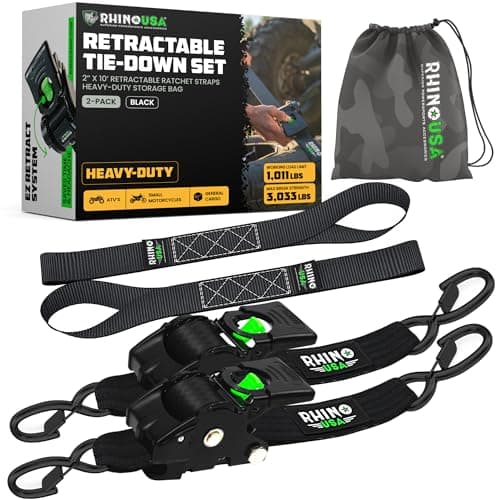
2 in webbing, 10 ft, published 3,033 lb break strength, and the strap retracts into the housing when you release it. The retraction is the feature: loose webbing in a bed is how straps get lost, frayed and run over.
Who should skip it. Retractable housings are bulkier than a plain strap and the mechanism is another thing to fail. For strapping down a load once a year, plain ratchet straps are fine.
Build
8.8
Capacity
8.8
Install
9.8
Day-to-day access
9.4
Value
7.8
What works
+Published break strength rather than a vague claim
+Retraction keeps the tail out of the dirt
+2 in webbing is the right width for real loads
What does not
−Bulkier housing than a plain strap
−The retraction mechanism is a wear item
−Break strength is not working load limit — do not confuse the two
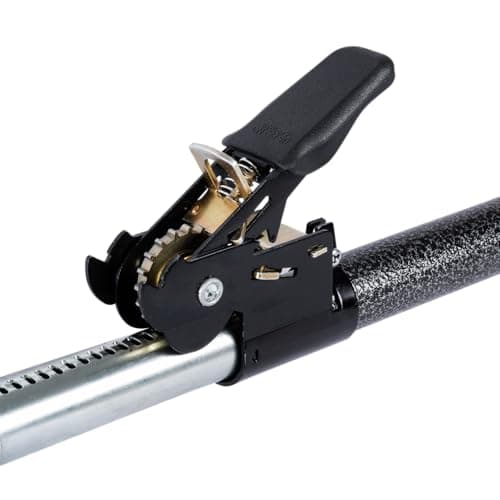
A 40-70 in ratcheting bar that braces across the bed and holds a load against the tailgate. It is the cheapest piece of kit on this site and it stops more rattling, sliding and scratched paint than anything else you can buy for the money.
Who should skip it. It is a brace, not a wall. It does not partition the bed into compartments and it will not hold a heavy load on its own.
Build
7.8
Capacity
6.8
Install
9.8
Day-to-day access
9.4
Value
9.6
What works
+Costs less than a tank of fuel
+Ratchet tension holds without tools
+Stores flat behind the seat when not in use
What does not
−Keeps a load in place; does not compartmentalize the bed
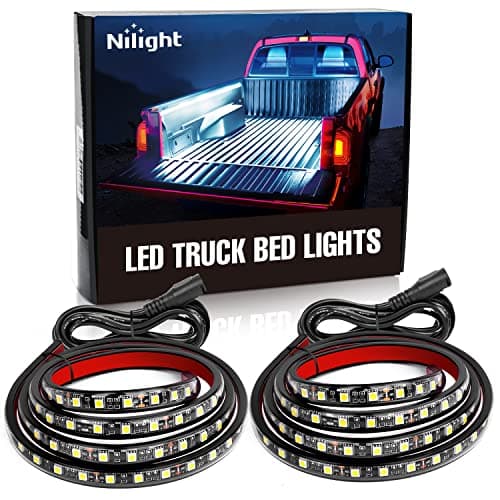
Two 60 in strips, 180 LEDs, with a waterproof switch, blade fuse and a two-way splitter in the box. It is a complete hard-wired kit rather than a strip and a prayer, which is why this is the one to buy.
Who should skip it. It is a wiring job. If you are not comfortable running a fused feed and finding a switch location, buy a rechargeable magnetic light instead.
Build
8.0
Capacity
8.4
Install
7.0
Day-to-day access
9.4
Value
9.4
What works
+Complete kit — fuse and switch included, not sold separately
+Two strips light both sides properly
+Stated warranty, which most strip kits do not carry
What does not
−Requires wiring into the truck
−Adhesive mounting needs a clean, dry surface to last
−Strip LEDs are directional — aim matters more than brightness
Beds with a full-length tool box blocking the rail
What “trade grade” actually means
The phrase gets used as marketing and it has a real meaning in this context. On a trade truck, the following things stop being nice-to-haves:
Parts availability. A latch, a gas strut, a drawer slide. When the thing you use daily breaks, the question is whether a replacement part exists or whether you buy the whole box again. This is the single strongest argument for the fleet brands.
Operation in gloves. A T-handle beats a paddle latch in winter gloves. A drawer pull beats a recessed finger slot. These sound trivial and they are the difference between using a feature and working around it.
Cycle life on moving parts. A drawer slide rated for occasional use is a wear item at a thousand cycles a year.
Serviceability in a yard. Gas struts that unclip beat struts riveted in place. Bolts beat rivets everywhere.
The payload problem nobody mentions
Add a drawer system, a crossover box, a ladder rack and a tonneau cover to a half-ton and you have consumed a meaningful fraction of the payload before loading a single tool. Then put two people, a full tank and a day's material in it.
The number to work from is the payload figure on the door-jamb sticker for your actual truck, not the maximum quoted for the model. If you also tow, the tongue weight comes out of the same budget. This is the constraint that quietly decides whether a drawer system is the right call on a half-ton or whether the honest answer is a lighter setup.
Two setups that work
The tool-heavy setup
For electrical, plumbing, HVAC and finish trades, where the bed carries many small things and a lot of cordless kit:
A full-length drawer system for hand tools, fasteners and consumables.
A crossover box above it for cased power tools and anything that must lock.
A cargo bar and mid-bed anchors for whatever material comes along.
Wired strip lighting, both sides.
The material-heavy setup
For framing, roofing, landscaping and concrete, where the bed carries bulk and length:
A side-mount topsider rather than a crossover, so the floor stays clear — see side mount boxes.
A ladder rack over the bed for length.
Rated anchors, 2 inch straps, and a cargo bar.
A bed mat rather than a drawer system, because the floor has to take abuse and stay low.
Those two are genuinely incompatible, and trying to build both on one truck is how people end up with a bed they cannot use. Pick the one that matches what you actually haul in a normal week.
Questions people actually ask
What is the best bed storage setup for a contractor?
It depends on whether you carry tools or material. Tool-heavy trades want a drawer system plus a locking crossover box. Material-heavy trades want a side-mount box that keeps the bed floor clear plus a ladder rack. The two setups are genuinely incompatible, which is why picking one matters.
What should I buy first for a work truck bed?
A ratcheting cargo bar and two rated mid-bed anchor points. Together they cost less than a tank of fuel and they fix the problem every work bed has — everything migrating to the bulkhead on the first hard stop. The full build order.
Will a drawer system and a tool box both fit?
Usually yes, and it is a common trade setup — the drawers take hand tools and consumables, the box takes cased power tools and anything that must lock. Watch the payload, because together they are a lot of weight before you load anything, and check the clearance between the raised deck and the box.
Does all this gear affect my payload?
Substantially. A drawer system, a crossover box, a rack and a cover together consume a meaningful fraction of a half-ton's payload before a single tool goes in. Work from the figure on your door-jamb sticker rather than the model's maximum, and remember tongue weight comes out of the same budget if you tow.
What makes a tool box trade grade rather than just expensive?
Four things: replacement parts actually exist years later, the latch works in winter gloves, the moving parts are rated for thousands of cycles rather than hundreds, and it is bolted rather than riveted so you can service it in a yard. Those are the reasons fleets standardize on specific brands.
Last reviewed October 5, 2026. Think a figure here is wrong? Tell us at contact@toolboxandtruck.com and we will check it, fix it and date the correction — see our editorial policy.