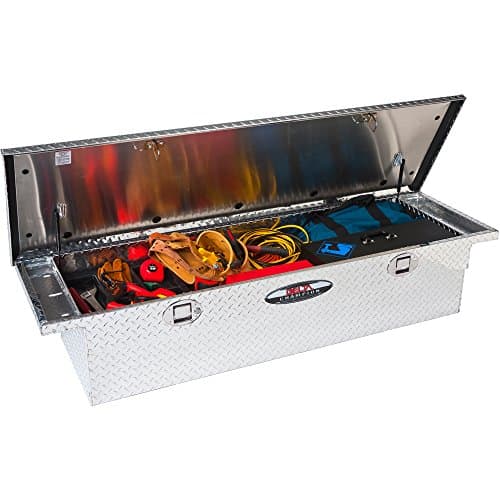
Featured here: the Crescent JOBOX Crescent JOBOX Gear-Lock 1-351002 Low-Profile Crossover.
Heads up: we earn an Amazon commission when you buy through our links, at no extra cost to you. Prices are pulled live from Amazon and were last checked October 5, 2026; when we cannot verify a price we say so rather than print an old one. How this site is funded.
How we know:Spec-verifiedOwner-report-verifiedWhat these mean
No statistics on this page. We could not find theft data specific to tools from pickup beds that we would be willing to print, and an invented figure in a crime-prevention article is worse than no figure. What follows is practice, ordered by how much difference it makes.
The single most effective measure is taking the small valuable things out overnight. Cordless batteries and chargers, mostly. It costs nothing, takes two minutes, and it beats every piece of hardware on this page.
Ranked by what actually works
Take the batteries and chargers out. Small, valuable, trivially resold, and they fit in one bag. Removing them makes the whole box less worth opening.
Park where the bed is visible. Under a light, facing a window, in a camera's field. A bed nobody can see is where a pry bar comes out.
Mark everything. Engraved, etched, painted. A marked tool is harder to resell, and resale value is the entire motive.
Record serials and photograph the kit. This does nothing for prevention and everything for recovery and for the insurance claim. Do it on a dry afternoon rather than afterwards.
Buy a multi-point lock. The only hardware upgrade that changes the outcome rather than the time taken. Why.
Reverse up to a wall. Does not stop a box being opened; makes removing anything bulky much harder.
Do not advertise. Branded decals plus a visible rack tells somebody exactly what is in the bed.
The cab is better than the bed
For anything small and valuable, the under-seat void in a crew cab is a better place than any bed box: dry, hidden, inside a locked vehicle with glass that makes noise when broken.
That is where recovery straps, a first aid kit, documents and — critically — batteries and chargers should live. Cab organizers and under-seat boxes.
JOBOX's Gear-Lock drives multiple lock points from one key turn, which is the single biggest difference between a box a thief opens with a screwdriver and one he walks away from. The rest of the box is honest fleet-grade aluminum.
Who should skip it. It costs premium money and spends it on the latch rather than the lid. If your box lives behind a locked gate every night, you are paying for security you do not need.
Build
9.0
Weather seal
8.6
Security
9.6
Bed usability
8.0
Value
7.0
What works
+Multi-point locking is genuinely harder to defeat than a single center latch
+Fleet-grade build with parts availability years out
+Low profile preserves rear visibility
What does not
−Expensive
−Heavier than a comparable thin-wall box — two people to lift it on
−Gear-Lock hardware is the part to keep lubricated through winter
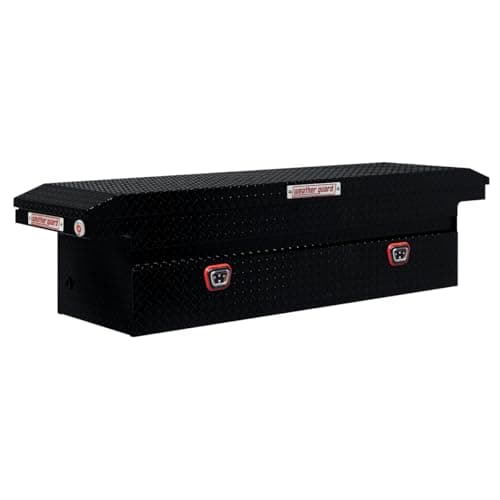
11.0 cu ft of aluminum in the low-profile saddle format that fleets have standardized on for decades. It is the box every other box gets compared with, and the reason is parts availability and a lid that stays sealed.
Who should skip it. It is the most expensive way to store tools in a pickup bed short of a drawer system. If this is a personal truck that sees a job every other weekend, the money is better spent elsewhere.
Build
9.6
Weather seal
9.4
Security
8.8
Bed usability
8.2
Value
6.8
What works
+11.0 cu ft published — not an estimate
+Weather Guard latch and seal hardware is available decades out
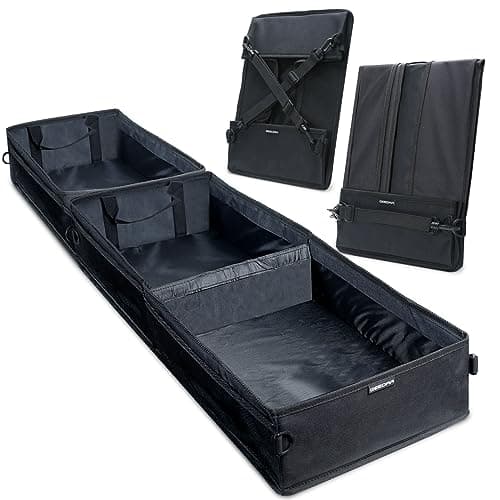
A hard box that fills the void under a crew-cab rear seat. That space is completely wasted in every crew cab and it is the single best place in the truck for recovery straps, a tool roll and a first aid kit.
Who should skip it. It reduces the usable rear footwell. If a passenger regularly rides back there with boots on, they will notice.
Material
7.4
Fit
7.8
Cleanability
8.0
Comfort
7.0
Value
9.4
What works
+Uses genuinely dead space
+In the cab, so contents stay dry and out of sight
+Cheap
What does not
−Eats rear footwell space
−Lock specification not stated
−Fitment varies by cab — verify
Published specifications
Fitment
Ford F-150 / F-250 / F-350 and Chevy Silverado — verify your cab
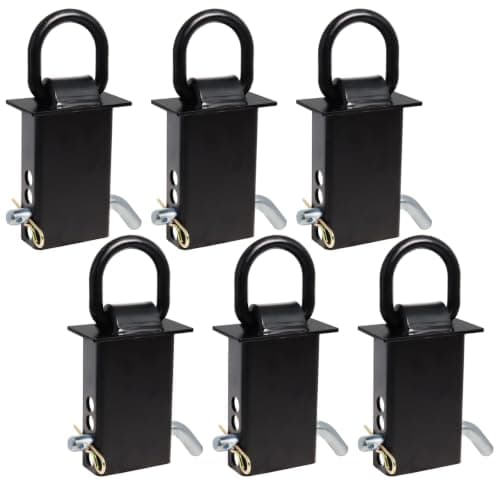
Drops into the factory stake pocket, published at 16,200 lb, and lifts straight out when you are done. No drilling, no sealed holes, and a rating that is in a completely different league from a bolt-on ring.
Who should skip it. Your truck has to have usable stake pockets. Many newer trucks have them covered by bed rail caps, and some have none at all.
Build
8.4
Capacity
9.6
Install
9.6
Day-to-day access
9.0
Value
9.0
What works
+No drilling at all
+Very high published rating
+Removable, so the pocket is free again when you need it
What does not
−Needs accessible stake pockets
−Bed rail caps often have to come off
−Rating assumes a sound stake pocket, which on an older truck is an assumption
Trucks and trailers with open, sound stake pockets
✗ Does not fit
Trucks without stake pockets
Beds with pockets covered by bonded rail caps
What makes a box slow to open
Lock points at both ends of the lid. Removes the single leverage point a bar works against.
A thick lid skin around the striker. The usual failure is the striker tearing out of thin aluminum, not the latch breaking.
A rigid lid. A lid that flexes opens a gap for a bar at the center. A cored lid does not.
A tight seal line. Less gap means less to get a bar into. This is a side benefit of a good seal rather than its purpose.
Notice that none of those is the lock cylinder. Cylinder quality is almost irrelevant to how a tool box actually gets opened, which is why a better key is not the upgrade people assume.
On site versus on the street
Jobsite, daytime
Street, overnight
Main risk
Opportunistic, people present
Deliberate, nobody watching
What helps most
Visibility, lids closed, nothing loose
Emptying the box of the valuable items
Lock tier needed
Any working latch
Multi-point, and still empty it
Habit that matters
Lock it every time you walk away
Take the batteries in
Before and after
Before, while nothing has happened
Photograph everything, with serials. One afternoon. It is the difference between a recoverable claim and a shrug.
Check your insurance. Tools in a vehicle are often limited or excluded under a standard auto policy. Find out which applies to you now.
Mark the tools. Permanently and visibly.
After, if it happens
Report it with serial numbers. Recovery depends almost entirely on identifiability.
Tell the insurer promptly. Delay is the usual reason a claim gets reduced.
Fix the habit as well as the hardware. If the tools were in the bed overnight, the fix is partly the box and partly the overnight.
Questions people actually ask
How do I stop tools being stolen from my truck?
Take the small valuable items out overnight — cordless batteries and chargers particularly. It costs nothing, takes two minutes and it beats every piece of hardware available, because it removes the reason to open the box at all.
Does a locking tool box stop theft?
It slows it down. A determined person with a bar gets into any pickup tool box; the realistic goal is to be a worse target than the next truck. A multi-point lock is the one hardware upgrade that genuinely changes the outcome rather than the time taken.
Is the cab safer than the bed for tools?
Yes, for small valuable items — the under-seat void in a crew cab is dry, hidden, and inside a locked vehicle with glass that makes noise when broken. Batteries, chargers, documents and recovery gear belong there rather than in the bed.
Does marking tools actually help?
It attacks the motive rather than the method. Resale value is the reason tools get taken, and a visibly marked tool is harder to sell. It also makes recovery possible, which an unmarked tool never is.
Are my tools insured in my truck?
Often limited or excluded under a standard auto policy, and it varies by insurer and jurisdiction. Find out which applies before you need to know, and photograph the kit with serial numbers now — a claim without identifiable items is a much weaker claim.
Last reviewed October 5, 2026. Think a figure here is wrong? Tell us at contact@toolboxandtruck.com and we will check it, fix it and date the correction — see our editorial policy.