Work truck gear, ranked for the people who load it every morning.
The master list
The best work truck accessories
Seven things that change how a working pickup actually functions, in the order we would buy them, with what each one costs you as well as what it gives.
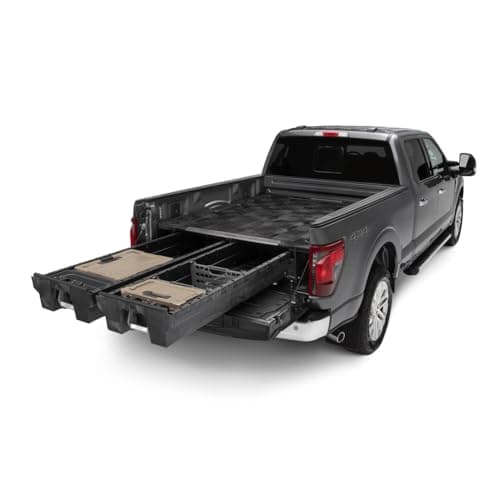
Our top pick: the DECKED DECKED Drawer System — Ford F-150 (2015-current) 5'6" bed.
Heads up: we earn an Amazon commission when you buy through our links, at no extra cost to you. Prices are pulled live from Amazon and were last checked October 5, 2026; when we cannot verify a price we say so rather than print an old one. How this site is funded.
How we know:Spec-verifiedOwner-report-verifiedWhat these mean
Quick picks — Best work truck accessories
#
Product
Best for
Material
Price
1
DECKED Drawer System — Ford F-150 (2015-current) 5'6" bed
Tap any row for the full write-up. Prices come straight from Amazon and are never typed in by hand.
There are hundreds of things you can bolt to a pickup and about seven that change how it works. This page is those seven, ranked by how much difference they make per dollar, with the order we would buy them in and — because almost nobody writes this part down — what each one costs you as well as what it gives.
The buyer this is written for is the contractor, tradesman or rural owner outfitting a working truck: somebody who needs gear that fits their exact bed and survives Monday, not somebody collecting specifications.
Buy in this order: a cargo bar, anchor points, floor liners, a locking tool box, a cover or a drawer system, seat covers, then a rack. The cheap things first is not a budget compromise — it is the right order.
How we ranked these
Not by price and not by category completeness. By the amount of daily difference per dollar, which is a different ordering from what most sites produce and is why a thirty-dollar cargo bar outranks several hundred-dollar items here.
Daily difference. How often you notice it, and whether you notice its absence.
What it costs you. Bed space, ground clearance, payload, or the ability to fit something else. Every item here has one.
Fitment breadth. Whether it works across trucks or needs an exact part.
Durability. Whether it is still doing its job in year five.
Value. Against the live Amazon price, which updates when you load this page.
The seven, ranked
No. 1DECKEDSpec-verified
DECKED Drawer System — Ford F-150 (2015-current) 5'6" bed
Two full-length weather-sealed drawers under a load-bearing deck. You keep the whole bed floor on top and gain two drawers you can reach from the tailgate without climbing in, which is the single biggest day-to-day change you can make to a work truck.
Who should skip it. It raises your bed floor by the height of the drawer module, so you lose vertical space and the ability to carry a full-height pallet. If you haul bulk more than tools, this is the wrong buy.
Build
9.4
Capacity
8.2
Install
8.8
Day-to-day access
9.8
Value
7.0
What works
+Drawers are reachable from the tailgate — no climbing into the bed
+Deck surface stays usable for cargo on top
+Weather-sealed drawers keep tools dry in an open bed
+No-drill installation on the factory cleat system
What does not
−The most expensive item in this category by a wide margin
−Raises the bed floor and costs you vertical capacity
−Very heavy — payload matters if you also tow
−Sold per bed length; ordering the wrong one means a return freight bill
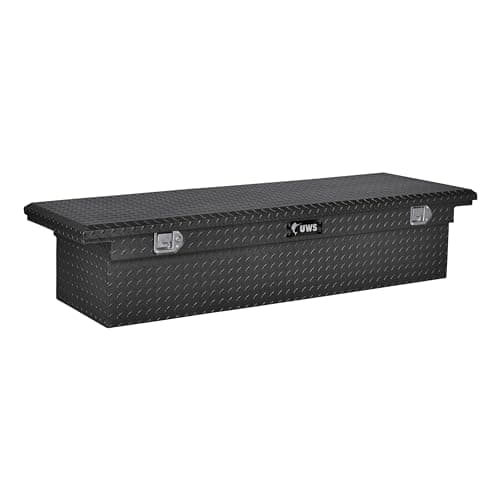
Heavy-wall aluminum, a foam-filled RigidCore lid that does not flex when you sit on it, and a low profile that still clears most rear glass. This is the crossover to buy if you intend to keep the truck.
Who should skip it. Skip it on a 5'5" short bed. At 69 inches it will sit on the rails, but you lose a disproportionate share of a short bed and the money is better spent on a side-mount pair.
Build
9.4
Weather seal
8.8
Security
8.6
Bed usability
8.0
Value
7.4
What works
+Foam-filled lid does not oil-can under body weight
+Low profile clears rear glass on most full-size crew cabs
+Heavy-wall extrusion survives being used as a step
+Gas struts are serviceable rather than sealed units
What does not
−Among the most expensive aluminum crossovers on the shelf
−69 in is a full-size length — not a mid-size answer
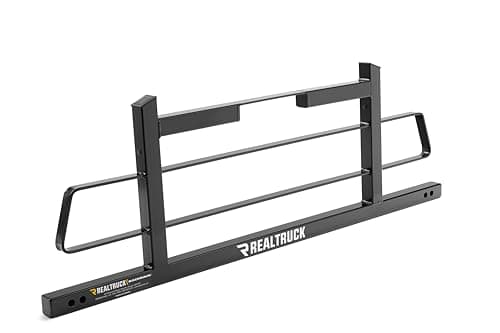
A frame that mounts into the bed's stake pockets with no drilling and puts real steel between the cab glass and whatever is in the bed. If a ladder shifts, this is the difference between a scare and a windscreen through the cab.
Who should skip it. The frame is sold frame-only. Hardware kits, lights and the tool-box mounting kit are extra, and the total adds up fast.
Build
9.4
Capacity
8.6
Install
9.0
Versatility
9.2
Value
7.4
What works
+No drilling — stake pocket mount
+Genuine cab protection rather than a styling bar
+Huge accessory ecosystem including tool box mounting
+Covers an unusually wide model-year range
What does not
−Frame only — budget for the hardware kit
−Blocks part of the rear window
−Total cost once accessorized rivals a cheap tonneau
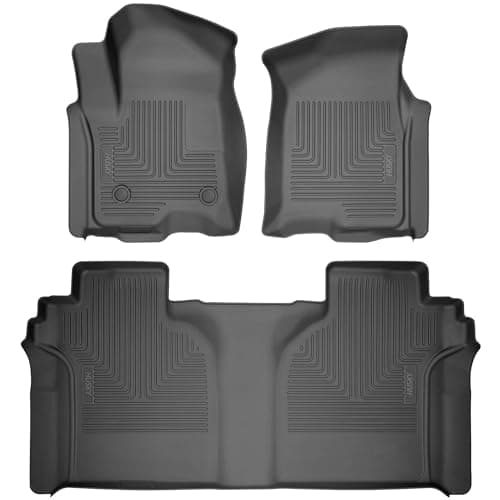
WeatherBeater is the liner most people should buy. It gives up a little wall height to WeatherTech and costs substantially less, and in daily use the difference shows up about twice a winter.
Who should skip it. If you track mud and meltwater in by the shovelful, the lower sill wall is a real limitation and WeatherTech earns its premium.
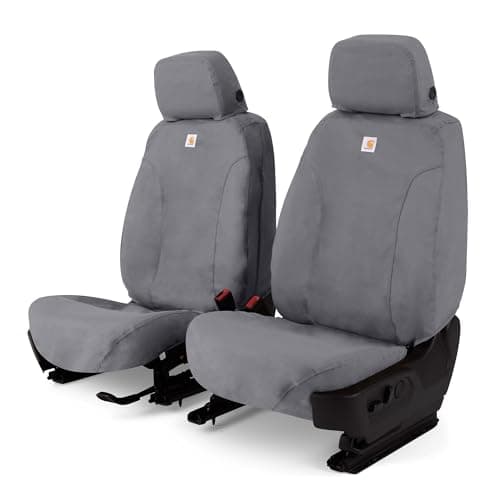
Carhartt's duck canvas on Covercraft's custom patterns. The custom fit is the entire argument: a universal cover bunches at the bolsters within a month, and a bunched cover is how a seat gets worn under the cover you bought to protect it.
Who should skip it. Duck canvas is stiff and it is hot in summer until it breaks in. If the truck is mostly a commuter, a mesh cover is more comfortable for less money.
Material
9.2
Fit
9.4
Cleanability
8.8
Comfort
7.2
Value
7.6
What works
+Custom pattern stays put instead of bunching
+Duck canvas shrugs off tool abrasion and dog claws
+Comes off and washes rather than needing valeting
+Covercraft publishes airbag compatibility per pattern
What does not
−Expensive for a seat cover
−Stiff and hot until broken in
−Pattern must match your exact seat configuration — a bench and buckets are different parts
Published specifications
Material
Carhartt duck canvas
Fit
Custom, vehicle-specific pattern
Airbag
Side-airbag compatible patterns available — verify your part number
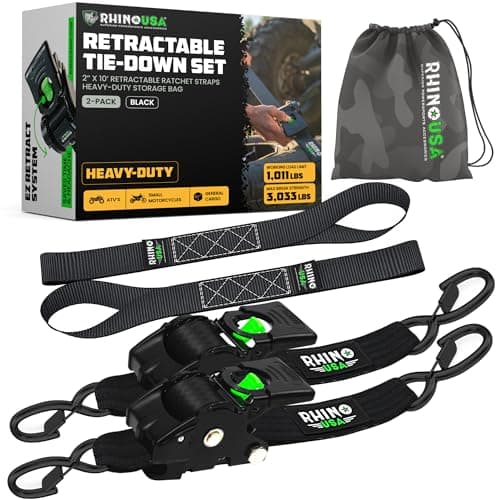
2 in webbing, 10 ft, published 3,033 lb break strength, and the strap retracts into the housing when you release it. The retraction is the feature: loose webbing in a bed is how straps get lost, frayed and run over.
Who should skip it. Retractable housings are bulkier than a plain strap and the mechanism is another thing to fail. For strapping down a load once a year, plain ratchet straps are fine.
Build
8.8
Capacity
8.8
Install
9.8
Day-to-day access
9.4
Value
7.8
What works
+Published break strength rather than a vague claim
+Retraction keeps the tail out of the dirt
+2 in webbing is the right width for real loads
What does not
−Bulkier housing than a plain strap
−The retraction mechanism is a wear item
−Break strength is not working load limit — do not confuse the two
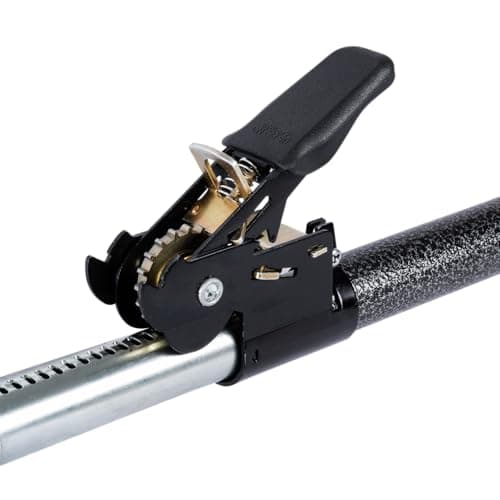
A 40-70 in ratcheting bar that braces across the bed and holds a load against the tailgate. It is the cheapest piece of kit on this site and it stops more rattling, sliding and scratched paint than anything else you can buy for the money.
Who should skip it. It is a brace, not a wall. It does not partition the bed into compartments and it will not hold a heavy load on its own.
Build
7.8
Capacity
6.8
Install
9.8
Day-to-day access
9.4
Value
9.6
What works
+Costs less than a tank of fuel
+Ratchet tension holds without tools
+Stores flat behind the seat when not in use
What does not
−Keeps a load in place; does not compartmentalize the bed
The order to buy them in, and why it is not the order above
The ranking above is by impact. The buying order is different, because some purchases constrain others and getting the sequence wrong is how people end up with two tonneau covers.
A ratcheting cargo bar. Costs less than a tank of fuel, stops the load migrating to the bulkhead on every hard stop. Nothing else here is this cheap or this immediate. Bed dividers.
Two rated anchor points mid-bed. The factory gives you corners; you strap in the middle. Tie-downs.
Floor liners. Cheapest item that measurably protects resale value, and the one a used-truck buyer notices. Floor liners.
Mud flaps. Almost as cheap, and they prevent the one damage pattern guaranteed on gravel. Mud flaps.
Decide: cover or tool box. This is the fork. It constrains the rack, the bed rack and the drawer system. Decide it deliberately — tool box vs tonneau cover.
Seat covers. Once you know the truck is staying. Check airbag compatibility. Seat covers.
A drawer system, if you carry tools. The big spend, and the biggest daily change. Drawer systems.
A rack, if you carry long material. Last, because it is the most constrained by everything above. Ladder racks.
The full version of that sequence, including the decisions that lock each other out, is in contractor truck setup.
What each one costs you
Every item on this page has a price that is not money. Here they are in one place.
The non-monetary cost of each item on this page.
Item
What it gives
What it costs
Drawer system
Organized, sealed, reachable tool storage
Vertical bed space, payload, tall-cargo capability
Crossover tool box
Lockable weather-sealed storage
18-21 in of bed floor, and usually a cover
Headache rack
Cab glass protection
Some rear visibility
Floor liners
Carpet and floor-pan protection
Nothing meaningful
Seat covers
Seat protection and resale value
Comfort until the fabric breaks in
Ratchet straps
A load that stays put
Nothing
Cargo bar
A load that stops migrating
Marks on a bare painted bed
Only two items here cost essentially nothing: the straps and the liners. That is a large part of why they rank where they do.
Fitment, which is where most of this goes wrong
The single most expensive mistake in truck accessories is ordering a part for a bed you do not have. Two numbers prevent nearly all of it.
Exterior bed rail width. Outside to outside across the top of the rails nearest the cab. UWS publishes roughly 65 in for an F-150, 64 in for a Silverado 1500, 66 in for a Ram 1500 and 57 in for a Tacoma. This decides tool boxes and racks.
Width between the wheel wells. 50.6 in, 50.63 in, 51.0 in and 44.7 in respectively. This decides chests, drawer modules and bed slides — and it is why a standard 48 in slide does not fit a Tacoma.
Beyond dimensions, three things exclude parts and all of them are in the listing fine print rather than the headline:
Body-style splits. The 2019 Silverado and the 2019-onward Ram were each sold as a new body style and a Classic in the same year.
Factory bed options. RamBox, Ford's Pro tailgate, factory bed steps and fold-flat rear floor storage all exclude specific parts.
Electric variants. Different bed hardware means mats and liners need to state compatibility explicitly.
What we would not buy
Worth saying, because a list of recommendations with nothing excluded is not a recommendation.
Bungee cords as load securement. They hold a tarp. They are not restraint and they fail suddenly. Use rated straps.
Unanchored universal mats in the driver's footwell. Anything that can slide under the pedals is a hazard, not an inconvenience.
Full-size parts on a mid-size truck. A 69 in box over 57 in of rail is cantilevered, not fitted. Tacoma-specific options.
A tonneau cover bought for fuel economy. The 5-10% claim is contested and we will not print it as fact. Buy a cover for weather and privacy. What is actually known.
An unfused accessory circuit. Bed lighting without an inline fuse is a fire waiting for a chafed wire.
Where we would start, in one sentence
A cargo bar, two mid-bed anchors and a set of floor liners — under a couple of hundred dollars together, fitted in an afternoon, and between them they fix the three things every work truck owner complains about before anything expensive enters the conversation.
Questions people actually ask
What are the best accessories for a work truck?
By daily difference per dollar: a ratcheting cargo bar, rated mid-bed anchor points, floor liners, mud flaps, then a locking tool box or a drawer system depending on whether you carry tools or material. The cheap items genuinely outrank the expensive ones on this measure.
What should I buy first for a new work truck?
A ratcheting cargo bar and two rated mid-bed anchor points. Together they cost less than a tank of fuel and they stop the thing every work bed does — everything migrating to the bulkhead on the first hard stop. The full build order.
Should I get a tonneau cover or a tool box?
They mostly exclude each other on a standard pickup, so it is a real fork. A cover if the bed carries varied cargo that needs keeping dry and out of sight; a tool box if specific tools need locking up. The full comparison.
How do I know what fits my truck?
Two measurements cover nearly everything: the exterior bed rail width (outside to outside across the rail tops nearest the cab) and the width between the wheel wells. Both are published for all four trucks here in the bed dimensions chart, and you should measure your own anyway.
Is a drawer system worth it?
If you carry tools and the daily problem is finding them and climbing into the bed, it is the biggest single change you can make. If you carry material more than tools, the raised floor costs you vertical capacity permanently and it is the wrong purchase. Full argument.
Do these accessories affect my payload?
Substantially, once you stack them. A drawer system, a crossover box, a rack and a cover together consume a meaningful fraction of a half-ton's payload before a single tool goes in. Work from the door-jamb sticker for your truck, and remember tongue weight comes out of the same budget.
Last reviewed October 5, 2026. Think a figure here is wrong? Tell us at contact@toolboxandtruck.com and we will check it, fix it and date the correction — see our editorial policy.