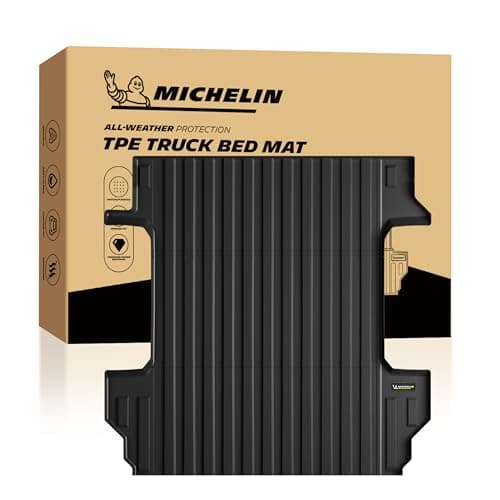
Our top pick: the Michelin Michelin Bed Mat — Silverado / Sierra 1500 5.8 ft (2019-2026).
Heads up: we earn an Amazon commission when you buy through our links, at no extra cost to you. Prices are pulled live from Amazon and were last checked October 5, 2026; when we cannot verify a price we say so rather than print an old one. How this site is funded.
How we know:Spec-verifiedOwner-report-verifiedWhat these mean
Quick picks — Bed mats
#
Product
Best for
Material
Price
1
Michelin Bed Mat — Silverado / Sierra 1500 5.8 ft (2019-2026)
Tap any row for the full write-up. Prices come straight from Amazon and are never typed in by hand.
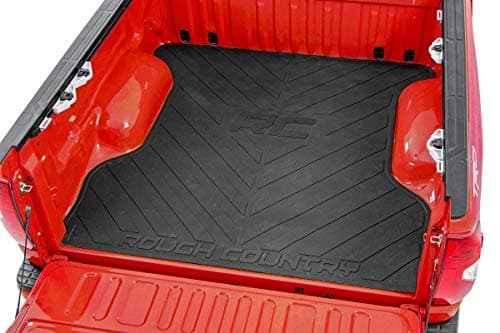
A bed mat is a thick rubber sheet cut to your bed floor. It is the least ambitious product in this category and probably the best value, because it covers the surface that takes nearly all the damage and it does the one thing a hard plastic liner does badly: it stops cargo sliding.
What it does not do is protect the bed sides. If you load with a machine, throw scrap in, or slide long material in at an angle, the sides need covering and a mat is not enough. For everyone else, a mat plus a cargo bar is a remarkably effective and cheap setup.
Buy a mat with a published thickness. The variable in cheap mats is how thin the maker went, and most listings will not tell you — which is itself the answer.
How we ranked these
Protection. Thickness where published, and how the mat behaves under a point load.
Weather seal. Whether the mat drains or holds water against the bed floor.
Install. It is a drop-in, so this scores high across the board; the differentiator is cut accuracy.
Durability. Compound quality, which shows up as cold flexibility rather than as wear.
Value. Against the live Amazon price.
The picks, ranked
No. 1MichelinSpec-verified
Michelin Bed Mat — Silverado / Sierra 1500 5.8 ft (2019-2026)
Michelin's bed mat for the 5.8 ft GM bed. Buying rubber from a tire company is not a gimmick — the compound is the product, and this one stays flexible in cold where cheap mats go board-stiff.
Who should skip it. It costs more than the budget mats for a difference you only notice in winter. In a warm climate, save the money.
Protection
8.0
Weather seal
7.2
Install
9.6
Durability
8.8
Value
8.0
What works
+Stays flexible in cold
+Grips as well as any mat in the category
+Cuts cleanly if you need to trim around hardware
What does not
−Premium for a mat
−Floor only
−Heavy
Published specifications
Fitment
Chevy Silverado / GMC Sierra 1500, 2019-2026, 5.8 ft bed
A tear-resistant rubber mat cut for the 5'10" GM bed. A mat is not a liner and does not pretend to be — it protects the floor, which is where 90% of the damage happens, and it stops cargo sliding, which a plastic tub does not.
Who should skip it. The bed sides stay exposed. If you load with a machine or throw scrap in, you need the sides covered too.
Protection
7.6
Weather seal
7.0
Install
9.8
Durability
8.4
Value
9.4
What works
+High-friction surface keeps a load put
+Rolls up and comes out in seconds for cleaning
+Cheapest meaningful bed protection
What does not
−Floor only — sides unprotected
−Heavy to handle when wet
−Traps grit underneath if never lifted
Published specifications
Fitment
Chevy Silverado / GMC Sierra 1500, 2019-2026, 5'10" bed
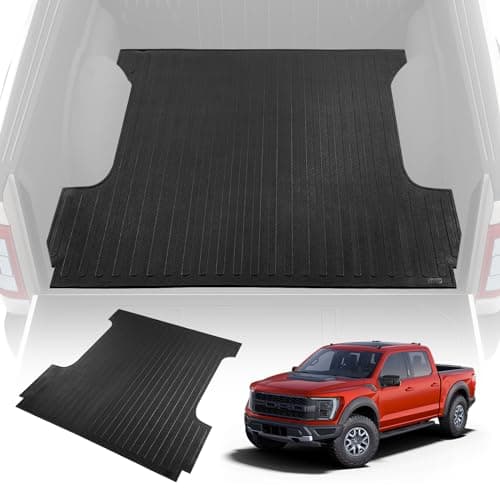
Cut for the 5.5 ft F-150 CrewCab bed and the Lightning, which matters because the Lightning's bed has different hardware. Heavy rubber, correct cut-outs, modest price.
Who should skip it. Unbranded rubber compound. It does what a mat does; do not expect Michelin's cold flexibility.
Protection
7.8
Weather seal
7.0
Install
9.6
Durability
8.0
Value
9.0
What works
+Correct cut-outs for the Lightning bed
+Heavy gauge rubber
+Priced below the brand-name mats
What does not
−Compound stiffens in cold
−Floor only
−Finish is functional, not pretty
Published specifications
Fitment
Ford F-150 2015-2026, 5.5 ft CrewCab; includes 2022-2026 Lightning
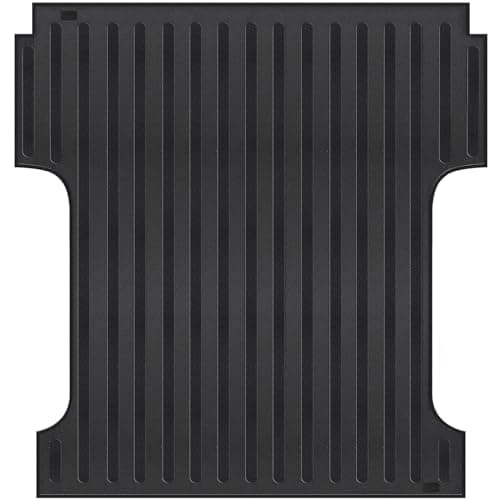
66.5 x 64 in at a quarter inch thick, with the thickness actually stated. That matters because the real variable in cheap mats is how thin they went, and most listings will not tell you.
Who should skip it. A quarter inch is adequate, not generous. For heavy equipment loading, buy thicker rubber.
Rubber compounds behave very differently below freezing. A good compound stays pliable; a cheap one goes board-stiff, and a board-stiff mat cracks at the point where it folds over the wheel-well arch. That crack then holds water against the bed.
This is why buying rubber from a company whose entire business is rubber is not a gimmick in this category. If you live somewhere it genuinely freezes, the compound matters more than the thickness. If you do not, save the money — the difference will never show up.
Thickness, and the figure nobody publishes
A quarter inch is the common thickness and the point at which a mat feels substantial underfoot and under a dropped tool. Thinner than that and it starts behaving like a sheet rather than a mat.
The problem is that most budget listings do not state a thickness at all, and the ones that do are usually the ones that have nothing to hide. Where a thickness is published we print it in the spec table; where it is not, the row says so. Treat an unpublished thickness as a reason to pick a different mat rather than as a neutral.
Lift it out, or it becomes the problem
A mat sitting in a bed collects grit underneath it exactly the way a drop-in liner does, and a mat flexing under a load grinds that grit against the floor. The difference is that a mat takes thirty seconds to roll up and pull out, where a liner takes twenty minutes.
Pull it out and hose both sides. Twice a year, or after anything particularly dirty.
Check underneath for standing water. If water sits under the mat rather than draining, the mat is fighting rather than helping.
Look at the drain holes. Most beds have them. A mat should not cover them.
Fitment, and the Lightning case
Bed mats are cut per truck and per bed length. One specific thing to know: electric pickups often have different bed hardware — charge outlets, tie-down positions, drain locations — and a mat for the gas truck may not have the right cut-outs.
The listings that cover both state it explicitly. If a mat listing names only the gas truck, assume the cut-outs are wrong for the electric one. Bed dimensions for all four trucks this site covers are in the bed dimensions chart.
Mat or liner?
If the question is purely budget, buy the mat — it covers the floor, which is most of the damage, for a fraction of a liner. If your loading touches the bed sides, buy a liner, because a mat leaves them bare and a scratched bed side is just as much a rust start as a scratched floor.
The complete comparison is in bed liners, and the mats-versus-liners framing for the cab floor — which follows exactly the same logic — is in floor mats vs floor liners.
Questions people actually ask
Is a bed mat enough protection on its own?
For most work trucks, yes — the floor takes the great majority of bed damage and a mat covers it while also stopping cargo sliding, which a hard plastic liner does not. If you load with a machine or carry scrap, the bed sides need covering too and a mat is not sufficient.
How thick should a truck bed mat be?
A quarter inch is the sensible minimum and the point at which a mat feels substantial under a dropped tool. The real issue is that many budget listings do not publish a thickness at all — treat that silence as a reason to choose a different mat.
Do bed mats trap dirt and damage the bed?
They collect grit underneath exactly as a drop-in liner does, and a flexing mat grinds it against the floor. The difference is that a mat takes thirty seconds to pull out and hose, so the problem is trivially preventable — do it twice a year.
Will a bed mat fit an electric pickup?
Only if the listing says so. Electric trucks often have different bed hardware — charge outlets, tie-down positions and drain locations — and a mat cut for the gas truck can have the wrong cut-outs. Listings that cover both state it explicitly.
Does a bed mat go over a spray-in liner?
Yes, and it is a common combination: the spray-in protects everything permanently and the mat adds grip and cushioning on the floor where cargo lands. A mat over a spray-in cannot trap grit against paint, because there is no paint behind it.
Last reviewed October 5, 2026. Think a figure here is wrong? Tell us at contact@toolboxandtruck.com and we will check it, fix it and date the correction — see our editorial policy.