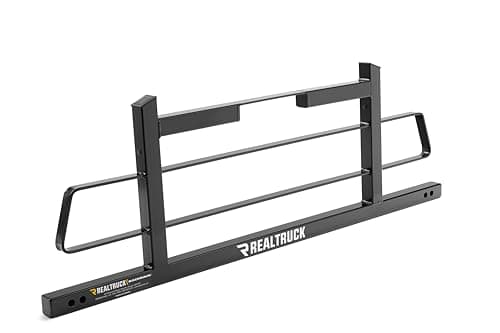
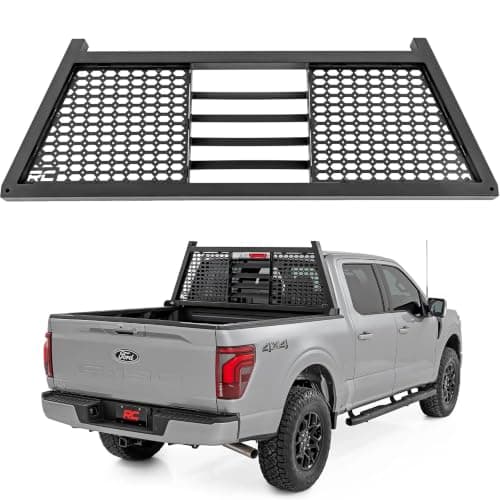
Our top pick: the BACKRACK BACKRACK Original Frame — F-150 (2004-2025), No Drill.
Heads up: we earn an Amazon commission when you buy through our links, at no extra cost to you. Prices are pulled live from Amazon and were last checked October 5, 2026; when we cannot verify a price we say so rather than print an old one. How this site is funded.
How we know:Spec-verifiedOwner-report-verifiedWhat these mean
Quick picks — Headache racks
#
Product
Best for
Material
Price
1
BACKRACK Original Frame — F-150 (2004-2025), No Drill
The headache rack that is actually a headache rack
Tap any row for the full write-up. Prices come straight from Amazon and are never typed in by hand.
A headache rack is a vertical steel barrier at the bulkhead. It carries nothing. Its entire job is to be between the rear cab glass and whatever is in the bed when that load decides to move forward, which it will do the first time you brake hard.
On a truck carrying pipe, conduit, ladders or lumber, that is not a styling accessory. Loose long material in a hard stop goes exactly one direction and the rear window is the thing in its way.
The BACKRACK Original is the one to buy: no drilling, stake-pocket mount, and an accessory ecosystem that includes tool-box mounting. Budget for the hardware kit — the frame is sold frame-only.
Frame-only, and why the price looks lower than it is
The fleet-standard racks are sold as a frame. The hardware kit that actually mounts it to your specific truck is a separate purchase, as are lights, the tool-box mounting kit and any of the panel inserts. The total once accessorized is meaningfully more than the frame price.
That is not a trick — it is what makes the system work across dozens of trucks and lets you move the frame to a new truck with a new hardware kit. But compare like for like when you are shopping, because a complete budget rack and a frame-only premium rack are not the same purchase.
How we ranked these
Build. Tube wall, weld quality and whether the rack is a barrier or a screen. There is a real difference.
Capacity. Glass coverage and what the rack would actually stop. Where a load rating is published we print it; most are not.
Install. Stake-pocket no-drill versus bolted, and whether the hardware kit is included.
Versatility. Accessory ecosystem, tool-box compatibility and lighting provision.
Value. Against the live price, with the frame-only caveat applied.
The picks, ranked
No. 1BACKRACKSpec-verified
BACKRACK Original Frame — F-150 (2004-2025), No Drill
Best for: The headache rack that is actually a headache rack
A frame that mounts into the bed's stake pockets with no drilling and puts real steel between the cab glass and whatever is in the bed. If a ladder shifts, this is the difference between a scare and a windscreen through the cab.
Who should skip it. The frame is sold frame-only. Hardware kits, lights and the tool-box mounting kit are extra, and the total adds up fast.
Build
9.4
Capacity
8.6
Install
9.0
Versatility
9.2
Value
7.4
What works
+No drilling — stake pocket mount
+Genuine cab protection rather than a styling bar
+Huge accessory ecosystem including tool box mounting
+Covers an unusually wide model-year range
What does not
−Frame only — budget for the hardware kit
−Blocks part of the rear window
−Total cost once accessorized rivals a cheap tonneau
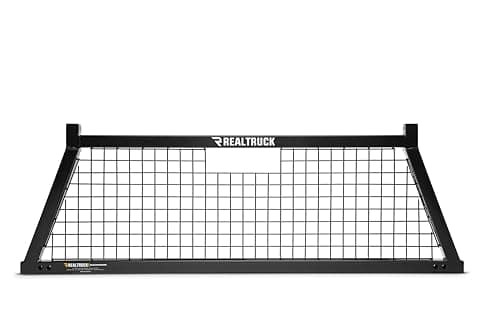
The Safety Rack covers more of the rear window than the Original. If the bed carries pipe, conduit or anything that can slide forward, the extra coverage is the entire reason to spend the difference.
Who should skip it. It blocks more of your rear view. On a truck used for tight reversing without a camera, that is a real cost.
Build
9.4
Capacity
8.8
Install
9.0
Versatility
8.4
Value
7.2
What works
+More glass coverage than the Original
+Same no-drill stake pocket mount
+Same accessory ecosystem
What does not
−Reduces rear visibility more than the Original
−Frame only
−Heavier
Published specifications
Fitment
Ford F-150 2004-2025; Chevy / GMC 2008-2019, 2020-2025
A heavy steel cab protector that arrives complete rather than frame-only, fitting a range of Chevrolet, Ford, Dodge and GMC trucks. If you want one order and one afternoon, this is the simpler purchase.
Who should skip it. Multi-fit means approximate fit. Expect to spend time getting it square, and expect the mounting to be less elegant than a model-specific rack.
Build
8.6
Capacity
8.4
Install
7.6
Versatility
8.0
Value
8.6
What works
+Complete rack in one purchase
+Heavy steel construction
+Fits a wide range of trucks
What does not
−Multi-fit alignment takes time
−Heavier than an aluminum rack
−Less refined mounting than model-specific designs
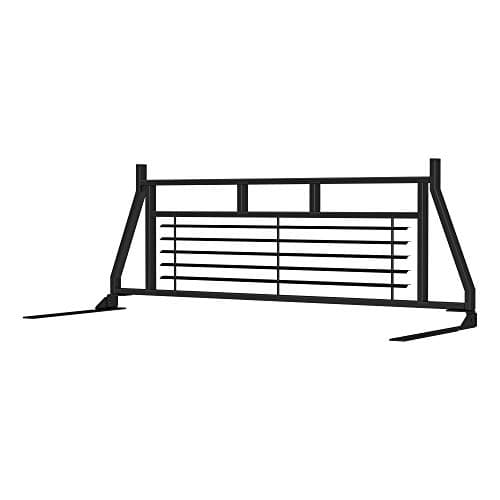
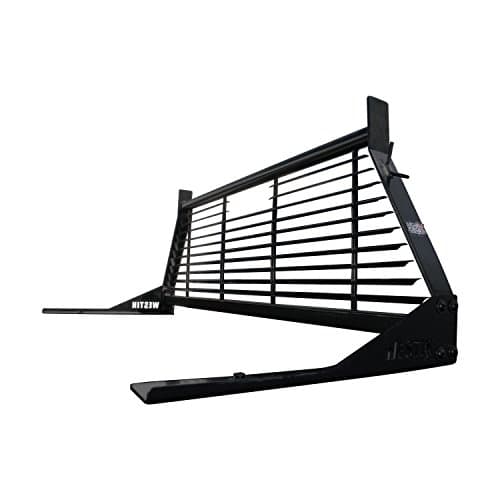
Westin's HD rack: heavier tube and a finish that survives what budget powder coat does not. On a truck that will carry this rack for a decade, the coating is the part that decides whether it still looks right in year five.
Who should skip it. HD means heavy. It is a two-person install and it costs you payload before you put anything in the bed.
A steel headache rack with two MOLLE panels, so the rack becomes storage rather than just a barrier. Recovery gear, a shovel, a fire extinguisher — all of it ends up off the bed floor.
Who should skip it. MOLLE panels mean more wind noise and more surface to collect road grime. If you will not use the panels, buy a plain rack.
Build
8.4
Capacity
8.0
Install
7.8
Versatility
9.4
Value
8.4
What works
+Rack doubles as gear mounting
+Steel construction
+Gets recovery gear off the bed floor
What does not
−More wind noise than a plain frame
−Panels collect grime
−Fitment application not stated in the listing — verify
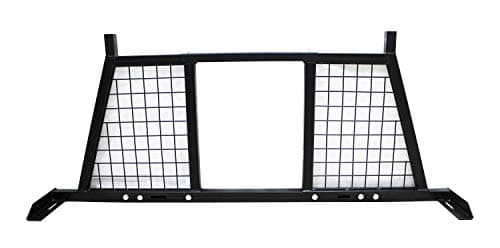
Adjustable 62 to 76.5 in, bolt-on stake pocket mount, no drilling, and it costs less than a set of straps. It is the entry point to cab protection and it is a better buy than nothing by a long way.
Who should skip it. It is a light steel screen, not a BACKRACK. It will stop a loose ladder from reaching the glass; do not expect it to survive a shifted pallet.
Full-size beds 62 to 76.5 in wide with usable stake pockets
✗ Does not fit
Heavy shifting loads
Beds without stake pockets
Coverage versus visibility
More steel between the bed and the glass means better protection and worse rear vision. That is a genuine trade on a truck reversed into tight spaces without a camera.
Style
Glass coverage
Rear vision
Right for
Open frame
Frame only, glass largely clear
Good
General work, visibility matters
Safety / full screen
Most of the window
Reduced
Pipe, conduit, anything that slides
Louvered
Full, with slats
Poor directly, some light through
Maximum protection, camera-equipped trucks
Mesh screen
Full, see-through
Moderate
A compromise most people are happy with
If the truck has a reversing camera, take the extra coverage. If it does not and you reverse onto sites daily, the open frame is the honest choice.
Stake pockets: the mount that makes this easy
The best headache racks mount into the factory stake pockets with no drilling. That is worth stating plainly because it is unusual among bed hardware: a rack that takes vertical load and is designed to resist a shifting load, mounted without a single hole in the truck.
The requirement is that your stake pockets are accessible and sound. Many newer trucks have them under bonded bed rail caps, which have to come off. On an older truck, check the pockets are not rotten — the rating assumes sound metal.
The combination that most trade trucks end up with
A headache rack plus a ladder rack, because the headache rack provides both the cab protection and the front support leg for the overhead bars. That is the single most common trade setup and it is also where the clearance problems with a tool box appear.
A tall crossover box and a low rack base interfere. Some racks state tool-box compatibility explicitly, and those are the ones to look at if a box is already fitted or planned. The whole problem is set out in ladder rack with a tool box.
Lights, and whether to bother
Rack-mounted work lights are genuinely useful on a truck that works after dark, and they are also another wiring job and another set of connectors in the weather. If you want light in the bed, a bed strip kit is cheaper, easier and lights the bed better. Rack lights are for lighting the area around the truck.
What we would actually buy
On a trade truck: the BACKRACK Original frame plus the hardware kit for your truck. No drilling, genuine protection, and the accessory range means it adapts as the truck's job changes.
On a truck hauling pipe or anything that slides: the Safety frame instead, accepting the reduced rear vision. The extra coverage is the entire point and the thing you are buying.
On a truck where any protection beats none and the budget is spent: the adjustable budget screen. It is light-duty and it will stop a loose ladder reaching the glass, which is most of what you need.
Questions people actually ask
What does a headache rack actually do?
It puts steel between the rear cab glass and whatever is in the bed. It carries nothing — its job is to stop a load that has started moving forward, which is what happens the first time you brake hard with loose long material in the bed.
Do headache racks require drilling?
The good ones do not — they mount into the factory stake pockets. The requirement is that your pockets are accessible and sound, which on newer trucks often means removing bonded bed rail caps first, and on older trucks means checking the pocket metal is not rotten.
Why is a headache rack sold as frame only?
Because the hardware kit that mounts it is truck-specific, which is what lets one frame design fit dozens of trucks and move to your next one. It does mean the total cost is meaningfully higher than the frame price, so compare a complete budget rack against frame plus hardware rather than against the frame alone.
Will a headache rack block my rear view?
An open frame barely does; a full screen or louvered rack substantially does. If the truck has a reversing camera, take the extra coverage. If it does not and you reverse onto sites daily, the open frame is the honest choice.
Can I fit a headache rack and a ladder rack together?
Yes, and it is the most common trade setup — the headache rack provides the cab protection and the front support leg for the overhead bars. The complication is a tool box: a tall crossover box and a low rack base interfere. Full detail.
Last reviewed October 5, 2026. Think a figure here is wrong? Tell us at contact@toolboxandtruck.com and we will check it, fix it and date the correction — see our editorial policy.