Work truck gear, ranked for the people who load it every morning.
Guides
Contractor truck setup, in the right order
Each purchase constrains the next. Get the sequence wrong and you buy some of it twice — which is how most work trucks end up with a cover in the garage.
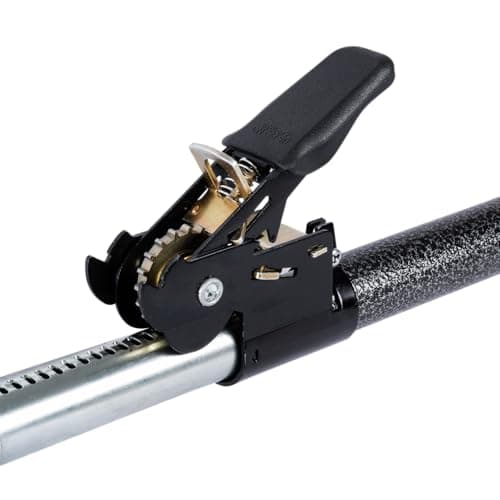
Featured here: the Keeper Keeper Adjustable Ratcheting Cargo Bar, 40-70 in.
Heads up: we earn an Amazon commission when you buy through our links, at no extra cost to you. Prices are pulled live from Amazon and were last checked October 5, 2026; when we cannot verify a price we say so rather than print an old one. How this site is funded.
How we know:Owner-report-verifiedSpec-verifiedWhat these mean
A work truck is not a list of accessories. It is a set of decisions where several of them exclude each other, and the usual failure is buying in the order things occur to you rather than the order that keeps your options open.
The classic version: buy a crossover tool box, then discover the tonneau cover you wanted needs to be a notched one at a premium. Or buy a cover, then discover the ladder rack you now need is a cover-compatible rail system at four times the price of a clamp-on rack. Both are avoidable and both are common.
Buy the cheap universal things first, make the two exclusive decisions deliberately, and check the payload before the big spend. That order costs the same money and produces a better truck.
Step 0: two measurements and one sticker
Ten minutes, before you spend anything, and it prevents most of the expensive mistakes.
Exterior bed rail width. Outside edge to outside edge, across the top of the rails, nearest the cab. Decides tool boxes and racks. UWS publishes roughly 65 in for an F-150, 64 in for a Silverado 1500, 66 in for a Ram 1500 and 57 in for a Tacoma.
Interior width between the wheel wells. The narrowest interior point, measured with whatever liner is in the bed. Decides chests, drawer modules and slides. Published at 50.6 in, 50.63 in, 51.0 in and 44.7 in respectively.
The door-jamb payload sticker. The figure for your truck as built, not the model maximum. You will need it at step five. All four trucks' dimensions.
Write all three on your phone. You will use them for a box, a cover, a liner, a mat, a rack and a drawer system — six purchases, one set of measurements.
Step 1: stop things moving
Cheapest step and the one with the highest return. Until the load stops migrating to the bulkhead on every hard stop, no organization you impose survives the week.
A ratcheting cargo bar, 1.25 in tube, rubber pads, in the range that covers your bed. Cargo bars.
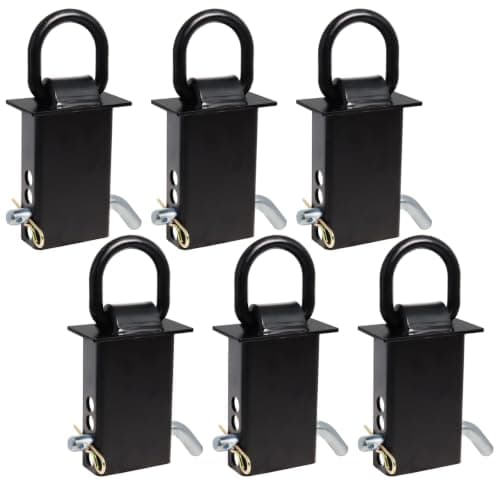
Two rated anchor points mid-bed. Removable stake-pocket D-rings if your pockets are accessible; bolt-on rings with a backing plate if not. Tie-downs.
Two 2-inch ratchet straps. Retractable if they live in the truck.
Step 2: protect what you cannot repair cheaply
Second, because this is cheap, universal, and the damage it prevents cannot be undone later.
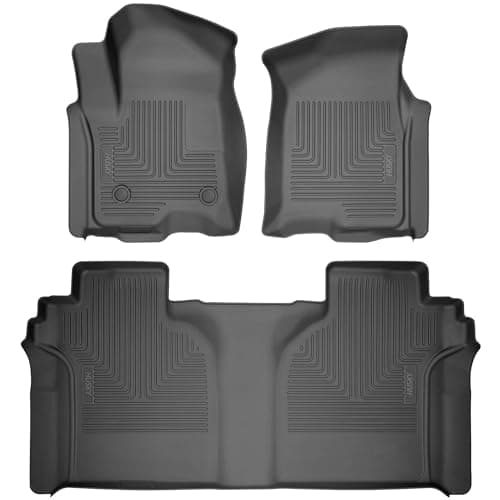
Floor liners. Water and salt through carpet reach the floor pan. Why they come first.
Mud flaps, front and rear. Prevent the sandblasted rocker panel that is guaranteed on gravel. Mud flaps.
A bed mat, at minimum. Covers the floor, which takes nearly all bed damage, and grips cargo. Bed mats.
Step 3: the first exclusive decision — cover or box
This is the fork. On a standard pickup a crossover tool box and an ordinary tonneau cover do not coexist, and whichever you pick constrains the rack decision after it.
Choose
If
And then
A cover
The bed carries varied cargo that needs keeping dry and hidden
A rack must be a cover-compatible rail system, or none
A box
Specific tools must be locked up
A rack needs its legs behind the box, or a headache rack
A slimline box + tri-fold cover
You genuinely need both
Measure both; the rack becomes very hard
A chest box on the floor
You want a cover AND lockable storage AND a rack
Costs a rectangle of floor; nothing else is excluded
The fourth row is the one nobody considers and it is often the right answer. A chest box uses no rail space, so it leaves every other decision open. The full fork is set out in tool box vs tonneau cover.
Step 4: light it
A wired LED strip kit. Two 60-inch strips for a short bed, three for a long one with the third across the bulkhead. Buy a kit with the fuse and the waterproof switch included rather than sold separately.
This goes here rather than last because every later decision is easier to make once you can see the bed properly at six in the morning. Bed lighting.
Step 5: the payload check, before the big spend
Do this with the sticker from step 0 and real numbers rather than impressions.
Now ask whether a drawer system and a rack both fit inside what is left. On a lot of half-tons they do not, and finding that out now rather than after is the point of putting this step here. How to work it out.
The seven-step build, with live prices
KeeperOwner-report-verified
Keeper Adjustable Ratcheting Cargo Bar, 40-70 in
Best for: Stopping the load sliding to the bulkhead
A 40-70 in ratcheting bar that braces across the bed and holds a load against the tailgate. It is the cheapest piece of kit on this site and it stops more rattling, sliding and scratched paint than anything else you can buy for the money.
Who should skip it. It is a brace, not a wall. It does not partition the bed into compartments and it will not hold a heavy load on its own.
Build
7.8
Capacity
6.8
Install
9.8
Day-to-day access
9.4
Value
9.6
What works
+Costs less than a tank of fuel
+Ratchet tension holds without tools
+Stores flat behind the seat when not in use
What does not
−Keeps a load in place; does not compartmentalize the bed
Drops into the factory stake pocket, published at 16,200 lb, and lifts straight out when you are done. No drilling, no sealed holes, and a rating that is in a completely different league from a bolt-on ring.
Who should skip it. Your truck has to have usable stake pockets. Many newer trucks have them covered by bed rail caps, and some have none at all.
Build
8.4
Capacity
9.6
Install
9.6
Day-to-day access
9.0
Value
9.0
What works
+No drilling at all
+Very high published rating
+Removable, so the pocket is free again when you need it
What does not
−Needs accessible stake pockets
−Bed rail caps often have to come off
−Rating assumes a sound stake pocket, which on an older truck is an assumption
WeatherBeater is the liner most people should buy. It gives up a little wall height to WeatherTech and costs substantially less, and in daily use the difference shows up about twice a winter.
Who should skip it. If you track mud and meltwater in by the shovelful, the lower sill wall is a real limitation and WeatherTech earns its premium.
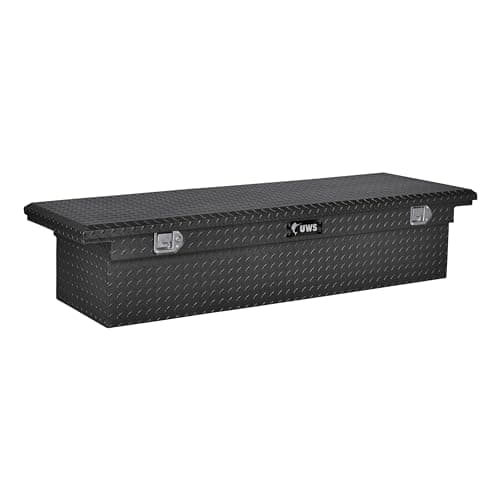
Heavy-wall aluminum, a foam-filled RigidCore lid that does not flex when you sit on it, and a low profile that still clears most rear glass. This is the crossover to buy if you intend to keep the truck.
Who should skip it. Skip it on a 5'5" short bed. At 69 inches it will sit on the rails, but you lose a disproportionate share of a short bed and the money is better spent on a side-mount pair.
Build
9.4
Weather seal
8.8
Security
8.6
Bed usability
8.0
Value
7.4
What works
+Foam-filled lid does not oil-can under body weight
+Low profile clears rear glass on most full-size crew cabs
+Heavy-wall extrusion survives being used as a step
+Gas struts are serviceable rather than sealed units
What does not
−Among the most expensive aluminum crossovers on the shelf
−69 in is a full-size length — not a mid-size answer
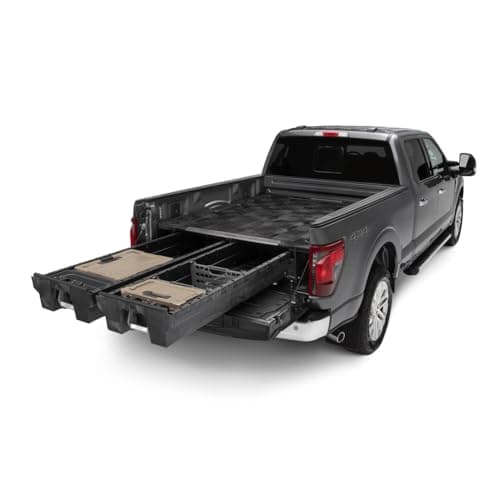
Two full-length weather-sealed drawers under a load-bearing deck. You keep the whole bed floor on top and gain two drawers you can reach from the tailgate without climbing in, which is the single biggest day-to-day change you can make to a work truck.
Who should skip it. It raises your bed floor by the height of the drawer module, so you lose vertical space and the ability to carry a full-height pallet. If you haul bulk more than tools, this is the wrong buy.
Build
9.4
Capacity
8.2
Install
8.8
Day-to-day access
9.8
Value
7.0
What works
+Drawers are reachable from the tailgate — no climbing into the bed
+Deck surface stays usable for cargo on top
+Weather-sealed drawers keep tools dry in an open bed
+No-drill installation on the factory cleat system
What does not
−The most expensive item in this category by a wide margin
−Raises the bed floor and costs you vertical capacity
−Very heavy — payload matters if you also tow
−Sold per bed length; ordering the wrong one means a return freight bill
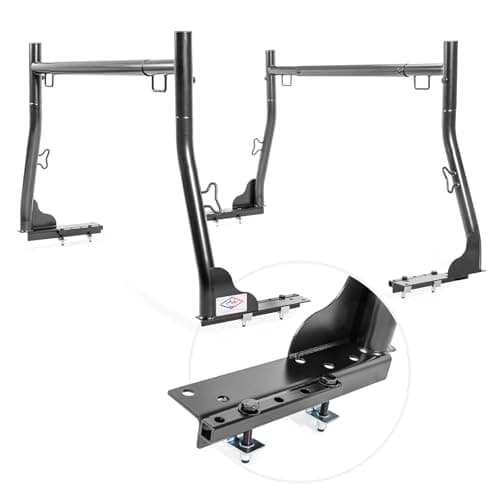
The same 800 lb X31 with eight Z-clamps instead of drilled mounts. The clamps are why you buy this version: no holes in the bed rail, nothing to seal, and the whole rack comes off in twenty minutes.
Who should skip it. Clamps need sound rails with accessible lips. Some newer trucks have bonded rail caps that leave nothing to clamp to.
Build
8.0
Capacity
8.4
Install
9.4
Versatility
8.6
Value
9.2
What works
+Zero holes in the truck
+Comes off completely for a clear bed
+Same 800 lb rating as the drilled version
What does not
−Clamps need accessible rail lips
−Clamped racks need re-torquing after the first loaded trips
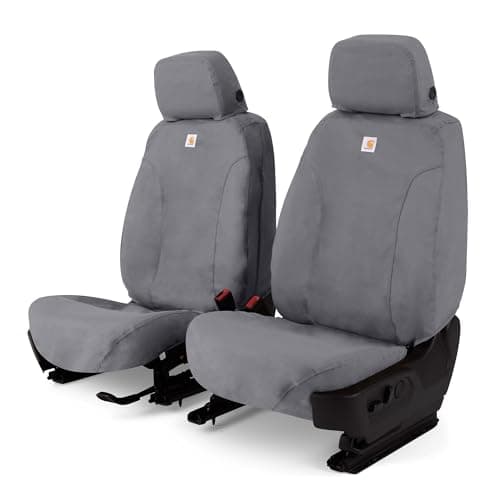
Carhartt's duck canvas on Covercraft's custom patterns. The custom fit is the entire argument: a universal cover bunches at the bolsters within a month, and a bunched cover is how a seat gets worn under the cover you bought to protect it.
Who should skip it. Duck canvas is stiff and it is hot in summer until it breaks in. If the truck is mostly a commuter, a mesh cover is more comfortable for less money.
Material
9.2
Fit
9.4
Cleanability
8.8
Comfort
7.2
Value
7.6
What works
+Custom pattern stays put instead of bunching
+Duck canvas shrugs off tool abrasion and dog claws
+Comes off and washes rather than needing valeting
+Covercraft publishes airbag compatibility per pattern
What does not
−Expensive for a seat cover
−Stiff and hot until broken in
−Pattern must match your exact seat configuration — a bench and buckets are different parts
Published specifications
Material
Carhartt duck canvas
Fit
Custom, vehicle-specific pattern
Airbag
Side-airbag compatible patterns available — verify your part number
Trucks with a Covercraft pattern for the exact seat configuration — confirm before ordering
✗ Does not fit
Seats whose configuration does not match the listed pattern
Anyone expecting a universal slip-on
Step 6: fix the reach problem
A six-and-a-half-foot bed puts the bulkhead four feet past your arms, and until that is addressed the front half of the bed is where things go to be forgotten.
Buy a cheap slide-out tray first. It costs very little and within a month it tells you whether reach is genuinely your problem.
If it is, and the issue is lifting: a steel slide with a published capacity. Bed slides.
If it is, and the issue is finding: a drawer system, subject to the payload check and the vertical-space cost. Drawer systems.
If it is not: you have saved a lot of money and the tray still earns its keep.
Step 7: a rack, if you carry long material
Last, because it is the most constrained by everything above. A clamp-on two-bar rack with load stops is the sensible default; the cover decision from step 3 may have already made that impossible.
No cover fitted: a clamp-on 800 lb two-bar rack with load stops. Cheap, no holes, comes off at resale.
Cover fitted: a cover-compatible bed rail system, at a premium and with less bar span. How.
Box fitted: the rack's front legs behind the box, or a headache rack stated as box-compatible. How.
Occasional long loads only: a hitch bed extender instead, which blocks towing but costs a fraction. Bed extenders.
The cab, which people do last and should not
Three small items that cost very little and fix daily irritations, and none of them conflicts with anything above:
An under-seat box. The best storage space in the truck, holding nothing from the factory.
A seat-back organizer. Gets paperwork off the passenger seat.
Seat covers, once you know the truck is staying. Check airbag compatibility. Seat covers.
Electrical, plumbing, HVAC, service, finish carpentry. Many small items, many trips to the truck.
Cargo bar, mid-bed anchors, straps
Floor liners, mud flaps, bed mat
A locking crossover box (no cover)
Wired strip lighting, both sides
A drawer system, payload permitting
Under-seat box and seat covers
Material-heavy trades
Framing, roofing, landscaping, concrete. Bulk and length rather than many small items.
Cargo bar, mid-bed anchors, 2-inch straps
Floor liners, mud flaps, spray-in or drop-in liner
A side-mount topsider (keeps the floor) — side boxes
A clamp-on ladder rack with load stops
Wired strip lighting
Under-seat box and seat covers
Those two are genuinely incompatible and trying to build both on one truck produces a bed you cannot use. Pick the one that matches what you haul in a normal week. More on both.
Questions people actually ask
What should I buy first when setting up a work truck?
A ratcheting cargo bar, two rated mid-bed anchor points and a pair of straps. Together they cost less than a tank of fuel, they fix the problem every bed has, and — crucially — nothing in that list forecloses any later decision.
Should I get a tonneau cover or a tool box first?
Decide both before buying either, because on a standard pickup they mostly exclude each other and whichever you pick constrains the rack decision after it. A chest box on the bed floor is the option that leaves everything else open. The fork.
In what order should I outfit a work truck?
Measurements and the payload sticker; stop things moving; protect what you cannot repair; decide cover or box; light it; check payload; fix reach; then a rack. The sequence matters because each exclusive decision constrains the next one.
Will a drawer system and a ladder rack both fit my payload?
On a lot of half-tons, no — once you subtract a box, a cover, liners, two people, fuel and tongue weight from the door-jamb figure, there is less left than people expect. Do the arithmetic before the big spend rather than after.
Can I build a setup that does both tools and material?
Not well. A tool-heavy setup wants a drawer system and a crossover box; a material-heavy setup wants a side box that keeps the bed floor and a ladder rack. They compete for the same space, and trying to have both produces a bed you cannot use.
What are the three measurements I need?
Exterior bed rail width (outside to outside across the rail tops nearest the cab), interior width between the wheel wells measured with the liner in, and the payload figure on your driver's door-jamb sticker. Write all three down — six later purchases use them.
Last reviewed October 5, 2026. Think a figure here is wrong? Tell us at contact@toolboxandtruck.com and we will check it, fix it and date the correction — see our editorial policy.