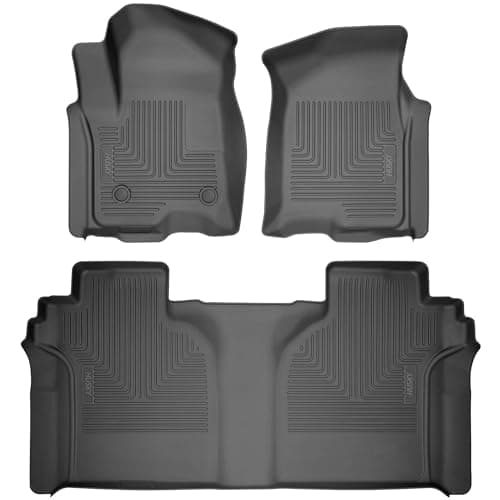
Featured here: the Husky Liners Husky Liners WeatherBeater Floor Mats — F-150 SuperCrew (2015-2026).
Heads up: we earn an Amazon commission when you buy through our links, at no extra cost to you. Prices are pulled live from Amazon and were last checked October 5, 2026; when we cannot verify a price we say so rather than print an old one. How this site is funded.
How we know:Spec-verifiedOwner-report-verifiedWhat these mean
Yes, and it is the first interior purchase we would make on any work truck. Not because carpet is expensive to replace — it is — but because of what sits under it.
Floor liners before seat covers, before a bed mat, before almost anything cosmetic. Water held against a steel floor pan is a structural problem rather than an appearance one.
The actual argument
A work boot brings in water, grit and road salt. The carpet takes all three. Water goes through it and sits against the floor pan; salt comes with it; the carpet holds both in place against the metal for as long as it takes to dry.
The carpet wears. Grit under a boot is an abrasive and carpet is not hard-wearing. Visible within two winters on a work truck.
The underlay holds water. Which means the pan stays damp long after the surface looks dry.
Salt accelerates everything. It is why this is worse in the snow belt than the rainfall alone would suggest.
The damage is invisible until it is not. Nobody lifts a truck carpet routinely, which is exactly why this happens.
A molded liner intercepts all of it. The water lands in a tray, the grit lands in a tray, and you tip the tray out. That is the whole product.
The money
A set of liners costs a fraction of replacing the carpet, and a fraction of what a visibly worn interior takes off the resale price. The comparison is not close enough to need working through.
WeatherBeater is the liner most people should buy. It gives up a little wall height to WeatherTech and costs substantially less, and in daily use the difference shows up about twice a winter.
Who should skip it. If you track mud and meltwater in by the shovelful, the lower sill wall is a real limitation and WeatherTech earns its premium.
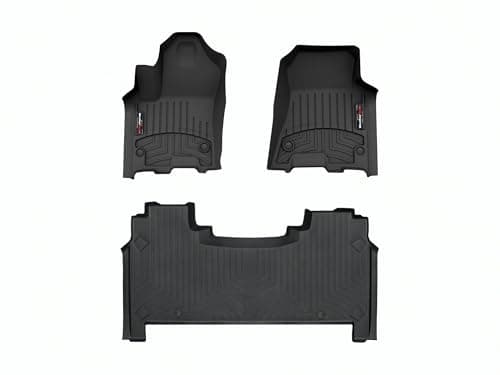
Laser-measured, high-wall liners for the Ram 1500 in a first and second row set. The reason WeatherTech still wins is the wall height at the door sill — that edge is what stops meltwater running onto the carpet instead of into the tray.
Who should skip it. They are the most expensive liners you can buy and the hard surface is noisier underfoot than a softer TPE mat.
Material
9.2
Fit
9.6
Cleanability
9.4
Comfort
7.4
Value
7.0
What works
+Highest sill walls in the category — water stays in the tray
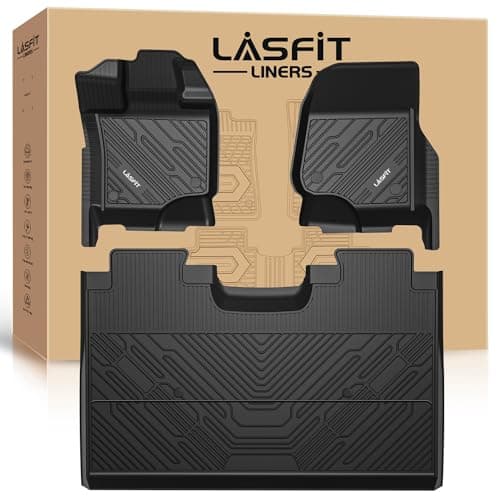
TPE rather than rubber or hard plastic, cut for the 2015-2026 F-150 SuperCrew without the fold-flat storage option. TPE stays flexible in cold, which is exactly when a stiff liner cracks at the heel pad.
Who should skip it. Excludes trucks with fold-flat rear storage. That is a common option, so check before you buy.
Material
8.2
Fit
8.6
Cleanability
8.8
Comfort
8.6
Value
9.2
What works
+TPE stays flexible in cold
+Noticeably cheaper than the premium brands
+Odor-free unlike cheap rubber
What does not
−Not for trucks with fold-flat rear storage
−Lower sill walls than WeatherTech
−Thickness not published
Published specifications
Fitment
Ford F-150 2015-2026 SuperCrew, without fold-flat storage
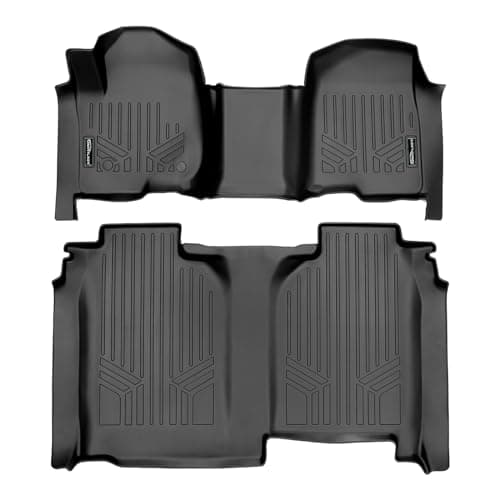
Two-row liners for the 2019-2026 Silverado 1500 at a price between the budget mats and the premium brands. The fit is close enough to the laser-measured liners that most owners cannot tell without the two side by side.
Who should skip it. The compound is harder than Husky's and the edges are less finished than WeatherTech's. It is a value play, not a quality play.
A mat is flat and covers the middle of the floor. A liner is a molded tray with walls that covers the footwell including the sides and the sill. Work-truck mess arrives at the edges — it comes off the sides of your boots, not the soles — so a liner catches the larger share.
The full comparison is in floor mats vs floor liners, and the short version is that for a truck that does work, a liner is almost always the right answer.
The catch, and it is a real one
A liner that never comes out traps grit underneath and abrades the carpet it was bought to protect — the identical problem a drop-in bed liner has, and the identical fix.
Pull them out twice a winter and hose them. Five minutes each.
Dry the carpet underneath if it is damp. Damp carpet under a liner means water is getting around it, which is a leak rather than a liner failure.
Check the retention posts. They work loose, and a liner that has stopped locking down is the one that will slide.
Where liners sit in the order
If the budget is finite, this is the order we would buy interior protection in:
Floor liners. For the reason above.
Seat covers. Abrasion from tool belts and boots. Worth it?
An under-seat storage box. Gets gear out of the footwell, which also keeps the liner working.
A console tray. Cheap, and it stops the console becoming a pit.
Yes, and they are the first interior purchase we would make. The reason is not the carpet — it is that water and road salt go through carpet and sit against the steel floor pan, where the damage is invisible until it is not.
Do floor liners protect resale value?
Yes, in two ways: the carpet stays presentable, and a buyer can see the truck was looked after. A set of liners costs a fraction of replacing carpet and a fraction of what a visibly worn interior takes off the price.
Can cheap floor mats be dangerous?
An unanchored mat in the driver's footwell can slide under the pedals, which is a hazard rather than an inconvenience. Use your truck's factory retention posts, and in this one place buying nothing is better than buying something that cannot lock down.
Do floor liners trap dirt and make things worse?
A liner that never comes out does — it traps grit underneath and abrades the carpet it was bought to protect. Pull them out twice a winter and hose them, which takes five minutes and eliminates the problem entirely.
Floor liners or seat covers first?
Floor liners, because water reaching the floor pan is structural in a way that a worn seat is not. Seat covers are the second interior purchase and the gap in priority is real rather than marginal.
Last reviewed October 5, 2026. Think a figure here is wrong? Tell us at contact@toolboxandtruck.com and we will check it, fix it and date the correction — see our editorial policy.