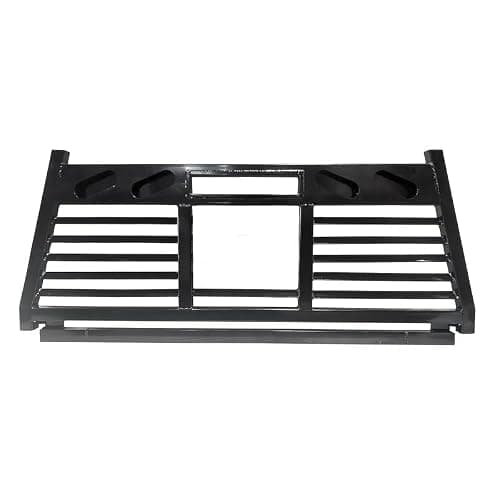
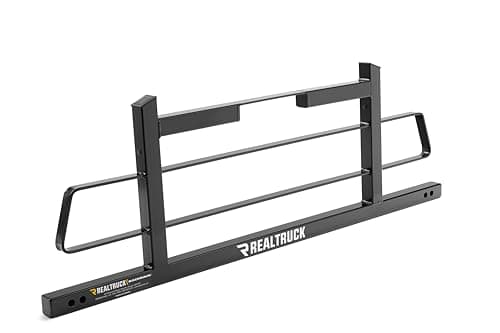
Our top pick: the Cattleman Cattleman HD FR302L Headache Rack — F-150 (2021-2026).
Heads up: we earn an Amazon commission when you buy through our links, at no extra cost to you. Prices are pulled live from Amazon and were last checked October 5, 2026; when we cannot verify a price we say so rather than print an old one. How this site is funded.
How we know:Spec-verifiedOwner-report-verifiedWhat these mean
Quick picks — Rack with a tool box
#
Product
Best for
Material
Price
1
Cattleman HD FR302L Headache Rack — F-150 (2021-2026)
Tap any row for the full write-up. Prices come straight from Amazon and are never typed in by hand.
This is one of the most searched questions in work-truck gear and it almost never gets a straight answer, because the honest answer is that nobody makes a good integrated rack-and-box product for a standard pickup. What exists is a set of combinations, and whether yours works comes down to two measurements.
So this page is not a roundup of all-in-one products. It is the combinations that clear each other, the parts that state compatibility explicitly, and the measurements to take before you buy either half.
The arrangement that works: a slimline or narrow crossover box, and a rack whose front legs land behind it. Measure the box height and the rack leg position before buying either.
Why they fight
Both a crossover tool box and a ladder rack want the same real estate: the bed rails immediately behind the cab. A standard crossover box is 14 inches or more tall and sits right where a rack's front legs and base plates go.
Leg position. A rack's front legs usually mount near the bulkhead. A box is also near the bulkhead.
Lid swing. Even if the legs clear the box's footprint, the lid has to open — and it opens upward into the space the rack's lower rail occupies.
Rail coverage. A box's clamp or bolt points can be exactly where the rack's base plate wants to sit.
Height. A tall box plus a rack base means the rack sits higher than intended, which is sometimes fine and sometimes puts the crossbars above your garage.
The three arrangements that work
Arrangement
How it works
Catch
Slim box forward, rack legs behind
A low or narrow box sits at the bulkhead; the rack's front legs land rearward of it
You lose some rack span, and the box must be genuinely slim
Headache rack stated as box-compatible
The rack is designed with clearance for a cross-bed box
Model-specific, and you still measure
Box on the rails, rack over the cab
An over-cab rack's front support is on the cab roof rather than the bed
Needs a cab-mounted system; not all trucks suit it
A fourth option that is not really an arrangement: skip the crossover box and use a side-mount box on one rail with the rack on the other. That genuinely works and it halves your rack's usable span, so it only suits short material.
The parts that make this work
No. 1CattlemanSpec-verified
Cattleman HD FR302L Headache Rack — F-150 (2021-2026)
Powder-coated steel for the 2021-2026 F-150, and the listing states it can be used with a cross-bed tool box. That compatibility is rare and it is the thing that usually forces people to choose between a rack and a box.
Who should skip it. 'Can be used with' still means you measure. A tall box and a low rack base will interfere regardless of what any listing says.
Build
8.2
Capacity
8.0
Install
8.4
Versatility
9.0
Value
8.6
What works
+Explicit tool-box compatibility in the listing
+Model-specific fit for the current F-150
+Powder-coated steel
What does not
−Still requires measuring against your specific box
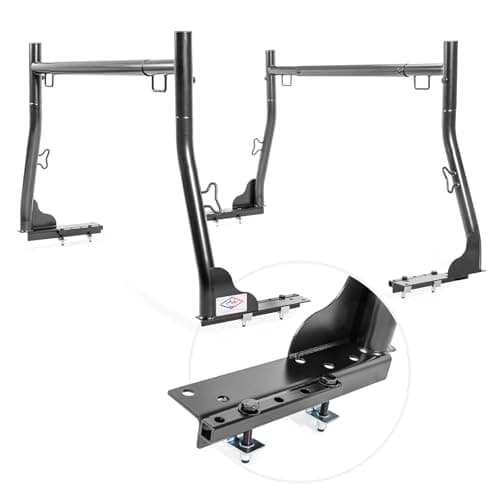
The same 800 lb X31 with eight Z-clamps instead of drilled mounts. The clamps are why you buy this version: no holes in the bed rail, nothing to seal, and the whole rack comes off in twenty minutes.
Who should skip it. Clamps need sound rails with accessible lips. Some newer trucks have bonded rail caps that leave nothing to clamp to.
Build
8.0
Capacity
8.4
Install
9.4
Versatility
8.6
Value
9.2
What works
+Zero holes in the truck
+Comes off completely for a clear bed
+Same 800 lb rating as the drilled version
What does not
−Clamps need accessible rail lips
−Clamped racks need re-torquing after the first loaded trips
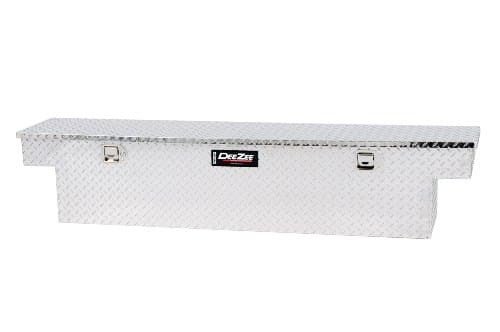
The narrow-body crossover. It eats noticeably less fore-aft bed length than a standard 19-20 in box, which is the whole point on a 5'5" or 5'7" bed where every inch in front of the wheel wells matters.
Who should skip it. If you carry long power tools in cases, the narrow body will fight you. A 19 in box swallows a circular saw case flat; this one does not.
Build
7.6
Weather seal
7.4
Security
7.2
Bed usability
9.2
Value
8.8
What works
+Gives back several inches of bed floor versus a standard-width box
+Light enough for a one-person install
+Cheapest route into a real aluminum crossover
What does not
−Narrow interior will not take large tool cases flat
−Thinner material than the heavy-wall boxes
−Published dimensions vary by listing — measure before you order
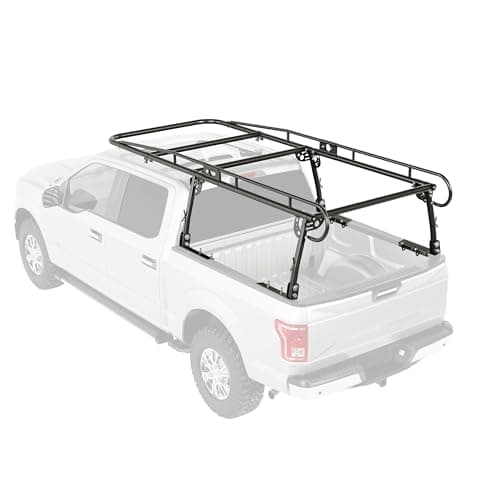
Adjustable 58-69 in, rated to 1000 lb, and tall enough to carry over the cab line. The height is what makes it usable for lumber as well as ladders — a low rack forces long material to sit on the tailgate.
Who should skip it. Height costs you in wind noise and in low clearances. If the truck lives in a parking garage, measure the entrance first.
A frame that mounts into the bed's stake pockets with no drilling and puts real steel between the cab glass and whatever is in the bed. If a ladder shifts, this is the difference between a scare and a windscreen through the cab.
Who should skip it. The frame is sold frame-only. Hardware kits, lights and the tool-box mounting kit are extra, and the total adds up fast.
Build
9.4
Capacity
8.6
Install
9.0
Versatility
9.2
Value
7.4
What works
+No drilling — stake pocket mount
+Genuine cab protection rather than a styling bar
+Huge accessory ecosystem including tool box mounting
+Covers an unusually wide model-year range
What does not
−Frame only — budget for the hardware kit
−Blocks part of the rear window
−Total cost once accessorized rivals a cheap tonneau
Before buying either half, with a tape measure and ten minutes:
Box height above the rail. With the box sitting on the rails, how far does its top stand above the rail line? This has to be less than the rack's lower rail clearance.
Lid swing arc. Open an imaginary lid. Where does the top edge end up? That arc has to be clear of the rack's front rail and legs.
Rack front leg position. Measure from the bulkhead to where the rack's front base plates sit. That distance has to exceed the box's depth.
Total height at the crossbars. Box plus rack base plus bar. Compare to your garage, your gate and your drive-through.
The headache rack route
A headache rack is often the better front support for a ladder rack than a bed-rail leg, for exactly this reason: it stands at the bulkhead in the vertical plane rather than occupying the rail horizontally, so a box can sit in front of it or behind it.
Some headache racks state tool-box compatibility explicitly in their listing. Those are the ones to shortlist. “Can be used with a cross-bed toolbox” is a meaningful claim and it is still your job to check it against the specific box you own. Headache racks, ranked.
What you give up either way
Be clear about this before you start. Running both means one of the following, and you should pick which:
Less rack span. Front legs further back means the crossbars are closer together, which is worse for long flexible material.
A slimmer box. A slimline box holds less and takes no cased power tools flat.
More height. Stacking a rack base above a box raises everything, and height has consequences at garages and gates.
A cover. A box plus a rack plus a tonneau cover on a standard pickup is, realistically, not a combination that works.
What we would actually buy
On an F-150 or similar where a box is already fitted: a headache rack that states cross-bed box compatibility, plus overhead bars mounted to it. Measure first.
On a truck being set up from nothing: a narrow crossover box at the bulkhead and a clamp-on two-bar rack with its front legs set behind it. That combination is cheap, reversible and it works on most full-size beds.
On a truck carrying long flexible material where bar span really matters: a side-mount box on one rail and accept the halved rack, or skip the box and use a chest on the floor instead — chest boxes use no rail at all.
Questions people actually ask
Can you have a ladder rack and a tool box on the same truck?
Yes, in specific combinations. The arrangement that usually works is a slim or narrow crossover box at the bulkhead with the rack's front legs landing behind it, or a headache rack that explicitly states cross-bed box compatibility. Measure the box height and the rack leg position before buying either half.
Is there a ladder rack with a built-in tool box?
Nothing good for a standard pickup. Integrated rack-and-box products exist for semi trucks and purpose-built service bodies. For a pickup you are assembling a combination, which is why the measurements matter more than the product choice.
What measurements do I need before buying both?
Four: the box's height above the rail line, the arc its lid swings through, the distance from the bulkhead to the rack's front base plates, and the total height at the crossbars once everything is stacked. Then dry-fit before you clamp or drill anything.
Is a headache rack a better front support than a bed-rail leg?
Often yes, because it stands in the vertical plane at the bulkhead rather than occupying the rail horizontally, which leaves room for a box. Several headache racks state cross-bed tool-box compatibility explicitly, and those are the ones to shortlist.
Can I run a rack, a box and a tonneau cover?
Realistically, no — not on a standard pickup. All three compete for the bed rails and the bulkhead area. Pick two. If a cover is essential, the combination that works is a cover plus a cover-compatible bed rack and a chest box on the floor.
Last reviewed October 5, 2026. Think a figure here is wrong? Tell us at contact@toolboxandtruck.com and we will check it, fix it and date the correction — see our editorial policy.