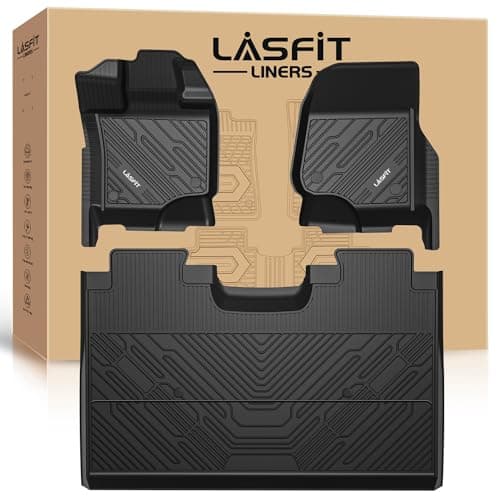
Work truck gear, ranked for the people who load it every morning.
Floor liners
The best all-weather truck floor liners
Five liners, and one specification that separates them in daily use: how high the wall stands at the door sill when there is meltwater in the footwell.
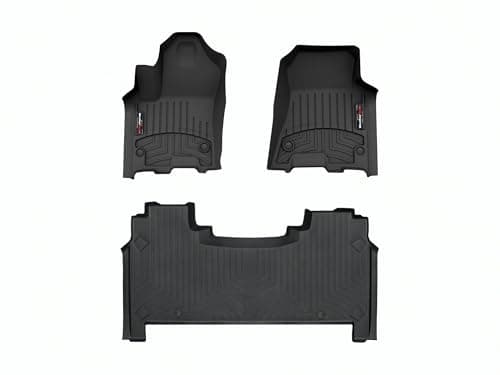
Our top pick: the WeatherTech WeatherTech FloorLiner — Ram 1500, 1st and 2nd Row.
Heads up: we earn an Amazon commission when you buy through our links, at no extra cost to you. Prices are pulled live from Amazon and were last checked October 5, 2026; when we cannot verify a price we say so rather than print an old one. How this site is funded.
How we know:Spec-verifiedOwner-report-verifiedWhat these mean
Quick picks — All-weather floor liners
#
Product
Best for
Material
Price
1
WeatherTech FloorLiner — Ram 1500, 1st and 2nd Row
Tap any row for the full write-up. Prices come straight from Amazon and are never typed in by hand.
Factory carpet in a truck that sees work boots has a lifespan measured in winters. Grit abrades it, water goes through it into the floor pan, and the floor pan is steel. A set of liners is the cheapest insurance in the cab and the one accessory a used-truck buyer visibly notices.
The marketing in this category is about laser measurement and material science. The thing that separates liners in actual daily use is simpler and almost never in the headline.
If you live where it snows, buy for sill wall height and pay the premium. If you do not, buy the mid-range liner and spend the difference somewhere it will show up.
The sill wall is the product
The end of a wet February day. There is a quarter inch of meltwater in the driver's footwell. If the liner's outboard wall stands proud of the door sill, that water stays in the tray and you tip it into a drain. If the wall is flush or low, it runs over the edge the first time you corner — onto the carpet under the sill plate, which is exactly the place you cannot reach to dry.
That is the practical difference between the premium liners and the mid-range ones. It shows up a handful of times each winter and, in a climate where it never snows, may genuinely never show up at all. Which is why the honest recommendation depends on where you live rather than on a ranking.
How we ranked these
Material. Compound, and specifically cold flexibility — a liner that goes board-stiff cracks at the heel pad.
Fit. Coverage of the footwell including the sides and the sill, and accuracy around brackets and retention posts.
Cleanability. Whether it hoses out and goes straight back, and how easily it comes out at all.
Comfort. Noise and hardness underfoot. The premium rigid liners are the worst here and the mid-range the best.
Value. Against the live Amazon price.
The picks, ranked
No. 1WeatherTechSpec-verified
WeatherTech FloorLiner — Ram 1500, 1st and 2nd Row
Laser-measured, high-wall liners for the Ram 1500 in a first and second row set. The reason WeatherTech still wins is the wall height at the door sill — that edge is what stops meltwater running onto the carpet instead of into the tray.
Who should skip it. They are the most expensive liners you can buy and the hard surface is noisier underfoot than a softer TPE mat.
Material
9.2
Fit
9.6
Cleanability
9.4
Comfort
7.4
Value
7.0
What works
+Highest sill walls in the category — water stays in the tray
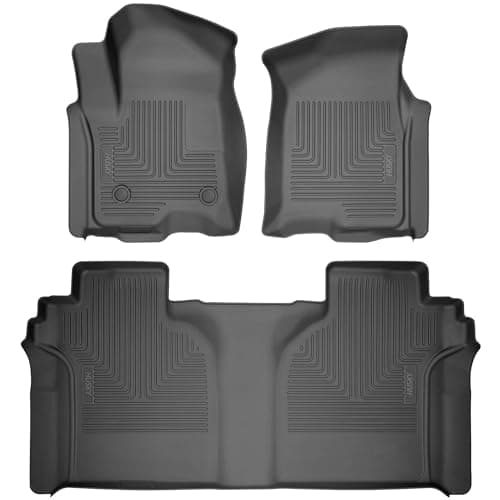
WeatherBeater is the liner most people should buy. It gives up a little wall height to WeatherTech and costs substantially less, and in daily use the difference shows up about twice a winter.
Who should skip it. If you track mud and meltwater in by the shovelful, the lower sill wall is a real limitation and WeatherTech earns its premium.
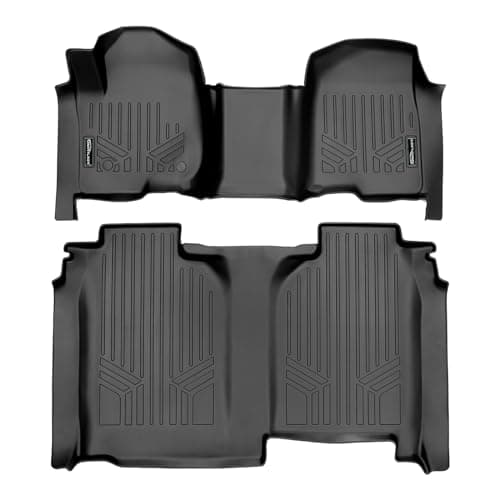
Two-row liners for the 2019-2026 Silverado 1500 at a price between the budget mats and the premium brands. The fit is close enough to the laser-measured liners that most owners cannot tell without the two side by side.
Who should skip it. The compound is harder than Husky's and the edges are less finished than WeatherTech's. It is a value play, not a quality play.
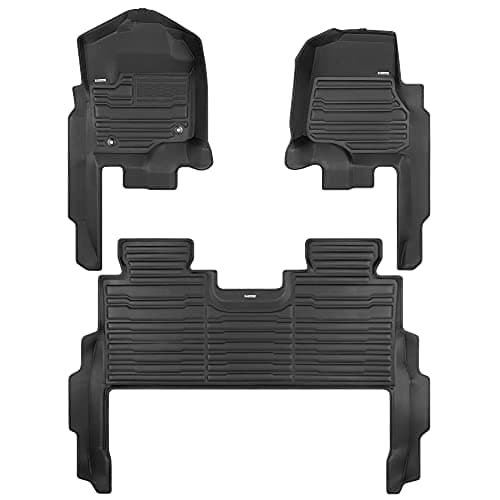
TuxMat's pitch is coverage: the mat climbs further up the footwell sides and the transmission tunnel than a conventional liner. On a truck where boots land everywhere except the middle of the mat, that is the difference that matters.
Who should skip it. Maximum coverage means a tighter install and a mat that is awkward to get out for cleaning. It is also premium money.
Material
8.8
Fit
9.4
Cleanability
8.0
Comfort
8.0
Value
7.2
What works
+Coverage extends up the footwell sides and tunnel
TPE rather than rubber or hard plastic, cut for the 2015-2026 F-150 SuperCrew without the fold-flat storage option. TPE stays flexible in cold, which is exactly when a stiff liner cracks at the heel pad.
Who should skip it. Excludes trucks with fold-flat rear storage. That is a common option, so check before you buy.
Material
8.2
Fit
8.6
Cleanability
8.8
Comfort
8.6
Value
9.2
What works
+TPE stays flexible in cold
+Noticeably cheaper than the premium brands
+Odor-free unlike cheap rubber
What does not
−Not for trucks with fold-flat rear storage
−Lower sill walls than WeatherTech
−Thickness not published
Published specifications
Fitment
Ford F-150 2015-2026 SuperCrew, without fold-flat storage
Ford F-150, 2015-2026, SuperCrew without fold-flat storage
✗ Does not fit
Trucks with the fold-flat rear storage option
SuperCab and Regular Cab
Material, and the one case where mid-range wins outright
Material
Wall height
Underfoot
Cold behavior
Rigid high-density compound
Highest
Hard and a bit noisy
Stiff; can crack if badly cold
Softer molded compound
Good
Quieter, warmer
Stays usable
TPE
Good
Soft, quiet, odor-free
Stays flexible well below freezing
Cheap rubber
Variable
Smells for weeks
Goes board-stiff, cracks
If your winters are genuinely cold, flexibility at low temperature matters more than wall height — because a cracked liner has no wall at all. That is the single case where a mid-priced TPE liner is the better buy than a premium rigid one, and it is a real case rather than a hedge.
Fitment: where the money gets wasted
Liners are sold by vehicle, cab configuration and sometimes by option code. Four variations catch people out, and all four are in the listing if you look:
Cab configuration. Crew, double, extended and regular cabs have different rear footwells and different parts.
Fold-flat rear floor storage. A common option that some liners explicitly exclude.
Factory retention posts. Trucks with floor hooks need liners with matching holes, or the liner slides — which is a pedal-area safety issue, not a cosmetic one.
Front and rear sold separately. Plenty of listings are first-row only. Check what is in the box before comparing prices.
Living with them
The whole value of a liner is that it comes out. A liner that never leaves the truck collects grit underneath and does to the carpet what you bought it to prevent.
Pull them out and hose them. Twice a winter at minimum. Five minutes each.
Dry the carpet underneath. If it is damp, you have found a leak path and the liner is doing its job but the water is getting around it.
Check the retention. Posts and hooks work loose. A liner that has stopped locking down is the one that will slide.
Trim only if the maker says to. A trimmed liner has a cut edge that will not seal and cannot be returned.
What we would actually buy
In the snow belt, on a truck you want to look clean at resale: the premium laser-measured liner, front and rear. The sill walls are what you are paying for and they are the thing that works.
Everywhere else: the mid-range molded liner. It gives up a little wall height, costs substantially less, and is quieter and warmer to stand on. That is the liner most people should buy.
Somewhere genuinely cold on a budget: a TPE liner, because flexibility below freezing matters more than the last half inch of wall.
Questions people actually ask
What is the most important feature of a floor liner?
The height of the outboard wall at the door sill. That is what keeps meltwater in the tray instead of letting it run onto the carpet under the sill plate, which is the place you cannot reach to dry. It is also the specification almost nobody puts in the headline.
Is WeatherTech worth the premium over Husky?
In the snow belt, yes — the higher sill walls and tighter fit show up a handful of times each winter. In a mild climate the difference may genuinely never show up, and Husky WeatherBeater is also quieter and warmer underfoot. Side by side.
Are TPE floor liners any good?
Yes, and in a genuinely cold climate they can be the better choice outright: TPE stays flexible well below freezing where a rigid compound goes stiff and can crack at the heel pad. A cracked liner has no wall at all, so flexibility beats the last half inch of wall height.
Will floor liners fit my cab configuration?
Only if you order for it. Crew, double, extended and regular cabs have different rear footwells and different part numbers, and some liners exclude trucks with fold-flat rear floor storage. Getting the cab wrong is the most common reason a set goes back.
Can I trim a floor liner to fit?
Only if the manufacturer says so. A trimmed liner has a cut edge that will not seal properly and cannot be returned. If a liner needs trimming to fit your truck, it is probably the wrong part.
How often should I take the liners out?
Twice a winter at minimum. A liner that never comes out collects grit underneath and abrades the carpet it was bought to protect — the same problem a drop-in bed liner has. It takes five minutes each.
Last reviewed October 5, 2026. Think a figure here is wrong? Tell us at contact@toolboxandtruck.com and we will check it, fix it and date the correction — see our editorial policy.