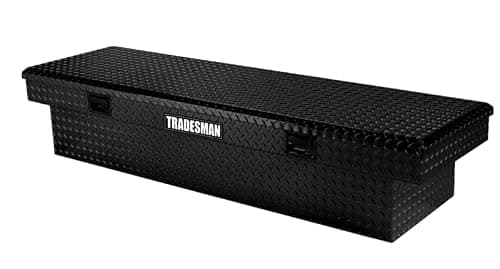
Featured here: the Tradesman Tradesman 7511101 70-inch Slimline Cross Bed Box.
Heads up: we earn an Amazon commission when you buy through our links, at no extra cost to you. Prices are pulled live from Amazon and were last checked October 5, 2026; when we cannot verify a price we say so rather than print an old one. How this site is funded.
How we know:Spec-verifiedOwner-report-verifiedWhat these mean
A standard 14-inch crossover tool box and an ordinary tonneau cover do not coexist. That is the default answer and it is why so many people end up buying one and then discovering the other has become awkward.
But there are three combinations that do work, and whether yours is one of them comes down to two measurements rather than to brand names.
Measure from your bed floor to the underside of the closed cover, and compare it to the box's total height. If the box is shorter, it fits. That is the whole test.
The three combinations that work
Combination
How
Catch
Slimline cross-bed box + tri-fold or roll-up cover
The box's low crown clears the closed cover
Shallow interior — no cased saws
Standard box + notched cover
The cover is cut around the box
Cover costs more; the box position is then fixed
Chest box on the floor + any cover
The box uses no rail and sits below the cover line
Takes a rectangle of floor
The third is the one almost nobody mentions and it is frequently the best answer. A chest box on the bed floor uses no rail space at all, which makes it compatible with any cover, any bed rack and any ladder rack. The only constraint is height.
The measurements to take
Bed floor to the underside of the closed cover. At the point where the box will sit, which for a cross-bed box is right at the bulkhead. This is the number that governs.
The box's total height. Including the lid and any hardware on top of it.
The lid's swing arc, if the box is under the cover. With the cover open, where does the box lid go? On a tri-fold, the folded stack is in that space.
Rail width, as always. Both the box and the cover clamp to the rails and they compete for the same lip.
Why a notched cover is a bigger commitment than it looks
A cover notched for a tool box is cut to accept a box of a specific size at a specific position. That is fine until you change the box, at which point the cover may not fit the new one.
It costs more than the equivalent un-notched cover.
It ties the two items together. Replacing either may mean replacing both.
It usually requires the box to be at the bulkhead, so you lose the flexibility of positioning it.
It is still a cover, not a lock. The box inside is where the security is.
A 70 in slimline cross-bed box with a low enough crown that a folding tonneau will usually close over it. If you want both a cover and a box and refuse to cut either, start here.
Who should skip it. Slim means slim. If a cover is not in the plan, you are paying for a constraint you do not have — buy a deeper box.
Build
7.8
Weather seal
7.6
Security
7.4
Bed usability
9.0
Value
8.4
What works
+Low crown clears most tri-fold and hard folding covers
+Full 70 in of box length across the rails
+Black finish matches factory bed rail caps
What does not
−Shallow interior — not for bulky cases
−Cover clearance still has to be verified against your specific cover
−The lid is unremarkable; it is a storage box, not a step
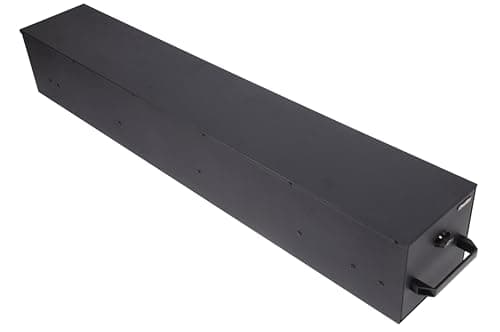
A low drawer unit designed to sit under a tonneau cover rather than fight it. If you have already committed to a cover and still want a drawer, this is the shape that works.
Who should skip it. Without a cover it is an exposed drawer in an open bed, which is the worst of both worlds. Buy a box instead.
Build
7.8
Capacity
7.0
Install
7.4
Day-to-day access
8.8
Value
7.8
What works
+Designed from the outset to clear a cover
+Drawer access beats reaching into a well under a half-open cover
+Dee Zee hardware is widely stocked
What does not
−Only makes sense with a cover already fitted
−Cover clearance must be checked against your specific cover model
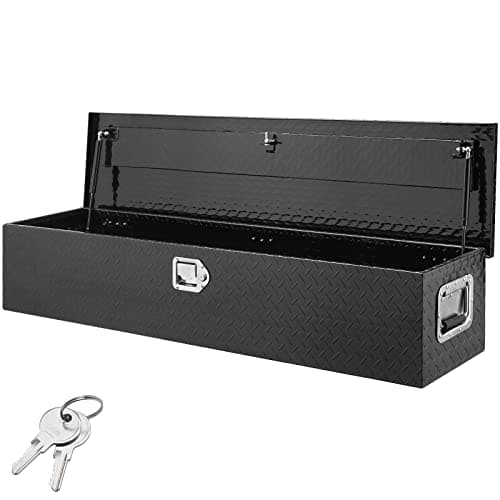
48 x 15 x 15 in of diamond-plate aluminum with side handles and a keyed latch. It is a box for straps, chains, salt and the things you do not want loose in the bed, and it costs a fraction of a branded chest.
Who should skip it. The latch is a budget latch. Do not treat this as secure storage, and do not expect it to stay dry in a sustained downpour.
Build
6.6
Weather seal
6.4
Security
5.8
Bed usability
8.0
Value
9.4
What works
+Very cheap for the volume
+Aluminum will not rust in the bed
+Side handles make it a two-man carry rather than a wrestle
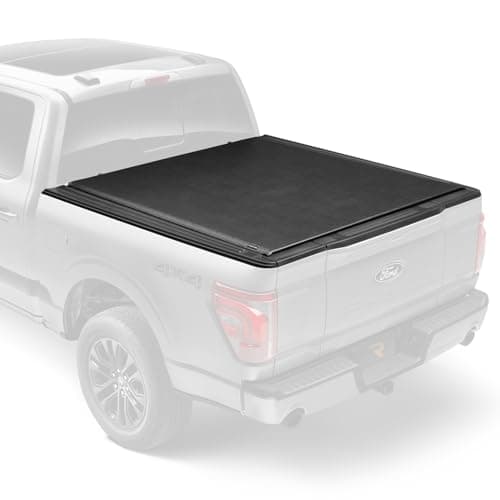
A low-profile soft roll-up that sits almost flush with the rails. Roll-ups beat folders on one axis that matters daily: you get the entire bed clear in about ten seconds without wrestling panels.
Who should skip it. Vinyl is vinyl. It will not take a snow load, it will not take weight, and in ten years it will look its age in a way an aluminum panel will not.
Protection
7.4
Weather seal
8.0
Install
9.4
Durability
7.8
Value
8.4
What works
+Whole bed clear in seconds — no panels to stow
+Low profile looks tidier than a folding cover
+Cheaper than any hard cover
+No drilling
What does not
−No snow or weight capacity
−Vinyl ages, especially in strong sun
−Rolled bundle sits at the bulkhead and reduces bed length when open
Other bed lengths and trucks — separate part numbers
Beds carrying a crossover tool box
The under-tonneau drawer: a format worth knowing about
A low drawer module designed from the outset to live under a closed cover. If the cover is already fitted and you want drawer access rather than lift-up-lid access, this is the shape that works.
It only makes sense with a cover — in an open bed it is an exposed drawer, which is the worst of both worlds. Boxes with drawers.
What about a tool box and a cover and a rack?
Realistically, no. All three compete for the bed rails and the bulkhead area. Pick two.
Cover plus box: slimline box or notched cover. Covered here.
Cover plus rack: a cover-compatible bed rail rack system. How.
Box plus rack: a slim box with the rack's legs behind it, or a headache rack stated as box-compatible. How.
All three: a chest box on the floor plus a cover plus a cover-compatible bed rack is the closest you will get, and the chest has to be short enough to clear the closed cover.
Order of purchase
Decide both before buying either. If you already own one, that constrains the other, and working out which constraint you are under before you spend is the whole lesson of this page.
A slimline or low-profile cross-bed box usually will under a tri-fold or roll-up cover; a standard 14 in crossover box needs a cover notched for a tool box. Measure from your bed floor to the underside of the closed cover and compare it to the box's total height — that is the whole test.
What is a notched tonneau cover?
A cover cut to accept a tool box of a specific size at a specific position. It costs more than the un-notched equivalent, ties the two items together so replacing either may mean replacing both, and usually fixes the box at the bulkhead.
Can I use a tool box with a retractable cover?
Usually not. A retractable cover's canister sits at the bulkhead, which is exactly where a cross-bed box wants to be. If you have one, a chest box further back in the bed is the realistic answer.
What is the best box format for a truck with a cover?
A chest box on the bed floor, which uses no rail space at all and is therefore compatible with any cover, bed rack or ladder rack. The only constraint is that it has to be short enough to clear the closed cover. Almost nobody suggests this.
Can I have a tool box, a cover and a ladder rack?
Realistically no — all three compete for the bed rails and the bulkhead. Pick two. The closest you will get to all three is a chest box on the floor, a cover, and a cover-compatible bed rail rack system.
Last reviewed October 5, 2026. Think a figure here is wrong? Tell us at contact@toolboxandtruck.com and we will check it, fix it and date the correction — see our editorial policy.