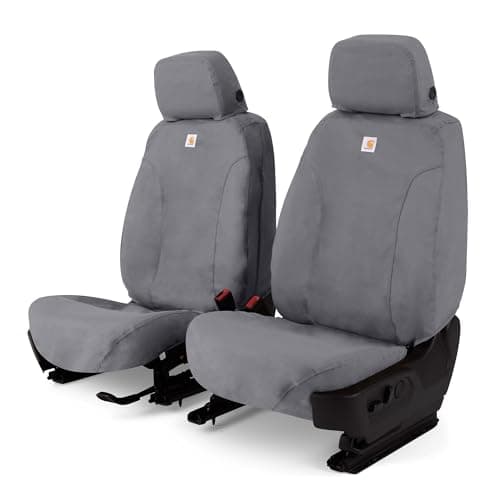
Featured here: the Covercraft Covercraft Carhartt SeatSaver Custom Seat Covers.
Heads up: we earn an Amazon commission when you buy through our links, at no extra cost to you. Prices are pulled live from Amazon and were last checked October 5, 2026; when we cannot verify a price we say so rather than print an old one. How this site is funded.
A seat cover that never comes off is not protecting the seat. It is trapping grit against it and grinding that grit in every time you get in. Removal is the whole mechanism, and washing is the part that happens once the cover is off.
Cold wash, air dry, twice a year, and hoover the seat underneath while the cover is off. The mistake that ruins a custom pattern is heat — a hot wash or a tumble dryer shrinks duck canvas and a shrunk pattern no longer fits.
The mistake that is not recoverable
Heat. Duck canvas shrinks, and a custom-pattern cover that has shrunk does not stretch back — it will not sit over the seat properly again and the release seam over a side airbag is no longer where the manufacturer put it.
Cold water only. Not warm.
Air dry only. No tumble dryer, on any setting, ever.
No high-heat pressing. If it needs flattening, do it damp and cool.
By fabric
Duck canvas
Shake it out and brush off loose dirt. Dried mud comes off dry far more easily than wet.
Cold machine wash, mild detergent, no bleach, no fabric softener. Softener coats the fibers and reduces water resistance.
Air dry, out of direct strong sun. Sun fades duck canvas, which is not a disaster and is avoidable.
Refit slightly damp. It settles onto the seat shape better than bone dry.
Expect it to fade a little over years. Most people think it looks better for it.
Cordura
Same routine as duck canvas. Cordura is water resistant, so it needs less washing and more rinsing — dirt tends to sit on the surface rather than work in. Do not use solvents; they can affect the coating.
Neoprene
Do not machine wash unless the manufacturer explicitly says to. Neoprene can delaminate.
Wipe down with mild soap and water, then rinse the soap off — residue attracts dirt.
Dry completely before refitting. Neoprene trapped damp is how the smell starts, and once it starts it does not fully leave.
Air it out regularly with the cover off the seat.
Mesh and polyester
The easiest of all. Cold machine wash, air dry, and they dry fast. The trade is that they protect against dirt rather than abrasion.
Carhartt's duck canvas on Covercraft's custom patterns. The custom fit is the entire argument: a universal cover bunches at the bolsters within a month, and a bunched cover is how a seat gets worn under the cover you bought to protect it.
Who should skip it. Duck canvas is stiff and it is hot in summer until it breaks in. If the truck is mostly a commuter, a mesh cover is more comfortable for less money.
Material
9.2
Fit
9.4
Cleanability
8.8
Comfort
7.2
Value
7.6
What works
+Custom pattern stays put instead of bunching
+Duck canvas shrugs off tool abrasion and dog claws
+Comes off and washes rather than needing valeting
+Covercraft publishes airbag compatibility per pattern
What does not
−Expensive for a seat cover
−Stiff and hot until broken in
−Pattern must match your exact seat configuration — a bench and buckets are different parts
Published specifications
Material
Carhartt duck canvas
Fit
Custom, vehicle-specific pattern
Airbag
Side-airbag compatible patterns available — verify your part number
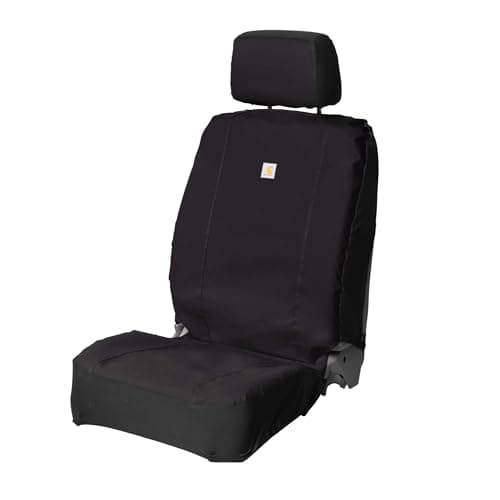
700 denier nylon duck in a universal front cover. The denier number is the specification that matters and 700 is a genuinely heavy fabric — higher than most work covers in this price bracket.
Who should skip it. It is universal fit. On a contoured truck seat it will never sit as cleanly as a custom pattern, and on a seat with side airbags you must verify compatibility.
Material
9.0
Fit
7.0
Cleanability
8.6
Comfort
7.0
Value
9.0
What works
+700 denier is a heavy, published figure
+Carhartt fabric with the brand's wear record
+Far cheaper than a custom set
What does not
−Universal fit will not sit flat on contoured seats
−Airbag compatibility not stated — verify before fitting over a side-airbag seat
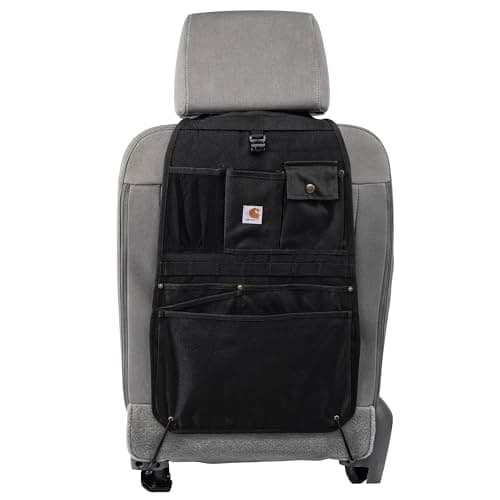
Duck canvas organizer that hangs off a seat back. Simple, and it solves the specific problem of a passenger seat buried in paperwork, tape measures and a hard hat.
Who should skip it. Hanging weight on a seat back means the whole thing swings on a corner. Load it with paper, not with sockets.
This is the part that actually protects the seat and the part everyone skips.
Hoover the seat thoroughly, including into the seams and the gap at the base of the back rest. This is where the grit lives.
Look at the seat fabric. If it is wearing in a line, the cover has been moving and you have a fit problem.
Check the cover's release seam if your seats have side airbags. It should be intact and unmodified. Why that matters.
Check the straps and hooks. They are what keeps the cover from migrating.
Clean the seat rails and the floor underneath. Since you are there.
Dealing with specific messes
Problem
What to do
What not to do
Dried mud
Let it dry fully, brush off, then wash
Scrub it wet — it drives it into the weave
Oil or grease
Blot, then a dedicated degreaser spot-treatment, then wash
Hot water, which sets it
Smell in neoprene
Remove, air for days, mild soap wipe, dry fully
Perfumed sprays — they mask and add
Paint or adhesive
Deal with it before it cures
Solvents on Cordura or neoprene
Dog hair
Rubber brush or a lint roller before washing
Washing it in — the machine will not get it out
How often
Twice a year minimum, and after anything specific — a wet dog, a spilled drink, a particularly filthy week. The twice-a-year baseline is not about how the cover looks; it is about the grit underneath it.
The same logic applies to floor liners, which also trap grit when they never come out, and to a drop-in bed liner. Anything that sits on a surface to protect it has to come off periodically to actually do so.
Questions people actually ask
Can you machine wash truck seat covers?
Duck canvas, Cordura and mesh covers generally machine wash cold and air dry. Neoprene usually should not be machine washed because it can delaminate — wipe it down instead. Follow the manufacturer's label over any general advice.
Will washing shrink my seat covers?
Heat will. Cold water and air drying are safe; a hot wash or a tumble dryer shrinks duck canvas, and a shrunk custom pattern does not stretch back — it will not fit the seat properly again and any airbag release seam is no longer where it was designed to be.
How often should I clean seat covers?
Twice a year minimum, and after anything specific. The reason is not appearance — it is the grit that accumulates underneath a cover and gets ground against the seat every time you get in. The removal matters more than the washing.
How do I get the smell out of neoprene seat covers?
Take them off, air them for several days, wipe with mild soap, rinse the residue off and dry completely before refitting. Neoprene trapped damp is how it starts and once it starts it does not fully leave — which is the main argument against neoprene in a work truck.
Should I use fabric softener on duck canvas covers?
No. Softener coats the fibers and reduces whatever water resistance the fabric had. Mild detergent, cold water, no bleach and no softener.
Last reviewed October 5, 2026. Think a figure here is wrong? Tell us at contact@toolboxandtruck.com and we will check it, fix it and date the correction — see our editorial policy.