Work truck gear, ranked for the people who load it every morning.
Guides
Headache rack vs ladder rack
Two products, one word, and the most expensive mix-up in this category. One protects the back of the cab. The other carries things over the bed. Only one of them is what you searched for.
Featured here: the BACKRACK Original Frame — F-150 (2004-2025), No Drill.
Heads up: we earn an Amazon commission when you buy through our links, at no extra cost to you. Prices are pulled live from Amazon and were last checked November 12, 2026; when we cannot verify a price we say so rather than print an old one. How this site is funded.
How we know:Spec-verifiedOwner-report-verifiedWhat these mean
Top pick9.6/10★★★★★
BACKRACK
BACKRACK Original Frame — F-150 (2004-2025), No Drill
A frame that mounts into the bed's stake pockets with no drilling and puts real steel between the cab glass and whatever is in the bed.
Tap any row for the full write-up. Prices come straight from Amazon and are never typed in by hand.
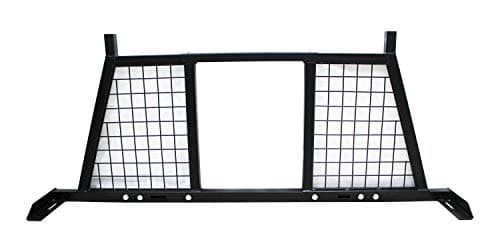
A headache rack is a vertical frame at the front of the bed that protects the back of the cab from the load. A ladder rack is a horizontal structure above the bed that carries a load of its own. If your problem is a ladder sliding forward into the rear glass, you want a headache rack; if your problem is that the ladder does not fit in the bed at all, you want a ladder rack. They are not alternatives, and buying one when you needed the other is the commonest outcome of searching “truck rack”.
The confusion is the industry's fault. Both are sold as “racks”, both are steel tube structures that bolt into the same stake pockets, and plenty of listings use both words in one title. Some products genuinely combine the two. But the question each one answers is different, and the money follows the answer.
Carrying long material that overhangs the cab, or loading more than fits between the rails: ladder rack. Carrying anything heavy that could shift forward — bundles, drums, machinery, a slide-in box: headache rack. On a truck that hauls lumber every day the honest answer is both, and the order is headache rack first because it is the one protecting glass and heads.
What each one is actually for
The headache rack
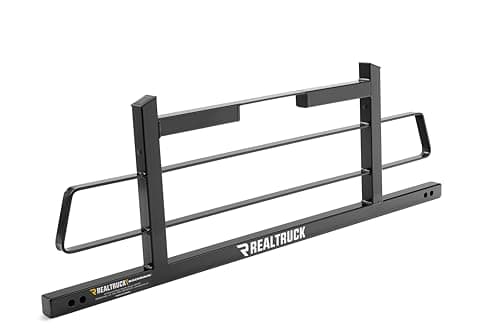
It exists for one scenario: a load that stops more slowly than the truck does. In a hard stop, anything in the bed that is not tied down travels forward, and the back of a cab is sheet metal and glass. A headache rack puts a steel frame in the way. The secondary benefits are real but secondary — it shades the rear glass, it gives you a place to hang a light bar, and on a work truck it looks like the truck means it.
The commonest version is a frame-only product like the BACKRACK Original, which fits into the stake pockets without drilling. Note the words frame only: on several brands the hardware kit that attaches the frame to the truck is a separate purchase, which is the single most common surprise in this category. The BACKRACK review covers that in detail.
The ladder rack
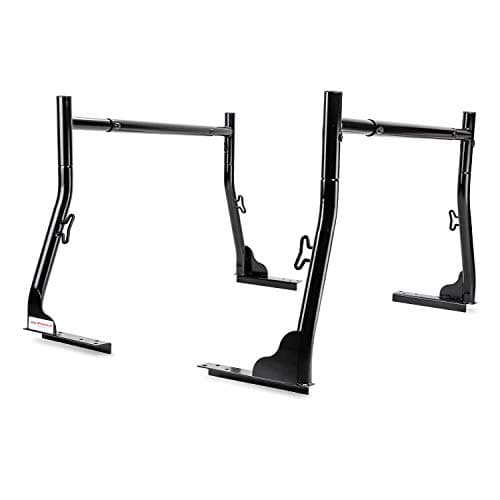
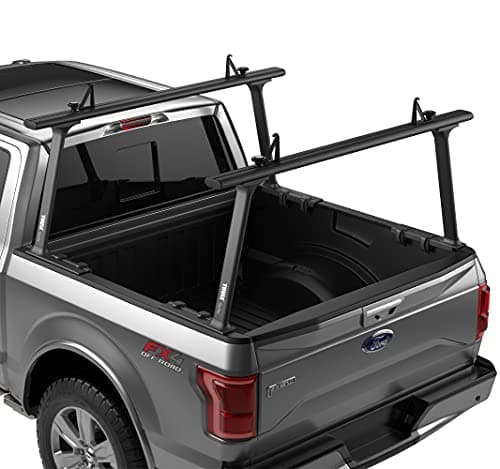
It exists to carry things the bed cannot. Ladders, conduit, pipe, lengths of timber, strut — anything long enough that putting it in the bed means half of it hangs out the back. A rack lifts the load above the bed, which also means the bed underneath stays available for everything else. That second effect is the one owners mention most after a month.
Ladder racks come as two-bar over-bed frames, full contractor racks with side rails, and model-specific systems. Capacity ratings run from a few hundred pounds to four figures, and the honest note is that your truck's payload will run out before a good rack's rating does. Ladder rack weight limits sets out how the two limits interact.
Side by side
Mounting styles and fitment are the makers' published figures; the use-case rows are our assessment.
Headache rack
Ladder rack
What it does
Stops the load reaching the cab
Carries a load above the bed
Where it sits
Vertical, at the front of the bed
Horizontal, over the bed
Typical mounting
Stake pockets, often no-drill
Bed rails or stake pockets, bolt-on or clamp
Does it carry cargo?
Not usually — some take a light bar or a rail
That is its only job
Does it protect the cab?
Yes, that is its only job
Partly, if it has a front bulkhead section
Bed space used
A few inches at the bulkhead
None at floor level
Effect on a tonneau cover
Usually compatible — it sits ahead of the cover
Often a conflict; depends on the cover
Typical cost
Lower, but check whether hardware is included
Higher, and clamp kits are often extra
Both kinds, ranked
BACKRACKSpec-verified
BACKRACK Original Frame — F-150 (2004-2025), No Drill
Best for: The headache rack that is actually a headache rack
$299.9920% off · Price as of November 12, 2026. #ad
A frame that mounts into the bed's stake pockets with no drilling and puts real steel between the cab glass and whatever is in the bed. If a ladder shifts, this is the difference between a scare and a windscreen through the cab.
Build
9.7
Capacity
9.4
Install
9.5
Versatility
9.6
Value
9.0
Why we picked it
+No drilling — stake pocket mount
+Genuine cab protection rather than a styling bar
+Huge accessory ecosystem including tool box mounting
+Covers an unusually wide model-year range
Good to know. The frame is sold frame-only. Hardware kits, lights and the tool-box mounting kit are extra, and the total adds up fast.
Adjustable 62 to 76.5 in, bolt-on stake pocket mount, no drilling, and it costs less than a set of straps. It is the entry point to cab protection and it is a better buy than nothing by a long way.
Build
8.9
Capacity
8.8
Install
9.7
Versatility
9.3
Value
9.7
Why we picked it
+Very cheap
+No drilling
+Wide adjustment range covers most full-size beds
Good to know. It is a light steel screen, not a BACKRACK. It will stop a loose ladder from reaching the glass; do not expect it to survive a shifted pallet.
800 lb published capacity, extendable width, two bars, and it costs less than a decent tonneau cover. For a trade truck that carries ladders and conduit, this is the honest value pick in the category.
Build
9.2
Capacity
9.4
Install
9.4
Versatility
9.4
Value
9.7
Why we picked it
+800 lb published, not implied
+Extendable width fits a range of beds
+Cheap enough to buy and still afford the straps
Good to know. Steel means rust at every scratch, and extendable joints mean more fasteners to check. If the rack never comes off, a welded rack would be stiffer.
TracRac's entry rack, built on the clamp system the trade standardized on. The reason to pay for it is that the crossbars stay square to each other after a year of loading — budget racks walk out of alignment and then you are fighting the straps.
Build
9.6
Capacity
9.4
Install
9.5
Versatility
9.4
Value
8.9
Why we picked it
+Crossbars stay square under repeated loading
+No-drill clamp system comes off cleanly when the truck is sold
+Thule accessory ecosystem fits it
Good to know. It is a lot of money for a two-bar rack. If the rack carries a ladder twice a month, a clamp-on steel rack does the job for a quarter of the price.
A truck that carries ladders daily wants both, and the two coexist easily because they occupy different space: the headache rack is vertical at the bulkhead, the ladder rack spans above. Many ladder racks include a front section that does part of the headache rack's job, which is where buyers decide they only need one.
That decision is usually wrong in one direction. A ladder rack's front bulkhead is open tube, designed to stop long material sliding forward along the rack — not to stop a loose drum of cable hitting the rear window at bed-floor height. If the cargo in the bed is heavy and irregular, the vertical frame is doing a job the rack cannot.
The order to buy in
Headache rack first if anything heavy rides loose in the bed, or if you are already running a slide-in box that could move. It is the cheaper product and it is the one protecting people.
Ladder rack first if the problem is that material does not fit. Nothing a headache rack does helps with a 16 ft length of conduit.
Straps either way, immediately. Neither rack secures a load. Rated straps and anchor points do, and that is the cheapest part of this whole build. Tie-downs and anchor points ranks them.
What about a cover?
A headache rack usually coexists with a tonneau cover, because it sits ahead of where the cover's front edge seals. A ladder rack and a cover are a genuine compatibility question that depends on the cover's format and the rack's feet. The combinations that work are set out in running a ladder rack with a tonneau cover — read it before buying either part.
The one-sentence answer
If the load could hit your cab, buy a headache rack. If the load will not fit in your bed, buy a ladder rack. If both are true, buy the headache rack this month and the ladder rack next, and buy rated straps today.
Questions people actually ask
What is the difference between a headache rack and a ladder rack?
A headache rack is a vertical frame at the front of the bed that protects the cab from the load. A ladder rack is a horizontal structure above the bed that carries a load of its own. One is protection, the other is capacity, and they are not substitutes.
Do I need a headache rack if I have a ladder rack?
Often yes. A ladder rack's front section is open tube designed to stop long material sliding along the rack, not to stop a loose heavy object at bed-floor height reaching the rear window. If the bed carries heavy irregular cargo, the vertical frame is doing a job the rack does not.
Can you fit a headache rack and a ladder rack together?
Yes, and on a truck carrying ladders daily that is the normal setup. They occupy different space — one vertical at the bulkhead, one spanning above the bed. Check the stake pocket positions each one needs, because they sometimes want the same pocket.
Does a headache rack require drilling?
Many do not — stake-pocket mounting is the common no-drill method, and several brands advertise it. Read the listing for whether the mounting hardware is included, because frame-only products are normal in this category and the hardware kit is a separate line item. The BACKRACK review explains that.
Which is cheaper, a headache rack or a ladder rack?
A headache rack is usually the cheaper product, and the cheapest no-drill models cost a fraction of a full contractor ladder rack. Compare all-in prices including mounting hardware and clamp kits, because both categories sell those separately. What a rack costs.
Last reviewed October 11, 2026. Think a figure here is wrong? Tell us at contact@toolboxandtruck.com and we will check it, fix it and date the correction — see our editorial policy.