Work truck gear, ranked for the people who load it every morning.
Reviews
BACKRACK Original review
The headache rack that is actually a headache rack rather than a styling bar — sold in a way that catches a lot of buyers out, because the frame is only part of what you need to order.
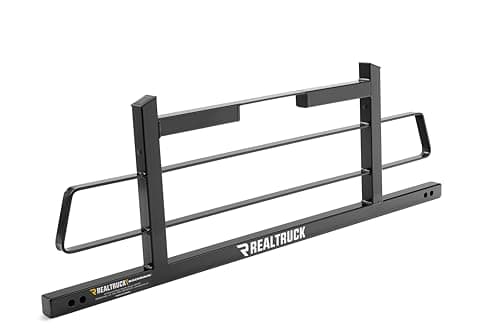
Featured here: the BACKRACK Original Frame — F-150 (2004-2025), No Drill.
Heads up: we earn an Amazon commission when you buy through our links, at no extra cost to you. Prices are pulled live from Amazon and were last checked November 13, 2026; when we cannot verify a price we say so rather than print an old one. How this site is funded.
$299.9920% off · Price as of November 13, 2026. #ad
A headache rack has one job: stop whatever is in the bed arriving in the cab. Most of the bars sold under that name are styling parts with a light bracket, and on a truck that carries pipe, conduit or a ladder that distinction is the whole product. The BACKRACK Original is the frame that does the job, and it is the one most work trucks end up wearing.
It is also sold in a way that trips people up, and that is the single most useful thing to know before you order one. What arrives is a frame. The hardware that attaches it to your specific truck is a separate part number, and so is everything else — lights, the tool box mounting kit, the drill-free stake pocket hardware for some applications.
The right buy if the bed carries anything that can slide forward and you want cab protection you can rely on rather than a bar that looks like it. Budget for the frame plus the hardware kit as one purchase, and if the cargo is pipe or conduit, look hard at the Safety Rack instead.
What it actually is
A welded steel frame that mounts into the bed's stake pockets at the bulkhead and stands up behind the cab, with an open center section. Two things about that description matter more than any specification:
Stake pocket mount, no drilling. The truck stays unmodified, the frame comes off cleanly, and it carries resale value of its own. For a leased truck or one you intend to sell, that is not a minor feature.
Frame only. The mounting hardware kit is a separate item chosen for your truck, and that is a deliberate design: one frame covers a very wide span of model years because the truck-specific part is the hardware. It is also why the price you first see is not the price you pay.
The fitment range on the F-150 frame we link runs across two decades of trucks, and the Chevrolet and GMC application is listed separately. That breadth is the practical argument for the system: change trucks and you may only need new hardware rather than a new rack.
What it does that a styling bar does not
Picture the event this product exists for. A ladder or a bundle of pipe is in the bed, loose or lightly strapped, and you stop hard. The load does not stay where you put it — it travels forward and it arrives at the bulkhead with the momentum of whatever it weighs times whatever you were doing.
A frame across the glass takes that and the cab stays intact. This is the entire value proposition and it either exists or it does not.
A tube bar with a mesh insert is designed for the same impression and not for the same load. Some are genuinely strong; many are bolt-on trim.
Nothing at all is the configuration most half-ton work trucks leave the lot in, and it is why rear glass is one of the more common insurance claims on a working pickup.
The honest caveat: a rack is not a substitute for securing the load. Rated straps and mid-bed anchor points stop the movement; the rack is what catches the failure of everything else. Both belong on a working truck and the straps are a fraction of the price. Tie-downs and anchor points.
The two frames, and which is which
BACKRACKSpec-verified
BACKRACK Original Frame — F-150 (2004-2025), No Drill
Best for: The headache rack that is actually a headache rack
$299.9920% off · Price as of November 13, 2026. #ad
A frame that mounts into the bed's stake pockets with no drilling and puts real steel between the cab glass and whatever is in the bed. If a ladder shifts, this is the difference between a scare and a windscreen through the cab.
Build
9.7
Capacity
9.4
Install
9.5
Versatility
9.6
Value
9.0
Why we picked it
+No drilling — stake pocket mount
+Genuine cab protection rather than a styling bar
+Huge accessory ecosystem including tool box mounting
+Covers an unusually wide model-year range
Good to know. The frame is sold frame-only. Hardware kits, lights and the tool-box mounting kit are extra, and the total adds up fast.
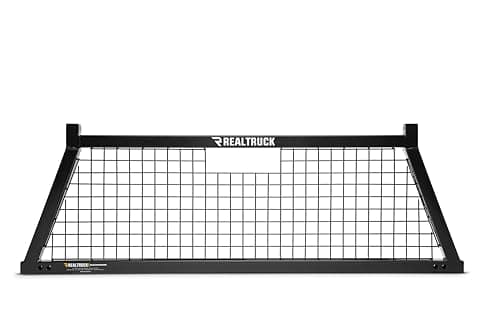
The Safety Rack covers more of the rear window than the Original. If the bed carries pipe, conduit or anything that can slide forward, the extra coverage is the entire reason to spend the difference.
Build
9.7
Capacity
9.5
Install
9.5
Versatility
9.4
Value
9.0
Why we picked it
+More glass coverage than the Original
+Same no-drill stake pocket mount
+Same accessory ecosystem
Good to know. It blocks more of your rear view. On a truck used for tight reversing without a camera, that is a real cost.
Published specifications
Fitment
Ford F-150 2004-2025; Chevy / GMC 2008-2019, 2020-2025
Chevrolet / GMC 2008-2025 per the listed applications
✗ Does not fit
Trucks relying on direct rear vision for reversing
Trucks without stake pockets
The cost nobody budgets for
This is the part of the review that will save you a phone call. A complete BACKRACK installation is a stack of separately ordered parts:
A BACKRACK install is a parts list, not a single item. The first two lines are mandatory.
Part
What it is
Optional?
Frame
The rack itself — Original or Safety Rack
No
Hardware kit
The truck-specific mounting components
No — the frame will not mount without it
Tonneau cover hardware
Spacer hardware so a cover and the rack coexist
Only if you run a cover
Tool box mounting kit
Moves the rack behind a crossover box
Only if you run a box
Light brackets
Mounts for work lights on the frame
Yes
Louvered or mesh insert
Fills the open center for more coverage
Yes
Add the frame and the hardware kit together and the total lands in the same bracket as a mid-range tonneau cover. That is the number to compare against, not the frame price on its own — and it is why the Value score on the cards above is the lowest of the five criteria while everything else scores high.
Original or Safety Rack?
The two frames mount identically and cost differently. The difference is how much of the rear window is covered.
The Original leaves a larger open center. More rear visibility, and enough structure to catch a shifting load.
The Safety Rack covers more of the glass. If the bed carries pipe, conduit, rebar or anything long enough and thin enough to come through an opening, that extra coverage is the entire reason to spend the difference.
The trade is real and it goes both ways: the Safety Rack costs you more of the rear view, which on a truck reversed into tight spaces without a camera is a genuine daily cost rather than a theoretical one. Choose on cargo shape, not on price.
Who should buy one
Anyone carrying long material. Pipe, conduit, lumber, ladders. The thing this prevents is the thing you carry.
Trucks that will also wear a ladder rack. The frame is the mounting point for a full rack later, which makes it the first part of a system rather than a one-off purchase. Ladder racks.
Trucks running a crossover box. With the tool box mounting kit the rack sits behind the box rather than fighting it. Rack and box combinations.
Leased or short-hold trucks. No drilling, clean removal and real resale value on the used market.
Who should not
Anyone buying for looks. It is expensive once accessorized and there are cheaper bars that achieve the aesthetic.
Trucks reversed into tight spots all day without a camera. Any frame costs rear visibility and this one is not the worst offender, but it is not free either.
Beds that only ever carry bulk. Gravel, bags and bins do not slide into the cab, and the money is better spent on a liner or a cover. What we would buy first.
Trucks without usable stake pockets. The mount needs them. Check before ordering.
Fitment and install
Two things to verify, in this order. First, that your truck is on the application list for the frame — the F-150 and the Chevrolet or GMC applications are separate listings with different year ranges, and a frame bought for the wrong one is a freight charge away from being a lesson. Second, that you have ordered the matching hardware kit, because the frame alone cannot be mounted.
The install itself is straightforward: hardware into the stake pockets, frame into the hardware, torque it down. It is a one-person job with hand tools and an hour. Where it gets more involved is when a cover or a tool box is already in the bed, which is the case for the extra hardware and the reason to decide the whole bed layout before ordering any of it. Ladder racks with a tonneau cover sets out those interactions, and if the cover itself is still undecided, BAKFlip MX4 vs TruXedo Lo Pro is that decision in one page.
The alternatives worth considering
If the BACKRACK total is more than you want to spend, two directions are honest rather than disappointing: an adjustable universal headache rack costs a fraction and mounts no-drill, at the cost of a less exact fit and a bolted rather than welded structure; or a full-height steel rack from one of the fleet brands gives you more coverage for similar money with a less flexible accessory ecosystem. The whole category is ranked on the headache racks page, and what a rack can and cannot carry is in ladder rack weight limits.
Questions people actually ask
Is the BACKRACK Original worth it?
If the bed carries anything that can slide forward, yes — it is cab protection you can rely on rather than a bar that resembles it, and it mounts with no drilling so the truck stays unmodified. If the bed only ever carries bulk material, the money does more for you elsewhere.
Does the BACKRACK Original come with mounting hardware?
No. The frame is supplied frame-only and the truck-specific hardware kit is a separate part number. That is how one frame covers two decades of model years, and it is also the single most common surprise for first-time buyers — budget for both as one purchase.
Does a BACKRACK require drilling?
No. It mounts into the bed's stake pockets, which means the truck stays unmodified, the frame comes off cleanly and it holds resale value of its own. Trucks without usable stake pockets are the exception and should be checked before ordering.
BACKRACK Original or Safety Rack?
Decide on cargo shape. The Safety Rack covers more of the rear glass, which is the right answer if the bed carries pipe, conduit or rebar. The Original leaves more rear visibility, which matters on a truck reversed into tight spaces without a camera.
Can you fit a BACKRACK with a tonneau cover?
Yes, with the cover-specific hardware — the rack needs spacing so the cover can still operate. Decide the full bed layout before ordering any of it, because the cover, the rack and a crossover box all compete for the same space behind the cab. The interactions in full.
How much weight can a BACKRACK carry?
We do not publish a figure, because BACKRACK does not publish one in a form we are willing to quote as a capacity. Treat the frame as cab protection and a mounting platform rather than a load-bearing rack, and if you intend to carry material overhead read ladder rack weight limits first.
Last reviewed October 8, 2026. Think a figure here is wrong? Tell us at contact@toolboxandtruck.com and we will check it, fix it and date the correction — see our editorial policy.