Featured here: the MaxxHaul 70229 Bed Extender, 350 lb.
Heads up: we earn an Amazon commission when you buy through our links, at no extra cost to you. Prices are pulled live from Amazon and were last checked November 13, 2026; when we cannot verify a price we say so rather than print an old one. How this site is funded.
How we know:Spec-verifiedOwner-report-verifiedWhat these mean
Top pick8.9/10★★★★★
MaxxHaul
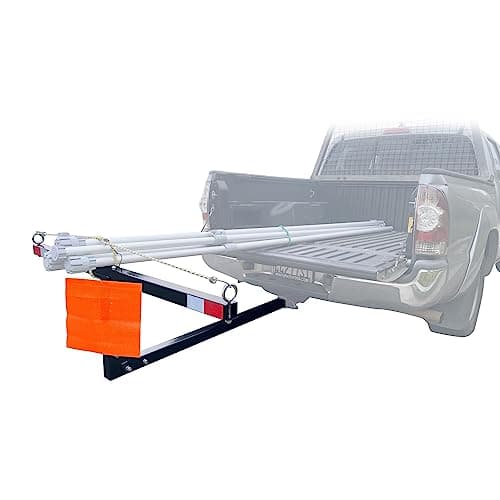
MaxxHaul 70229 Bed Extender, 350 lb
Same idea as the 70231 with a published 350 lb capacity.
Worth it on any short bed that occasionally carries long material — an extender costs a small fraction of what a rack costs and it turns a 5'7" bed into something that will take eight-foot stock with the tailgate down. Not worth it if what you actually need is to carry long material regularly, every week, at speed: that is a ladder rack's job, and an extender is a compromise on load height and securement that a rack does not ask you to make.
The confusion worth clearing up first is that “bed extender” names two different products. A hitch-mount extender is a frame that plugs into your receiver and holds the load off the back of the truck. A tailgate extender is a cage or panel that sits in the bed and extends the usable floor onto the lowered tailgate. They solve the same problem from opposite ends and they are not interchangeable.
Buy a hitch-mount extender if your long loads are occasional and heavy — lumber runs, pipe, a kayak. Buy a tailgate-mount extender if your problem is that cargo rolls out of a short bed with the tailgate down. If you carry long material every day, skip both and buy a rack.
The two types, side by side
Mounting and rating rows are the makers' published figures; the use-case rows are our assessment.
Hitch-mount extender
Tailgate extender
Where it mounts
The receiver hitch
In the bed, on the tailgate
What it does
Supports the load behind the truck
Extends the bed floor onto the open tailgate
Published ratings here
350 lb and 1000 lb on the picks below
Usually not published
Blocks the hitch?
Yes — you cannot tow with it fitted
No
Lives on the truck?
Removed between uses
Can stay in the bed
Tailgate
Must be down
Must be down
Best for
Lumber, pipe, kayaks, occasional long loads
Stopping cargo rolling out of a short bed
Read the ratings row carefully. Two of the picks below publish a load rating and two do not, and a published figure is worth real credit in a category where most listings skip it. A rating is also not permission: the receiver's own tongue weight rating and your truck's payload are both limits that sit underneath the extender's number, and the lowest limit always wins.
What an extender genuinely does well
Occasional eight-foot stock on a short bed. The single best case. A sheet of plywood or a bundle of 2x4 rides on the extender with the tailgate down for a fraction of a rack's cost.
Kayaks, canoes and ladders on a weekend truck. Several extenders are published as dual-purpose for exactly this, and a kayak's weight is well inside any rating here.
Keeping a load off the tailgate itself. A tailgate is not a cargo deck, and a loaded tailgate hinge is a repair bill. An extender spreads the load onto a frame instead.
A truck that cannot have a rack. Low garage, a cover you are keeping, or a lease that will not tolerate drilled bed rails.
What it cannot do
Carry a load with the tailgate up. Both types need the tailgate down, which means the bed is open to weather and anything loose can leave.
Tow at the same time. A hitch-mount extender occupies the receiver. If you tow and haul long material on the same day, that is a rack decision.
Make the load legal by itself. An overhanging load has marking requirements that vary by state, and the extender does not change them.
Replace securement. The extender supports the load; straps restrain it. Those are different jobs and only one of them keeps the load in the truck.
Extenders worth fitting
Two hitch-mount extenders with published ratings, a lower-cost hitch option, and a retractable tailgate extender that stays on the truck.
Same idea as the 70231 with a published 350 lb capacity. The number matters: an unrated extender carrying 400 lb of lumber on a rough road is a guess you do not want to be making.
Build
9.1
Capacity
8.9
Install
9.8
Versatility
9.2
Value
9.7
Why we picked it
+Published 350 lb rating
+Cheap
+Fits any receiver
Good to know. 350 lb is a modest figure. For bundled lumber or steel, you need a rated rack rather than an extender.
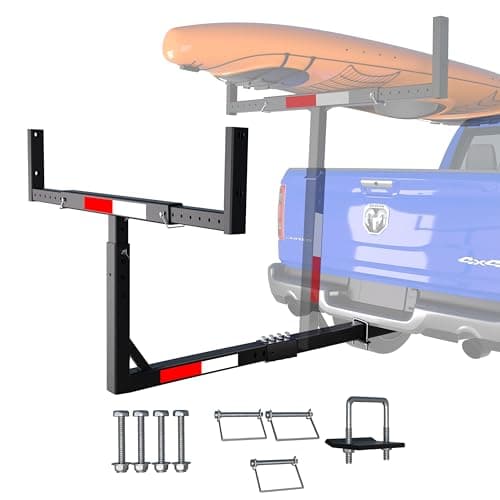
Adjustable, 2-in-1 (extender or kayak carrier), and rated at 1000 lb. If the extender is going to carry real weight rather than just support the tail of a board, this is the one with the number to back it.
Build
9.3
Capacity
9.6
Install
9.6
Versatility
9.5
Value
9.4
Why we picked it
+Highest published rating in the category
+Doubles as a kayak carrier
+Adjustable
Good to know. A 1000 lb rating on a hitch extender is a rating for the steel, not permission to put 1000 lb of concrete behind the axle. Mind your tongue weight and your rear axle rating.
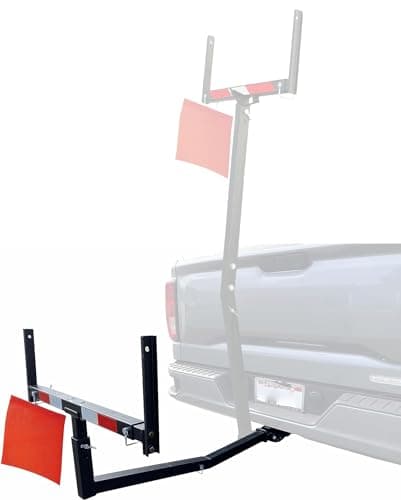
A hitch-mount extender that supports long material off the back of the truck. On a 5'5" bed carrying sixteen-foot lumber, this is the cheapest legal way to do it with the load properly supported.
Build
9.1
Capacity
9.0
Install
9.8
Versatility
9.3
Value
9.7
Why we picked it
+Supports long material instead of letting it hang
+Cheap
+Comes out of the receiver in seconds
Good to know. It uses the receiver, so you cannot tow at the same time, and the load still has to be flagged. It is not a substitute for a longer bed.
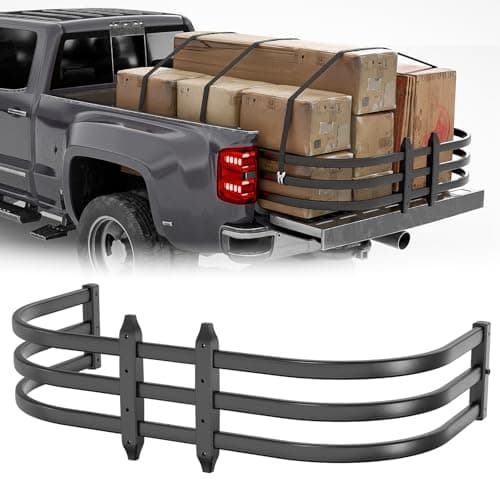
A retractable tailgate extender, 59-69 in adjustable, in aluminum. It stays fitted and folds away, which is the difference between an extender you use and one that lives in the garage.
Build
9.2
Capacity
9.1
Install
8.9
Versatility
9.4
Value
9.2
Why we picked it
+Stays on the truck, folds away
+Aluminum — no rust
+Does not block the hitch receiver
Good to know. It requires drilling and it needs the tailgate down to work. If a sealed, cover-compatible bed matters, this complicates it.
Full-size beds — Silverado, Sierra, F-Series, Ram, Tundra and Titan, 59 to 69 in at the tailgate
✗ Does not fit
Mid-size beds under 59 in
Anyone unwilling to drill
Trucks with a retractable cover canister in the way
The overhang rule of thumb
Rear overhang marking requirements are set by state law and they differ, so the only honest advice is to check your own state's rule before a long haul. The practical rule most people work to is that a visible marker on the end of the load is never wrong, that a red flag by day and a lamp at night is the common requirement pattern, and that a load you can see the end of from the mirror is a load you are driving more safely.
For securement itself, the federal cargo securement rules cited below are a sound rule of thumb even though they are written for commercial vehicles: restrain the load forward, rearward and laterally, and use enough rated straps that no single one is doing all the work. The anchor points and straps worth buying are ranked on tie-downs and anchor points.
Extender, rack, or trailer?
Three honest tiers for the same problem, and the deciding factor is frequency.
Occasionally — a few times a year. Extender. The cheapest answer and it stores in the garage between uses.
Weekly.Ladder rack. It carries long material above the bed, leaves the bed usable underneath, and does not need the tailgate down. Budget racks start lower than most people expect.
Daily, heavy, or longer than the truck plus an extender can carry. A trailer. At that point you are not solving a bed problem.
The one-sentence answer
If long loads are an occasional annoyance rather than your daily work, a hitch-mount extender with a published rating is one of the best-value parts on this site — and if they are your daily work, the extender is the wrong purchase and a rack is the right one.
Questions people actually ask
Are truck bed extenders worth it?
For occasional long loads on a short bed, yes — an extender costs a small fraction of a rack and lets a 5'7" bed take eight-foot stock with the tailgate down. For regular long-material hauling it is the wrong purchase, because a rack does the job without the tailgate down and without blocking the hitch.
What is the difference between a hitch bed extender and a tailgate extender?
A hitch-mount extender plugs into the receiver and supports the load behind the truck. A tailgate extender sits in the bed and extends the usable floor onto the lowered tailgate, mainly to stop cargo rolling out. They are different products for different problems.
Can you tow with a bed extender fitted?
Not with a hitch-mount extender — it occupies the receiver. A tailgate-mount extender leaves the hitch free. If you need to tow and haul long material on the same trip, that is a rack or trailer decision.
How much weight can a bed extender hold?
The published ratings on the picks here run from 350 lb to 1000 lb, and several listings in this category publish nothing at all. Whatever the extender's rating, the receiver's tongue weight rating and your truck's payload sit underneath it — the lowest of the three is your real limit.
Are truck bed extenders legal?
The extender is; the overhanging load is what the law addresses, and marking requirements for rear overhang are set by state and differ. Check your own state's rule, mark the end of the load, and treat a flag by day and a lamp at night as the baseline.
Last reviewed October 11, 2026. Think a figure here is wrong? Tell us at contact@toolboxandtruck.com and we will check it, fix it and date the correction — see our editorial policy.