Work truck gear, ranked for the people who load it every morning.
Guides
How to haul lumber in a pickup
Most lumber damage happens in the first fifty feet, when the bundle slides forward into the bulkhead. Three cheap parts and the right order of strapping prevent all of it.
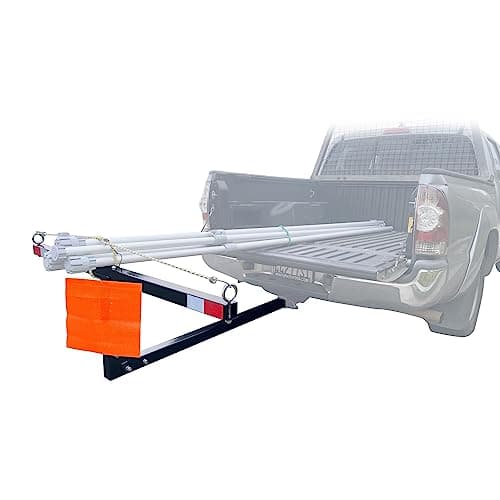
Featured here: the MaxxHaul 70229 Bed Extender, 350 lb.
Heads up: we earn an Amazon commission when you buy through our links, at no extra cost to you. Prices are pulled live from Amazon and were last checked November 12, 2026; when we cannot verify a price we say so rather than print an old one. How this site is funded.
How we know:Spec-verifiedOwner-report-verifiedWhat these mean
Top pick8.9/10★★★★★
MaxxHaul
MaxxHaul 70229 Bed Extender, 350 lb
Same idea as the 70231 with a published 350 lb capacity.
Load the lumber as far forward as it will go, support any overhang with a hitch-mount extender, restrain the bundle forward with a cargo bar or a strap to the front anchors, then strap down to rated anchor points at two points along its length — and mark the end of the overhang before you drive. That order matters: forward restraint first, because forward is the direction a load moves when the truck stops.
Everything else on this page is detail on those four moves. The reason to get them right is unglamorous: a bundle of studs that slides forward in a hard stop hits the bulkhead with the full weight of the load behind it, and on a crew cab the thing on the other side of that bulkhead is the back of a seat.
In the bed with an extender for occasional eight-foot stock. On a rack for anything longer, anything you carry weekly, or anything you want to carry with the tailgate up. Either way, rated straps to rated anchor points — the bed's factory cleats are convenient, not a securement system.
Before you load: three numbers
Your bed's clear floor length with the tailgate up and with it down. On a 5'7" bed the second number is roughly two feet longer, which is why the tailgate-down configuration is the one lumber runs use.
Your payload. A pallet of treated lumber is heavier than people estimate, and payload has to cover it plus the people plus everything already in the truck. The door-jamb sticker is the authority.
Your state's rear overhang rule. Marking requirements differ by state. A red flag by day and a lamp at night is the common pattern; check your own before a long haul.
The method, in order
1. Forward first
Push the bundle to the bulkhead so there is no run-up. If the bed is empty ahead of the load, close the gap with a cargo bar — a ratcheting bar across the bed ahead of the load does more for safety than another strap on top of it, because it removes the forward movement entirely.
2. Support the overhang
Anything hanging past the tailgate wants support, not just restraint. A hitch-mount extender takes the weight off the tailgate hinge and keeps the bundle in one plane, which also stops the ends whipping at speed. Are bed extenders worth it covers which type to buy.
3. Strap down, at two points
Two tie-down points along the bundle's length, not one in the middle. One strap in the middle lets both ends pivot. Use rated straps, run them over the bundle to anchor points on opposite rails, and tension them enough that the bundle and the truck move as one object.
4. Anchor to something rated
Factory bed cleats are fine for light cargo. For a heavy bundle, use stake-pocket D-rings or bolt-in anchor points with a published rating — a strap is only as strong as what it is attached to, and that is where most securement actually fails.
The four parts that make this easy
An extender for the overhang, a rack for when the bed is not the answer, a cargo bar for forward restraint, and rated anchor points.
Same idea as the 70231 with a published 350 lb capacity. The number matters: an unrated extender carrying 400 lb of lumber on a rough road is a guess you do not want to be making.
Build
9.1
Capacity
8.9
Install
9.8
Versatility
9.2
Value
9.7
Why we picked it
+Published 350 lb rating
+Cheap
+Fits any receiver
Good to know. 350 lb is a modest figure. For bundled lumber or steel, you need a rated rack rather than an extender.
$299.9914% off · Price as of November 12, 2026. #ad
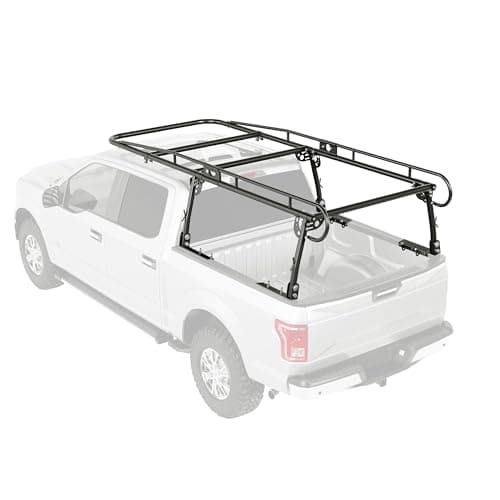
Adjustable 58-69 in, rated to 1000 lb, and tall enough to carry over the cab line. The height is what makes it usable for lumber as well as ladders — a low rack forces long material to sit on the tailgate.
Build
9.2
Capacity
9.5
Install
9.2
Versatility
9.6
Value
9.5
Why we picked it
+Tall enough to clear the cab for long material
+1000 lb published capacity
+Adjustable width covers most full-size beds
Good to know. Height costs you in wind noise and in low clearances. If the truck lives in a parking garage, measure the entrance first.
$50.9915% off · Price as of November 12, 2026. #ad
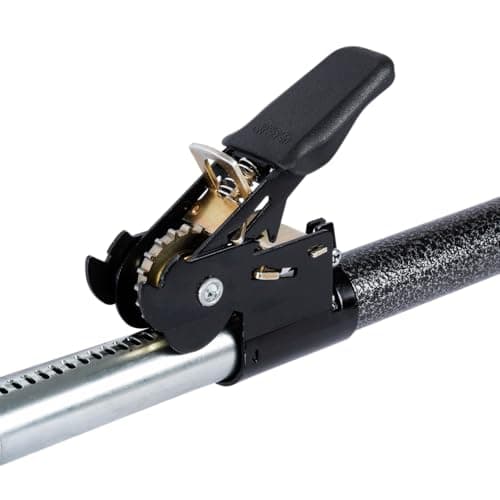
A 40-70 in ratcheting bar that braces across the bed and holds a load against the tailgate. It is the cheapest piece of kit on this site and it stops more rattling, sliding and scratched paint than anything else you can buy for the money.
Build
9.2
Capacity
8.8
Install
9.8
Day-to-day access
9.7
Value
9.7
Why we picked it
+Costs less than a tank of fuel
+Ratchet tension holds without tools
+Stores flat behind the seat when not in use
Good to know. It is a brace, not a wall. It does not partition the bed into compartments and it will not hold a heavy load on its own.
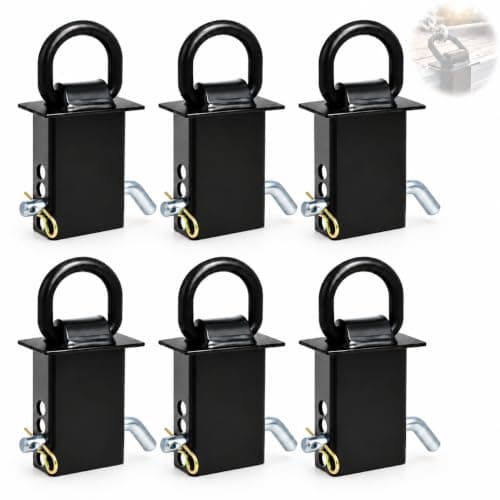
Drops into the factory stake pocket, published at 16,200 lb, and lifts straight out when you are done. No drilling, no sealed holes, and a rating that is in a completely different league from a bolt-on ring.
Build
9.4
Capacity
9.7
Install
9.7
Day-to-day access
9.5
Value
9.5
Why we picked it
+No drilling at all
+Very high published rating
+Removable, so the pocket is free again when you need it
Good to know. Your truck has to have usable stake pockets. Many newer trucks have them covered by bed rail caps, and some have none at all.
Trucks and trailers with open, sound stake pockets
✗ Does not fit
Trucks without stake pockets
Beds with pockets covered by bonded rail caps
Bed or rack?
Our assessment of the two configurations. Published rack capacities are on the product cards.
In the bed, tailgate down
On a ladder rack
Maximum practical length
Bed length plus overhang
Well beyond the truck, cab to past the tailgate
Tailgate
Must be down
Can stay up
Bed usable underneath?
No
Yes
Loading height
Waist height
Overhead — two people for heavy stock
Weather
Bed open
Bed can stay covered
Cost
An extender
A rack, plus clamps
The decisive row is the third. A rack keeps the bed available for everything else, which on a working truck is worth more than the price difference within a couple of months. Budget racks covers the cheap end honestly, and ladder racks ranks the whole category.
Five mistakes that cost money
One strap in the middle. The ends pivot, the bundle walks, and by the second corner a strap has gone slack.
Strapping to the tailgate. The tailgate is a door. It is not an anchor and its hinges are not a securement point.
Letting the load rest on the tailgate's edge. That is where tailgates bend. Support the overhang on a frame instead.
Forgetting to re-check at the first stop. Timber bundles settle and compress. A strap that was tight in the lot is not tight at the lights.
No marker on the overhang. It is the cheapest part of the whole job and the one most likely to involve somebody else's bumper.
What about the cab?
If you haul long or heavy material regularly, a headache rack is the part that stands between a shifting load and the back of the cab. It is the one purchase in this whole area that protects people rather than property, and it is cheaper than the glass it protects. Headache rack versus ladder rack explains the difference and why a truck that hauls lumber often ends up with both.
The one-sentence answer
Forward to the bulkhead, support the overhang, two rated straps to rated anchors, mark the end — and if you are doing this more than a few times a year, buy a rack and stop putting lumber in the bed at all.
Questions people actually ask
How do you haul 8 ft lumber in a short bed truck?
Tailgate down, bundle pushed to the bulkhead, the overhang supported on a hitch-mount bed extender, and two rated straps to anchor points on opposite rails. Mark the end of the overhang. A 5'7" bed with the tailgate down takes eight-foot stock comfortably that way.
How far can lumber stick out of a truck bed?
That is set by state law and it differs, so check your own state's rear overhang and marking rule. The common pattern is a red flag by day and a lamp at night once the load projects past the vehicle, and a visible marker is never the wrong call.
How do you stop lumber sliding forward in a truck bed?
Remove the run-up rather than trying to hold the load back. Push the bundle hard against the bulkhead and put a ratcheting cargo bar across the bed ahead of it. Forward restraint does more than extra straps over the top, because forward is the direction the load moves when you stop.
Can you strap lumber to the tailgate?
No. The tailgate is a door with hinges, not an anchor point, and a loaded tailgate edge is where tailgates bend. Strap to the bed's rated anchor points or to stake-pocket D-rings, and support any overhang on an extender.
Is a ladder rack better than a bed extender for lumber?
For regular hauling, yes — a rack carries long material above the bed with the tailgate up and leaves the bed usable underneath. An extender is the cheaper answer for occasional loads. Are bed extenders worth it sets out that trade-off.
$299.9914% off · Price as of November 12, 2026. #ad
Last reviewed October 11, 2026. Think a figure here is wrong? Tell us at contact@toolboxandtruck.com and we will check it, fix it and date the correction — see our editorial policy.