Work truck gear, ranked for the people who load it every morning.
Guides
Custom vs universal truck seat covers
Usually framed as a looks question. It is not — a cover that moves abrades the seat it was bought to protect, and that is a fit problem rather than an aesthetic one.
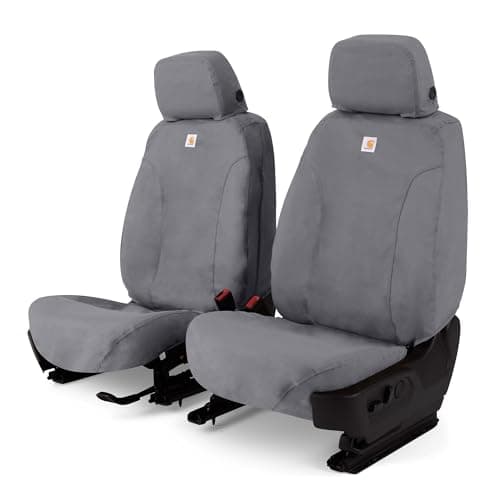
Featured here: the Covercraft Covercraft Carhartt SeatSaver Custom Seat Covers.
Heads up: we earn an Amazon commission when you buy through our links, at no extra cost to you. Prices are pulled live from Amazon and were last checked October 5, 2026; when we cannot verify a price we say so rather than print an old one. How this site is funded.
How we know:Spec-verifiedOwner-report-verifiedWhat these mean
A custom cover costs two to four times a universal one and the usual explanation is that it looks better. That is true and it is not the argument. The argument is mechanical, and once you see it the decision mostly makes itself.
Bolstered bucket seats: custom, and the extra money buys a cover that does its job rather than a tidier-looking one. Flat bench seats: universal is genuinely fine and the money is better spent elsewhere.
The bunching problem, which is the whole thing
A universal cover is a shape stretched over a seat it was not cut for. On a modern truck bucket seat with pronounced side bolsters there is nowhere for the excess material to go, so within about a month it gathers at the bolsters.
A gathered cover moves. Every time you slide in and out it shifts a little against the seat fabric underneath it, carrying whatever grit has worked its way between the two. The cover you bought to protect the seat is now sanding it.
That is why this is a fit decision rather than a looks decision. A cover that migrates is worse than no cover on a seat you were trying to preserve.
Carhartt's duck canvas on Covercraft's custom patterns. The custom fit is the entire argument: a universal cover bunches at the bolsters within a month, and a bunched cover is how a seat gets worn under the cover you bought to protect it.
Who should skip it. Duck canvas is stiff and it is hot in summer until it breaks in. If the truck is mostly a commuter, a mesh cover is more comfortable for less money.
Material
9.2
Fit
9.4
Cleanability
8.8
Comfort
7.2
Value
7.6
What works
+Custom pattern stays put instead of bunching
+Duck canvas shrugs off tool abrasion and dog claws
+Comes off and washes rather than needing valeting
+Covercraft publishes airbag compatibility per pattern
What does not
−Expensive for a seat cover
−Stiff and hot until broken in
−Pattern must match your exact seat configuration — a bench and buckets are different parts
Published specifications
Material
Carhartt duck canvas
Fit
Custom, vehicle-specific pattern
Airbag
Side-airbag compatible patterns available — verify your part number
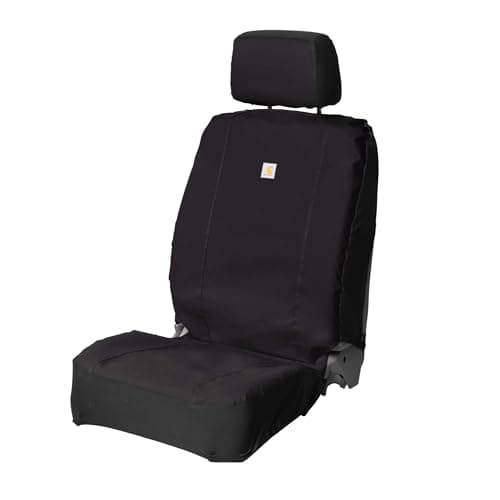
700 denier nylon duck in a universal front cover. The denier number is the specification that matters and 700 is a genuinely heavy fabric — higher than most work covers in this price bracket.
Who should skip it. It is universal fit. On a contoured truck seat it will never sit as cleanly as a custom pattern, and on a seat with side airbags you must verify compatibility.
Material
9.0
Fit
7.0
Cleanability
8.6
Comfort
7.0
Value
9.0
What works
+700 denier is a heavy, published figure
+Carhartt fabric with the brand's wear record
+Far cheaper than a custom set
What does not
−Universal fit will not sit flat on contoured seats
−Airbag compatibility not stated — verify before fitting over a side-airbag seat
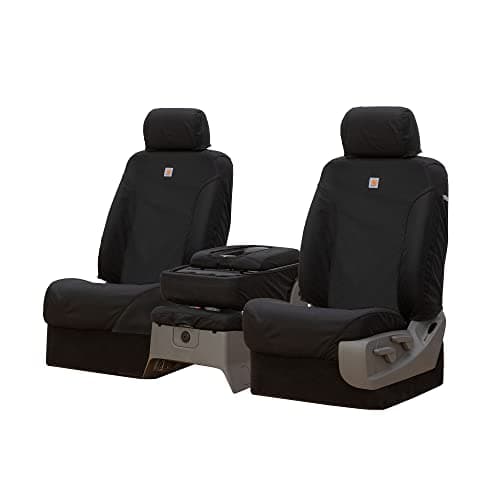
Cordura rather than plain duck canvas, in Covercraft's custom pattern. Cordura adds water resistance to the abrasion resistance, which is the difference between a wet jacket soaking the seat and beading on the cover.
Who should skip it. It is the most expensive seat cover on this page. If the truck is dry inside, you are paying for a property you will not use.
Material
9.4
Fit
9.4
Cleanability
9.2
Comfort
7.8
Value
6.8
What works
+Water resistant as well as abrasion resistant
+Custom Covercraft pattern
+Less stiff out of the box than duck canvas
What does not
−Highest price here
−Denier not published
−Still needs the correct pattern for your seat configuration
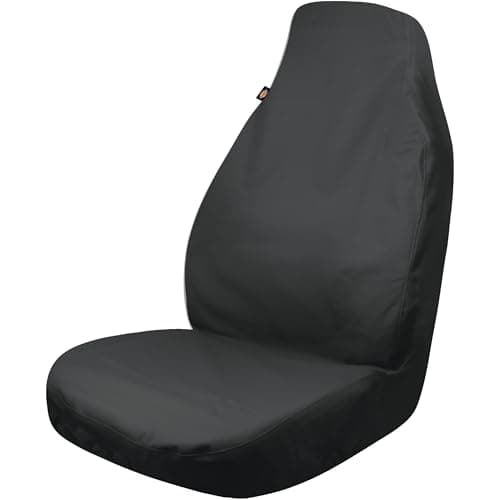
A water-resistant universal cover for less than the cost of a tank of diesel. It will not last like a Carhartt and it will not fit like a Covercraft, but it will stop one muddy week ruining a cloth seat.
Who should skip it. Treat it as consumable. At this price it is a one or two season cover, not a long-term solution.
The airbag difference, which is not about preference
Most modern truck seats have a side airbag in the outboard bolster that deploys through a seam in the seat trim. A cover over that bolster sits across the deployment path.
The major custom makers publish side-airbag compatibility per pattern and build a release seam into compatible designs. Universal covers generally publish nothing on the subject — which is an absence of information rather than a clearance.
There is a second-order point that matters here specifically: a cover that has migrated has moved whatever release feature it had away from where it was designed to sit. So on a bolstered seat with a side airbag, the fit argument and the safety argument point the same way. The full write-up, with citations.
When universal is the right answer
Four genuine cases, not concessions:
A flat bench seat. There is nothing to bunch over. Universal fits properly and the saving is real.
A truck with one bad winter ahead of it. A consumable cover for a known short period is a sensible purchase.
Seats you want to transfer the cover off. A custom pattern is cut for one truck; a universal cover moves with you.
A hot climate where you need mesh. Custom patterns in breathable mesh are rarer than universal ones, and a mesh cover you keep fitted beats a duck canvas cover in the garage.
Getting the custom pattern right
Custom only works if the pattern matches the seat, and the same truck in the same model year can take several. Check all five before ordering:
Bucket or bench, and if bench, the split — 40/20/40 and 60/40 are different parts.
Center console or a fold-down jump seat in the middle position.
Powered or manual seats — side control panels change the pattern.
Headrest type — integrated versus adjustable changes whether the cover slips over the top.
Rear bench shape — folding, split-folding and fixed are all different.
A nearly-right custom pattern bunches exactly like a universal cover, which means you have spent custom money for a universal outcome. This is the most common way the purchase goes wrong.
Semi-custom, briefly
Some makers sell by seat type rather than by vehicle — “fits most full-size truck buckets”. On a simple seat these are a reasonable middle ground. On anything with pronounced bolsters or side control panels they behave like universal covers, because that is functionally what they are.
The decision in three lines
Do your seats have pronounced side bolsters? If yes, custom. Stop here.
Do they have side airbags? If yes, custom with published compatibility for your exact pattern.
Neither? Universal, in the heaviest fabric you can find, and spend the saving on floor liners.
Questions people actually ask
Are custom seat covers worth it over universal?
On a bolstered bucket seat, yes — and the reason is mechanical rather than cosmetic. A universal cover gathers at the bolsters within weeks, then moves against the seat fabric and abrades the thing it was bought to protect. On a flat bench seat, universal is genuinely fine.
Why do universal seat covers bunch?
Because they are a shape stretched over a seat they were not cut for, and on a bolstered seat the excess material has nowhere to go. The gathering is not a fitting error you can correct; it is what the product does on that seat shape.
Do universal covers work with side airbags?
They generally publish nothing on the subject, and an absence of information is not a clearance. The major custom makers publish compatibility per pattern and build a release seam into compatible designs. Full write-up.
What makes a custom seat cover pattern wrong?
Five things, any of which is enough: bucket versus bench, the bench split, the presence of a center console or jump seat, powered versus manual seat controls, headrest type, and rear bench shape. A nearly-right custom pattern bunches exactly like a universal cover.
What about semi-custom covers?
Sold by seat type rather than by vehicle. On a simple seat they are a reasonable middle ground; on anything with pronounced bolsters or side control panels they behave like universal covers, because functionally that is what they are.
Last reviewed October 5, 2026. Think a figure here is wrong? Tell us at contact@toolboxandtruck.com and we will check it, fix it and date the correction — see our editorial policy.