Work truck gear, ranked for the people who load it every morning.
Guides
How to keep tools from rusting in a truck box
A sealed box does not stop tool rust. It is often the cause of it, because the thing rusting your tools arrived as water vapor and then had nowhere to go.
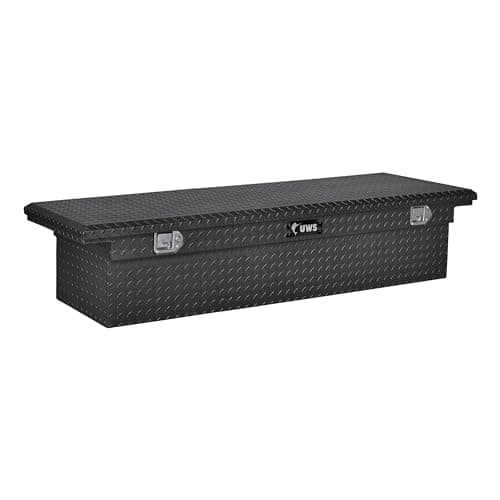
Featured here: the UWS EC10473 69-inch Heavy-Wall Aluminum Crossover.
Heads up: we earn an Amazon commission when you buy through our links, at no extra cost to you. Prices are pulled live from Amazon and were last checked November 12, 2026; when we cannot verify a price we say so rather than print an old one. How this site is funded.
Tools rust in a truck box because of condensation, not because of leaks. Warm damp air gets into the box during the day, the metal box cools faster than the air inside it overnight, and the moisture in that air condenses onto the coldest surfaces available — which are your tools. A perfectly sealed box with no drain path makes this worse rather than better, because the water that forms inside has nowhere to leave. That is the whole mechanism, and every fix below follows from it.
This is the question underneath a lot of confusion about whether truck boxes are waterproof. They are not, and even the ones that are nearly watertight will still rust a set of chisels, because the water did not come in as rain. It came in as air. Are truck tool boxes waterproof covers the sealing side of the story; this page is about what to do about the inside.
Stop the moisture arriving, give what does arrive somewhere to go, and keep a desiccant in the box. Those three together fix almost every case. Adding a tighter seal on its own usually makes it worse.
Why a sealed box is not the answer
Air carries water. Every time you open the box on a humid morning you fill it with damp air. The seal keeps that air in as effectively as it keeps rain out.
Metal boxes cool fast. An aluminum box loses heat overnight much faster than the air inside it, which pushes that air below its dew point.
The coldest surfaces get the water. Steel tools in an aluminum box are usually the coldest thing in there.
Wet things make it much worse. A damp rag, a wet tarp or a jacket put in the box is a humidifier running all night in a sealed container.
With no drain, it stays. A box with a drain path dries out. A perfectly sealed box recycles the same water every night.
The five fixes, in order of how much they do
The habit at the top does more than the four products below it combined.
Fix
What it addresses
Effort
Nothing wet goes in the box
The biggest single source of moisture
Free, and a habit
Desiccant in the box
The water already in the air
A few dollars, recharge occasionally
Check and keep the drain path clear
Water that has already formed
Minutes
Rust-inhibitor paper or VCI liner
Bare steel surfaces specifically
Cheap, replace annually
Light oil film on bare steel
Hand tools, chisels, planes, pipe wrenches
An hour, once
That top row is not a cop-out. The single commonest cause of a box full of rusty tools is a wet rag or a damp canvas bag that lives in there, and removing it changes the box more than any product will.
Desiccant, properly
Use a rechargeable canister, the kind that changes color and goes in an oven or a socket to dry out. Single-use sachets saturate in weeks in a truck box and then do nothing.
Put it where the air moves, not under a tray at the bottom.
Check it monthly in the wet season. A saturated desiccant is a wet object in a sealed box, which is the problem rather than the fix.
Size it to the box. A crossover box is a large volume; one small sachet is theatre.
Box features that help
Some of this is purchasable. When you are choosing a box, these features change the condensation picture.
A gasket plus a drain path. The combination matters: the gasket keeps rain out, the drain lets condensation leave. Either alone is worse than both.
A foam-cored lid. The UWS RigidCore lid is foam-filled, which has an incidental benefit here: a lid with an insulating core does not chill as fast as a bare sheet-metal one, so less water forms on the underside of it.
Aluminum over steel for the box itself. The box will not rust even when the inside is damp, which keeps the problem confined to the tools.
Trays that hold tools off the floor. Anything lying on the bottom of a box is lying in whatever collects there.
A box that is not oversized. A half-empty large box holds more damp air than a full small one.
Boxes that handle damp better
A foam-cored lid, a real gasket and aluminum construction. Live Amazon prices where available.
Heavy-wall aluminum, a foam-filled RigidCore lid that does not flex when you sit on it, and a low profile that still clears most rear glass. This is the crossover to buy if you intend to keep the truck.
Build
9.7
Weather seal
9.5
Security
9.4
Bed usability
9.2
Value
9.0
Why we picked it
+Foam-filled lid does not oil-can under body weight
+Low profile clears rear glass on most full-size crew cabs
+Heavy-wall extrusion survives being used as a step
+Gas struts are serviceable rather than sealed units
Good to know. Skip it on a 5'5" short bed. At 69 inches it will sit on the rails, but you lose a disproportionate share of a short bed and the money is better spent on a side-mount pair.
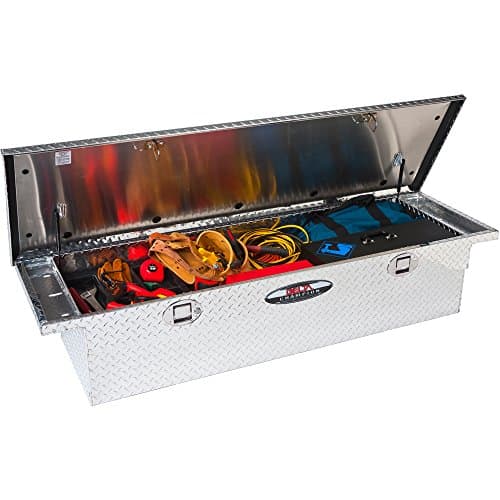
JOBOX's Gear-Lock drives multiple lock points from one key turn, which is the single biggest difference between a box a thief opens with a screwdriver and one he walks away from. The rest of the box is honest fleet-grade aluminum.
Build
9.5
Weather seal
9.4
Security
9.7
Bed usability
9.2
Value
8.9
Why we picked it
+Multi-point locking is genuinely harder to defeat than a single center latch
+Fleet-grade build with parts availability years out
+Low profile preserves rear visibility
Good to know. It costs premium money and spends it on the latch rather than the lid. If your box lives behind a locked gate every night, you are paying for security you do not need.
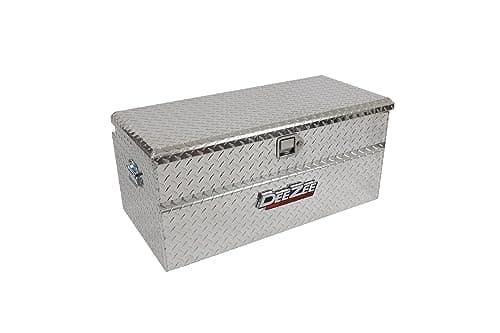
A 37-inch Brite-Tread chest with 6.4 cu ft inside it, a crowned lid on a double-V stiffener, a closed-cell foam gasket and a locking stainless paddle handle. It holds more than the 48-inch budget chests while taking a foot less of your bed floor, and it is backed by a limited lifetime warranty.
Build
9.5
Weather seal
9.4
Security
9.3
Bed usability
9.2
Value
9.1
Why we picked it
+6.4 cu ft in a 37 in footprint — more volume than a 48 in budget chest
+Front, back and bottom are bent from one piece of aluminum, so there are fewer seams to leak
+Hidden full-length hinge cannot be attacked from outside the box
+Closed-cell foam gasket under a crowned, stiffened lid
+Gas shocks and side handles — it opens one-handed and lifts out two-handed
+Limited lifetime warranty on a chest at this price
Good to know. It is a chest, so it sits on the bed floor rather than on the rails: you keep the rails for a cover or a rack, and you give up a 37 x 19 in patch of floor.
Published specifications
Dimensions (L x W x H)
37.1 x 19 x 16.6 in
Volume
6.4 cu ft
Material
.056 in Brite-Tread aluminum
Lid
Crowned, double-V stiffener, gas shocks
Latch
Self-centering latch, locking stainless paddle handle, two keys
Any bed with 37 in of clear floor — full-size and mid-size alike
Beds already running a tonneau cover or a bed rack
Trailers, tractors and utility beds
✗ Does not fit
Beds where the floor has to stay flat for sheet goods
Mounting on the bed rails — this is a floor chest
What to do about tools that are already rusting
Sort them. Surface bloom on a wrench is cosmetic; pitting on a measuring face is a replacement.
Clean it back. A nylon abrasive pad and oil for light rust; a wire wheel for heavier, carefully, on anything that is not a precision surface.
Oil and wrap. A light oil film, then VCI paper for anything going back into storage.
Fix the cause before you put them back. Otherwise it is a seasonal chore rather than a repair.
Check the box floor. If there is standing water or a rust ring in the bottom of your box, the drain path is blocked or absent.
The cab is drier than the bed
Worth saying, because it is the cheapest fix of all: anything with electronics, a precision surface or a battery belongs in the cab, not in a bed box. The cab is climate-controlled and dry, and the space under the rear seat is already there and already lockable.
Put in the cab: meters, lasers, levels, chargers, battery packs, anything with a measuring face.
Leave in the box: hand tools, power tools in cases, fasteners, anything that tolerates a damp morning.
Open your box, take out anything damp, check that the bottom drains, and put a rechargeable desiccant canister where the air moves — that is an afternoon's work and it is most of the problem.
Questions people actually ask
How do I keep tools from rusting in a truck tool box?
Keep anything wet out of the box, put a rechargeable desiccant canister where the air can reach it, make sure the box has a clear drain path, and put a light oil film or VCI paper on bare steel. The habit of not storing damp rags and tarps in there does more than the products.
Why do my tools rust in a sealed tool box?
Because the water arrived as vapor, not as rain. Damp air gets in when you open the box, the metal box cools faster than the air overnight, and the moisture condenses onto the coldest surfaces — your tools. A seal with no drain path keeps that water in.
Does a desiccant work in a truck tool box?
Yes, if it is a rechargeable canister sized to the box and positioned where air moves. Single-use sachets saturate within weeks in a truck box and then do nothing at all, and a saturated desiccant is just a wet object in a sealed container.
Should I drill drain holes in my truck tool box?
Check first — many boxes already have a drain path at the bottom of the lid channel or the box floor, and it is blocked rather than missing. If you do add one, put it at the lowest point, deburr it and paint the edge on a steel box.
Is an aluminum tool box better than steel for rust?
The aluminum box itself will not rust, which keeps the problem confined to your tools rather than the container. It does not stop condensation forming — aluminum sheds heat quickly, so the inside of a bare aluminum lid is often the wettest surface in the box.
Where should I keep tools that cannot get damp?
In the cab. Meters, lasers, levels, chargers and anything with a measuring face belong in the dry, climate-controlled end of the truck. The rear footwell is already there and already behind locked doors — under-seat storage.
Last reviewed October 17, 2026. Think a figure here is wrong? Tell us at contact@toolboxandtruck.com and we will check it, fix it and date the correction — see our editorial policy.