Work truck gear, ranked for the people who load it every morning.
Guides
Do seat covers work with heated seats?
Mostly yes, with a delay and a fabric caveat. Ventilated seats are the harder case, and the thing you should really be checking is the airbag tag in the bolster.
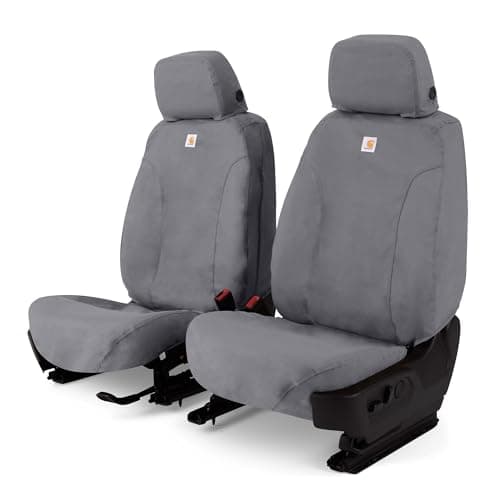
Featured here: the Covercraft Carhartt SeatSaver Custom Seat Covers.
Heads up: we earn an Amazon commission when you buy through our links, at no extra cost to you. Prices are pulled live from Amazon and were last checked November 13, 2026; when we cannot verify a price we say so rather than print an old one. How this site is funded.
How we know:Spec-verifiedOwner-report-verifiedWhat these mean
Top pick9.5/10★★★★★
Covercraft
Covercraft Carhartt SeatSaver Custom Seat Covers
Carhartt's duck canvas on Covercraft's custom patterns.
$322.9915% off · Price as of November 13, 2026. #ad
A heated seat still works under a seat cover. The heating element is in the cushion, under the factory upholstery, and it warms the surface it is in contact with — so a cover over the top gets warm too. What changes is the time: a layer of canvas between the element and you means it takes longer to feel the heat, and the setting you used to run on low you will now run on medium. That is the whole effect for the great majority of trucks.
Ventilated and cooled seats are the genuinely harder case, and for the opposite reason: they work by moving air through perforations in the upholstery, and a solid cover blocks that airflow. A cover with no perforation over a ventilated seat does not slow the cooling down, it mostly stops it. If your seats blow air rather than only warming, that is the thing to read the listing about.
Heated seats: fine, slower to warm, run one setting higher. Ventilated seats: a solid cover defeats them, so either accept that or do not fit a cover to that seat. In both cases the compatibility question worth more of your attention is the side airbag, not the heater.
What actually changes with a cover fitted
The six seat features owners ask about, in the order they actually matter.
Seat feature
With a cover fitted
What to do about it
Heated cushion
Works; takes longer to feel warm
Run one setting higher, nothing else
Heated backrest
Same as the cushion
Nothing
Ventilated or cooled
Largely defeated by a solid cover
Leave that seat uncovered, or accept the loss
Lumbar adjustment
Works; the cover may mask the feel slightly
Nothing
Power seat controls
Works if the cover is cut for the side panel
Check the cover clears the switch pack
Side airbag in the bolster
The real compatibility question
Buy a pattern that states compatibility
Note the last row, because it is the one that is not about convenience. NHTSA publishes occupant protection information and FMVSS No. 208 governs the occupant crash protection requirement; neither issues a cover-specific ruling, which is exactly why we will not tell you a cover over an airbag seam is fine. Covercraft publishes side-airbag-compatible patterns and asks you to verify the part number for your seat. That verification costs nothing. Do seat covers affect airbags is the full discussion.
Fabric changes how much delay you notice
All covers slow the heat. Some slow it more, and it tracks thickness and weave rather than brand.
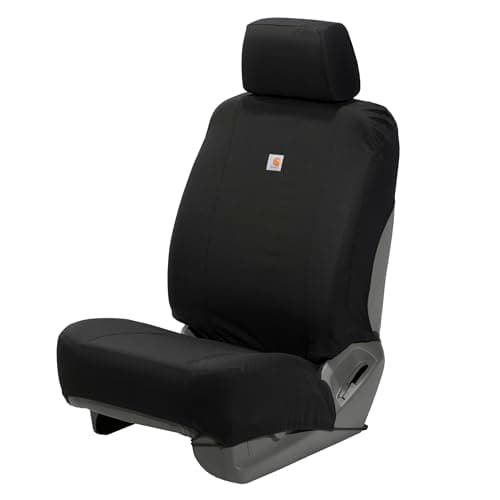
Canvas and duck weaves are the best behaved: they are dense but thin, so the delay is noticeable and small. This is the fabric family on all three picks below.
Neoprene is the worst of the common materials for this, because it is a foam sandwich and foam is an insulator by design. Good for water, poor for heat transfer.
Sheepskin and fleece insulate heavily. The seat heater ends up warming the cover rather than you.
Perforated fabrics are the only honest answer on a ventilated seat, and they are rare in the work-truck end of the market.
The full material-by-material comparison, including denier and what each fabric does with water, is in the best truck seat cover material.
Will a cover damage the heating element?
Not by being fitted. The element is beneath the factory upholstery and a cover does not touch it. Two indirect risks are worth naming honestly, because they are real and they are both avoidable.
Trapped heat with an insulating cover. A heavily insulating cover left on high for hours holds more heat at the upholstery than the system was designed around. Running the heater one setting higher is fine; running it on maximum because the cover is thick is the pattern to avoid.
Moisture held against the seat. A waterproof cover over a wet jacket keeps the water at the upholstery instead of letting it dry. That is a seat problem rather than a heater problem, and it is covered in do seat covers damage seats.
Three covers that behave well over a heated seat
Canvas and duck weaves, which conduct heat better than neoprene or fleece. Live Amazon prices where available.
$322.9915% off · Price as of November 13, 2026. #ad
Carhartt's duck canvas on Covercraft's custom patterns. The custom fit is the entire argument: a universal cover bunches at the bolsters within a month, and a bunched cover is how a seat gets worn under the cover you bought to protect it.
Material
9.6
Fit
9.7
Cleanability
9.5
Comfort
9.0
Value
9.1
Why we picked it
+Custom pattern stays put instead of bunching
+Duck canvas shrugs off tool abrasion and dog claws
+Comes off and washes rather than needing valeting
+Covercraft publishes airbag compatibility per pattern
Good to know. Duck canvas is stiff and it is hot in summer until it breaks in. If the truck is mostly a commuter, a mesh cover is more comfortable for less money.
Published specifications
Material
Carhartt duck canvas
Fit
Custom, vehicle-specific pattern
Airbag
Side-airbag compatible patterns available — verify your part number
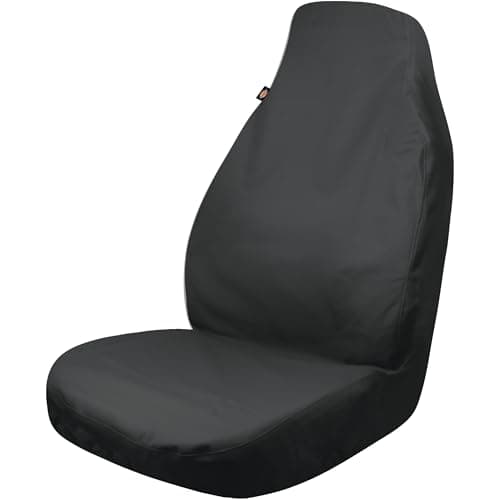
A water-resistant universal cover for less than the cost of a tank of diesel. It will not last like a Carhartt and it will not fit like a Covercraft, but it will stop one muddy week ruining a cloth seat.
Material
8.8
Fit
8.7
Cleanability
9.4
Comfort
9.0
Value
9.7
Why we picked it
+Very cheap
+Water resistant
+Easy to throw in a wash
Good to know. Treat it as consumable. At this price it is a one or two season cover, not a long-term solution.
Look for an airbag tag on the outboard bolster of the seat. If there is one, buy a pattern that states side-airbag compatibility and verify the part number for your exact seat.
Decide whether your seats ventilate or only heat. A fan symbol on the switch means a solid cover is the wrong purchase for that seat.
Check the side switch pack clears. Power seat controls live on the outboard side panel and a universal cover can sit over them.
Choose a thin, dense fabric if the heater matters to you. Canvas over neoprene, every time.
Check the bolster for an airbag tag and the switch for a fan symbol; if it is a plain heated seat, fit a canvas cover and turn the heater up one notch.
Questions people actually ask
Do seat covers work with heated seats?
Yes. The heating element sits under the factory upholstery and warms whatever is in contact with it, including a cover. The practical effect is a delay — it takes longer to feel warm, and you will run the heater a setting higher than before.
Do seat covers work with ventilated or cooled seats?
Mostly not. Ventilated seats move air through perforations in the upholstery, and a solid cover blocks that airflow rather than slowing it. Unless the cover is perforated, expect the cooling function to be largely defeated.
Will a seat cover damage a heated seat?
Not by being fitted — the element is below the upholstery and the cover never touches it. The avoidable risks are a heavily insulating cover run on maximum for hours, which holds more heat at the upholstery than intended, and a waterproof cover trapping moisture against the seat.
Which seat cover material is best for heated seats?
A thin, dense weave: canvas or nylon duck. Neoprene is the worst of the common choices because it is a foam sandwich and foam insulates by design. Sheepskin and fleece insulate heavily too. Material comparison.
Do I need to turn the heated seat up with a cover on?
Usually one setting, yes. That is the normal and expected effect of putting a layer between the element and you. If you find yourself running it on maximum, the cover is too insulating rather than the heater being too weak.
Last reviewed October 17, 2026. Think a figure here is wrong? Tell us at contact@toolboxandtruck.com and we will check it, fix it and date the correction — see our editorial policy.