Work truck gear, ranked for the people who load it every morning.
Guides
Do seat covers damage truck seats?
A correctly fitted cover protects a seat. A badly fitted one abrades it, traps moisture against it, and on a side-airbag seat it can do something far worse than wear.
Featured here: the Covercraft Carhartt SeatSaver Custom Seat Covers.
Heads up: we earn an Amazon commission when you buy through our links, at no extra cost to you. Prices are pulled live from Amazon and were last checked November 13, 2026; when we cannot verify a price we say so rather than print an old one. How this site is funded.
$322.9915% off · Price as of November 13, 2026. #ad
A properly fitted cover does not damage a seat — it is the reason the seat under a ten-year-old work truck's cover still looks new. Damage comes from three specific things, and all three are avoidable: grit trapped between the cover and the upholstery, moisture held against the fabric or hide, and a loose cover that moves every time somebody gets in. Leather is the material most at risk, because it marks and dries rather than simply wearing.
The much more important question on a modern truck is not cosmetic at all. If your seat has a side airbag in the seat back, the cover you fit has to be compatible with it, and that is a safety matter rather than a preference. Seat covers and airbags is the page to read before you buy anything, and it is not optional reading.
Buy a custom-fit cover, keep grit out from under it, and take it off occasionally to let the seat breathe. On cloth, a cover is nearly all upside. On leather, use a breathable cover, accept some sheen change over years, and never fit a cover over a damp seat.
The three things that actually cause damage
Grit. Sand and dust that get under a cover sit between two surfaces that move against each other every time somebody shifts in the seat. That is abrasion, and it is the commonest real cause of damage under a cover. The fix is removing the cover and vacuuming the seat every few months — not a different cover.
Trapped moisture. A wet jacket, a spilled drink or a damp cover fitted in a hurry puts water against the upholstery and keeps it there. On cloth that is a mildew problem; on leather it is a drying and staining problem. The fix is airflow and patience.
Movement. A universal cover that is close rather than correct slides a little on every entry. Over years that polishes the high points of the upholstery and, on leather, can put a visible sheen or crease where the cover's edge sits.
Cloth versus leather
Our assessment, based on the materials and construction each maker publishes.
The summary is that cloth seats in a work truck should essentially always be covered, and leather seats are a judgement call: a cover protects hide from tool belts and grit, at the cost of some appearance change over years. If the truck is a work truck, cover the leather too — a scuffed hide costs more than a sheen.
Covers that protect rather than mark
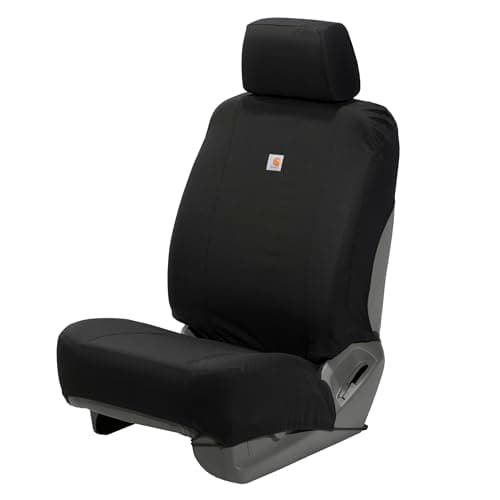
Two custom-fit covers published with airbag-compatible patterns available, and the universal option for a seat nobody makes a pattern for.
$322.9915% off · Price as of November 13, 2026. #ad
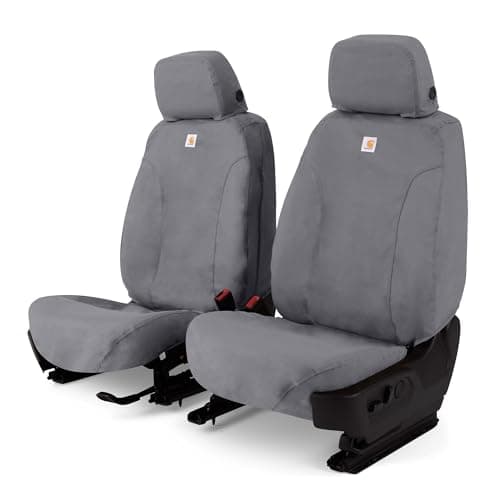
Carhartt's duck canvas on Covercraft's custom patterns. The custom fit is the entire argument: a universal cover bunches at the bolsters within a month, and a bunched cover is how a seat gets worn under the cover you bought to protect it.
Material
9.6
Fit
9.7
Cleanability
9.5
Comfort
9.0
Value
9.1
Why we picked it
+Custom pattern stays put instead of bunching
+Duck canvas shrugs off tool abrasion and dog claws
+Comes off and washes rather than needing valeting
+Covercraft publishes airbag compatibility per pattern
Good to know. Duck canvas is stiff and it is hot in summer until it breaks in. If the truck is mostly a commuter, a mesh cover is more comfortable for less money.
Published specifications
Material
Carhartt duck canvas
Fit
Custom, vehicle-specific pattern
Airbag
Side-airbag compatible patterns available — verify your part number
$411.9910% off · Price as of November 13, 2026. #ad
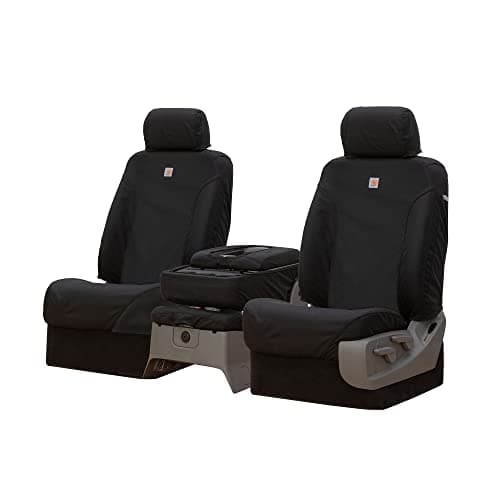
Cordura rather than plain duck canvas, in Covercraft's custom pattern. Cordura adds water resistance to the abrasion resistance, which is the difference between a wet jacket soaking the seat and beading on the cover.
Material
9.7
Fit
9.7
Cleanability
9.6
Comfort
9.2
Value
8.8
Why we picked it
+Water resistant as well as abrasion resistant
+Custom Covercraft pattern
+Less stiff out of the box than duck canvas
Good to know. It is the most expensive seat cover on this page. If the truck is dry inside, you are paying for a property you will not use.
Many trucks have a side airbag inside the outboard edge of the seat back. It deploys through a seam in the upholstery. A cover that is not designed to let it through can interfere with that deployment, and manufacturers' own guidance and FMVSS 208, cited below, are the reason this is treated as a safety requirement rather than a feature.
What to do about it is simple: buy a cover published as compatible with your seat's airbag, verify the part number against your exact truck and trim, and do not modify a cover to make it fit. The full treatment, including what the compatible designs actually do differently, is in seat covers and airbags.
Fitting and living with a cover without marking the seat
Fit it on a clean, dry seat. Vacuum first. Anything you leave under there stays under there, working.
Tension it properly. A cover that is slack moves; a cover that is drum-tight stresses its own seams and the upholstery edges. Follow the maker's strap and hook routing rather than improvising.
Take it off seasonally. Twice a year is enough on most trucks. Vacuum the seat, let it air, condition leather, refit.
Wash the cover, not the seat. A removable, washable cover is the whole point — the dirt leaves the vehicle instead of migrating into the upholstery. How to clean truck seat covers.
Never fit a cover over a wet seat. This is the single most damaging thing people do, and it is entirely avoidable.
Does a cover affect resale?
Positively, nearly always, and the mechanism is obvious once stated: the buyer sees the seat you protected, not the cover you removed. A work truck with unmarked cloth under a tired cover shows better than one with a worn seat and no cover, and it is one of the few interior investments a used-truck buyer can verify at a glance.
A correctly fitted, breathable cover protects a seat rather than damaging it. Damage comes from grit trapped underneath, moisture held against the upholstery, and a loose cover that moves on every entry. All three are avoidable with a custom fit and an occasional removal and vacuum.
Do seat covers damage leather seats?
They can mark leather over years — sheen change, creasing where an edge sits, and drying if airflow is poor. On a work truck that is usually still the better trade than tool-belt scuffs on bare hide. Use a breathable custom-fit cover and condition the leather when you take it off.
Do seat covers cause mildew?
Only if moisture is trapped. Never fit a cover over a damp seat, let a wet cover dry before refitting, and take the cover off seasonally so the upholstery can air. A washable cover is an advantage here, because the dirt and moisture leave the truck.
Are seat covers safe with side airbags?
Only covers designed and published as compatible with your seat's airbag. The airbag deploys through a seam in the seat back, and a cover that is not designed to let it through can interfere with that. Verify the part number for your exact truck and trim. The full explanation.
How often should you take seat covers off?
Twice a year on most trucks: remove, vacuum the seat, let it air, condition leather if fitted, refit. That routine prevents the only damage mechanism that really matters under a well-fitted cover, which is trapped grit abrading the upholstery.
$411.9910% off · Price as of November 13, 2026. #ad
Last reviewed October 11, 2026. Think a figure here is wrong? Tell us at contact@toolboxandtruck.com and we will check it, fix it and date the correction — see our editorial policy.