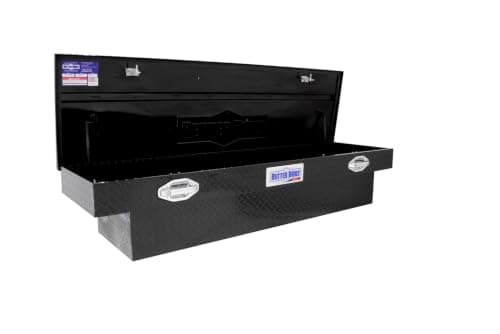
Featured here: the Better Built Better Built 79210986 Crown Series Crossover.
Heads up: we earn an Amazon commission when you buy through our links, at no extra cost to you. Prices are pulled live from Amazon and were last checked October 5, 2026; when we cannot verify a price we say so rather than print an old one. How this site is funded.
How we know:Owner-report-verifiedSpec-verifiedWhat these mean
The Better Built Crown Series crossover is 70 x 19 x 14 inches of gloss black aluminum with a single lid, and it costs meaningfully less than the heavy-wall and fleet-grade boxes. The useful question is not whether it is as good as those — it is not — but where specifically the money was saved, and whether those are savings you can live with.
Buy it if the budget has to cover a box, a cover and a rack. It gives you the volume and most of the function; what you gave up is lid rigidity and latch quality.
What you get, in numbers
The dimensions are the honest selling point. Nineteen inches of depth is genuinely useful — a framing square lies flat in it, which a narrow-body box will not do — and 70 inches uses the full width of a full-size bed.
Better Built 79210986 published dimensions.
Figure
What it means
Length
70 in
Full-size rail coverage
Width
19 in
A framing square lies flat
Height
14 in
Watch rear glass on a lowered truck
Material
Aluminum
No rust at the mounting points
Lid
Single lid
One seal perimeter, simpler
Finish
Gloss black
Wipes clean; dust does not show
Where the money was saved
Two places, and both are worth understanding before you buy.
Lid rigidity. The panel is thinner than a foam-filled or cored lid and it will flex under body weight. That matters because a lid that loses flatness eventually stops meeting its seal — which is the mechanism behind a box that leaks in year three. Why the lid matters.
Latch hardware. The latch is the part owners most consistently report replacing on boxes in this bracket. It is also a replaceable part, which blunts the objection somewhat.
What was not saved: the aluminum body, the dimensions, or the finish. Those are all legitimately good, and that is why this box is a defensible purchase rather than a false economy.
A 70 x 19 x 14 in gloss black aluminum single-lid box at a price the premium brands do not touch. You give up some lid rigidity; you keep most of the useful volume.
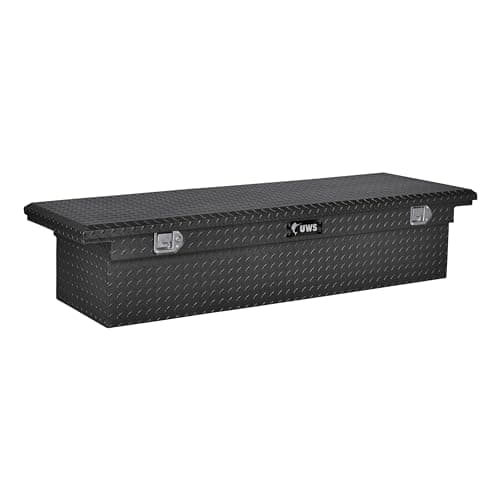
Who should skip it. Not the one if you plan to stand on the lid daily — the panel is thinner than UWS's foam-filled RigidCore and will flex. Buy the UWS or a saddle box instead.
Build
8.0
Weather seal
7.8
Security
7.6
Bed usability
8.2
Value
9.2
What works
+Full 19 in of depth — a framing square lies flat
+Gloss finish wipes clean; dust does not show the way matte does
+Priced well below the premium aluminum boxes
What does not
−Lid flexes under weight compared with foam-filled designs
−14 in height can crowd rear glass on lowered or small-cab trucks
−Latch hardware is the first thing owners report replacing
Heavy-wall aluminum, a foam-filled RigidCore lid that does not flex when you sit on it, and a low profile that still clears most rear glass. This is the crossover to buy if you intend to keep the truck.
Who should skip it. Skip it on a 5'5" short bed. At 69 inches it will sit on the rails, but you lose a disproportionate share of a short bed and the money is better spent on a side-mount pair.
Build
9.4
Weather seal
8.8
Security
8.6
Bed usability
8.0
Value
7.4
What works
+Foam-filled lid does not oil-can under body weight
+Low profile clears rear glass on most full-size crew cabs
+Heavy-wall extrusion survives being used as a step
+Gas struts are serviceable rather than sealed units
What does not
−Among the most expensive aluminum crossovers on the shelf
−69 in is a full-size length — not a mid-size answer
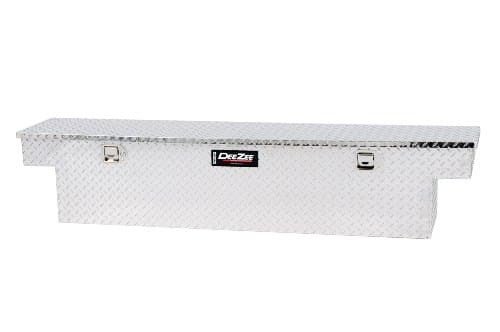
The narrow-body crossover. It eats noticeably less fore-aft bed length than a standard 19-20 in box, which is the whole point on a 5'5" or 5'7" bed where every inch in front of the wheel wells matters.
Who should skip it. If you carry long power tools in cases, the narrow body will fight you. A 19 in box swallows a circular saw case flat; this one does not.
Build
7.6
Weather seal
7.4
Security
7.2
Bed usability
9.2
Value
8.8
What works
+Gives back several inches of bed floor versus a standard-width box
+Light enough for a one-person install
+Cheapest route into a real aluminum crossover
What does not
−Narrow interior will not take large tool cases flat
−Thinner material than the heavy-wall boxes
−Published dimensions vary by listing — measure before you order
Full-size short beds where fore-aft space is tight
Trucks pairing a box with a bed slide or drawer unit
✗ Does not fit
Mid-size beds — narrow body, still full-size length
Anyone needing to lay a saw case flat inside the box
Who should buy it
Anyone outfitting a truck on a total budget. A box, a cover, liners and straps for the price of a premium box alone is a better outfitted truck.
Trucks where the box holds moderate-value tools. The latch deters; it does not defeat a determined attempt. That is true of most boxes in every bracket.
Second trucks and shared trucks. Where a premium box's resale value is not part of the calculation.
Anyone wanting 19 inches of depth cheaply. The narrow-body boxes are cheaper still and will not take a cased saw flat.
Who should not
Anyone who stands on the lid daily. Buy the cored lid. This is the one objection with no good workaround.
Street-parked trucks that stay loaded. A multi-point lock changes the outcome; this latch does not.
Lowered trucks. Fourteen inches of height plus a lid opening can crowd rear glass. Measure first.
Fleets. Parts availability over a decade is the fleet criterion, and that is Weather Guard's territory.
Fitment
A full-size box, suiting exterior bed rail widths in the mid sixties — UWS publishes about 65 in for an F-150, 64 in for a Silverado 1500 and 66 in for a Ram 1500. Not a Tacoma, at about 57 in.
On a 5.5 ft bed, 19 inches of depth leaves roughly 48 inches of floor. That is a real cost and the narrow-body box is the alternative worth considering. The short-bed calculation.
The one thing to do on day one
Lubricate the latch and the lock cylinder before the first winter, not after it seizes. On a box whose latch is the known weak point, that is twenty minutes that may be the difference between replacing it in year two and year six.
The verdict
A good box at a fair price with two known compromises, both of which are disclosed by the price. If the budget is the constraint, this is the full-size crossover we would buy, and we would spend what we saved on floor liners, straps and a cargo bar — which collectively change your week more than a stiffer lid would.
Questions people actually ask
Are Better Built tool boxes any good?
Yes, with two disclosed compromises: the lid panel is thinner than a cored lid and will flex, and the latch is the part owners most often replace. The aluminum body, the 70 x 19 x 14 in dimensions and the finish are all legitimately good for the price.
What size is the Better Built Crown Series box?
70 inches long, 19 inches wide and 14 inches high, in gloss black aluminum with a single lid. Nineteen inches of depth means a framing square lies flat, which a narrow-body box will not do.
Can I stand on a Better Built lid?
You can, and each time contributes to the panel losing flatness — which is what eventually stops a lid meeting its seal. If standing on the lid is part of your routine, buy a box with a foam-filled or cored lid instead. That is the one objection here with no workaround.
Will a 70 inch Better Built box fit my truck?
It suits the full-size half-tons, whose exterior bed rail widths are in the mid sixties. It does not fit a Tacoma at about 57 inches. Measure your own rail width and check Better Built's fitment chart for your truck and year.
How much bed space does it take?
Nineteen inches of bed floor length. On a 5.5 ft bed that leaves about 48 inches, which is a real cost — a narrow-body box is the alternative worth considering on a short bed.
Last reviewed October 5, 2026. Think a figure here is wrong? Tell us at contact@toolboxandtruck.com and we will check it, fix it and date the correction — see our editorial policy.