Work truck gear, ranked for the people who load it every morning.
Bed storage
The best truck bed cargo bars
The cheapest thing you can put in a bed that changes how the bed behaves. Four bars and one divider, judged on span, stiffness and what they are honestly capable of holding.
Our top pick: the Keeper Adjustable Ratcheting Cargo Bar, 40-70 in.
Heads up: we earn an Amazon commission when you buy through our links, at no extra cost to you. Prices are pulled live from Amazon and were last checked November 13, 2026; when we cannot verify a price we say so rather than print an old one. How this site is funded.
How we know:Owner-report-verifiedSpec-verifiedWhat these mean
Top pickBest cargo bars9.3/10★★★★★
Keeper
Keeper Adjustable Ratcheting Cargo Bar, 40-70 in
A 40-70 in ratcheting bar that braces across the bed and holds a load against the tailgate.
Tap any row for the full write-up. Prices come straight from Amazon and are never typed in by hand.
A cargo bar is a telescoping tube that ratchets across the bed between the two walls and stops whatever is behind it from sliding forward. It is the least glamorous thing in this entire category and, measured by what it changes per dollar, it is the best-value purchase on this site.
The problem it solves is specific. A pickup bed is a smooth box with a tailgate at one end, and nearly everything you put in it ends up at the bulkhead by the time you arrive. Tool bags migrate. A cooler goes over. Bagged material slumps forward on the first hard stop and then slides back again on the first hard acceleration, and by Friday the bed floor has a set of gray scuff arcs that will not wash off. A bar stops that for roughly the price of a tank of fuel.
What it does not do is secure a load. That distinction runs through this whole page and it is worth being blunt about it before the picks: a cargo bar is a brace against movement, not a tiedown. If the load has to stay put in a hard stop, it needs straps and anchor points, which is a separate purchase covered on tie-downs and anchor points.
If your bed is 40 to 70 inches between the walls, the Keeper is the one to buy and the decision takes about ninety seconds. Beds wider than 70 inches need the Strapinno. If what you actually want is the bed split into two zones rather than one brace, that is a divider, and it is a different product.
How we ranked these
Four criteria, scored 0-10 and published on every card below. The weighting here is unusual for this site because this is a category where the expensive option is barely more capable than the cheap one, so value carries more than it does anywhere else.
Build. Tube diameter and wall stiffness. This is the criterion that separates the bars, because a thin tube visibly bows once a real load leans on it and a bowed bar has already lost most of its grip on the bed walls.
Capacity. What the thing will genuinely hold back. Scored low across this whole category on purpose — see the section below on the rating none of these publish.
Install. How long it takes to put in and take out. Scored high across the board: every product here tensions by hand against the bed walls with no drilling, which is most of the appeal.
Day-to-day access. Whether the bar is in your way when the bed is empty, and how quickly it comes out when you need the full floor.
Value. Against the live Amazon price, which updates when you load this page.
The picks, ranked
Prices come straight from Amazon when you load the page. Where no live price is available the button says check price rather than showing you a number we cannot stand behind.
No. 1KeeperOwner-report-verified
Keeper Adjustable Ratcheting Cargo Bar, 40-70 in
Best for: Stopping the load sliding to the bulkhead
$50.9915% off · Price as of November 13, 2026. #ad
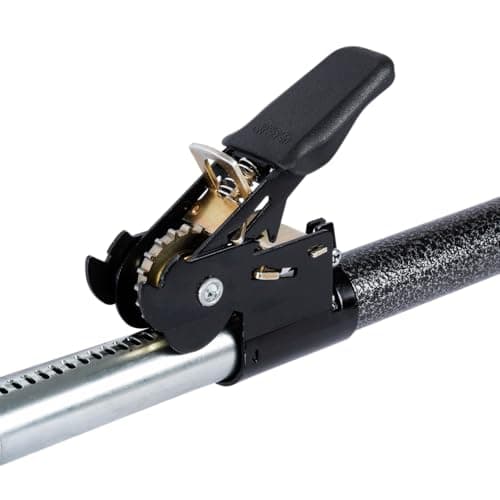
A 40-70 in ratcheting bar that braces across the bed and holds a load against the tailgate. It is the cheapest piece of kit on this site and it stops more rattling, sliding and scratched paint than anything else you can buy for the money.
Build
9.2
Capacity
8.8
Install
9.8
Day-to-day access
9.7
Value
9.7
Why we picked it
+Costs less than a tank of fuel
+Ratchet tension holds without tools
+Stores flat behind the seat when not in use
Good to know. It is a brace, not a wall. It does not partition the bed into compartments and it will not hold a heavy load on its own.
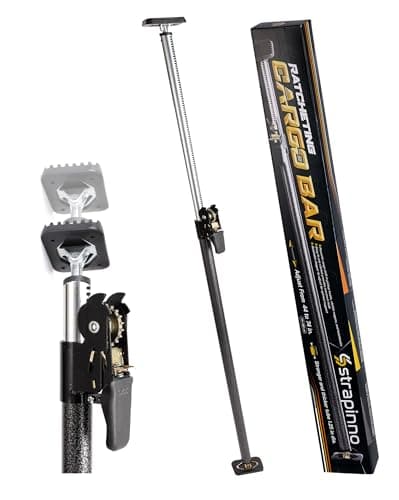
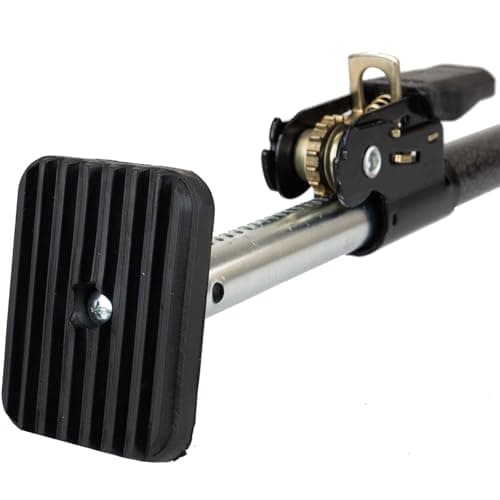
44-74 in of reach on a 1.25 in tube with non-slip pads. The wider range and the thicker tube are the difference — the thin-tube bars flex noticeably once the load pushes on them.
Build
9.3
Capacity
9.0
Install
9.7
Day-to-day access
9.6
Value
9.5
Why we picked it
+Thicker tube resists flex under load
+Covers wide full-size beds
+Non-slip pads grip a bed liner
Good to know. If your bed is under 44 in between the walls you cannot shorten it enough. Buy the 40 in bar instead.
Same 40-70 in format from a company whose entire business is cargo securement, with rubber non-slip pads. Buy it if you would rather have the specialist's hardware than the hardware-store brand.
Build
9.4
Capacity
8.9
Install
9.7
Day-to-day access
9.6
Value
9.4
Why we picked it
+Load-securement specialist's hardware
+Works in trailers and SUVs as well as a bed
+Rubber pads protect a painted bed better than bare plastic
Good to know. Functionally very close to the cheaper bars. If budget is the constraint, the difference is not decisive.
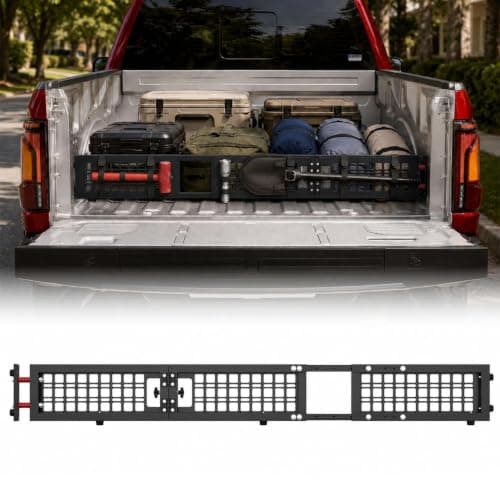
Two sliding steel grid bodies that telescope from 60 to 70 in and stand 8 in tall — a partition rather than a single brace. If you want the bed split into a tools zone and a material zone, this is the shape of thing that does it.
Build
9.2
Capacity
9.2
Install
9.2
Day-to-day access
9.1
Value
9.2
Why we picked it
+Splits the bed into two working zones, not just one brace
+Steel grid holds boxes and tool cases where you put them
+No drilling — spring-loaded pads tension against the bed walls
Good to know. At 8 in high it stops boxes and cases, not loose small items, and at 16 lb bolted at the connecting plates it is more to wrestle out than a bar. If you need the full bed back regularly, a cargo bar is the pragmatic answer.
F-150, F-250, F-350, Silverado, Sierra, Ram standard bed, Tundra, Titan
✗ Does not fit
Mid-size beds — Tacoma, Colorado, Ranger
Ram with RamBox, or an F-150 with Pro Power Onboard side outlets
Anyone who needs the full bed clear most days
The load rating nobody publishes
Every product on this page has the same gap in its specification sheet, and it is the gap that matters most: none of them states a load rating. Not the hardware-store bar, not the specialist's bar, not the steel divider. The spec row on each card below reads not published, because that is the honest answer.
That is not an accident, and it is not evidence that the makers are hiding something. A cargo bar is tensioned by friction against two bed walls whose surface the maker has never seen. The same bar in a spray-in bed liner, a drop-in plastic liner and a bare painted bed will hold three different amounts, and no number the maker printed would survive that. The honest position is that a bar holds a load that is already sitting still, and nothing more.
What follows from that is practical. Put the heavy, dense things on the floor against the bulkhead where they belong, use the bar to stop the light bulky things migrating into them, and when something genuinely needs restraining, strap it. Break strength against working load limit explains why the numbers printed on strap packaging are not the numbers that count either.
Span is the only fitment question
Cargo bars are one of the few things in a truck bed with almost no fitment complexity. There is one measurement: the clear width between the inner bed walls at the height where the bar will sit. Measure it, buy a bar whose range brackets it comfortably in the middle, and you are done.
Measure between the walls, not the rails. The rail width at the top of the bed is wider than the floor width at the wheel wells. The bar sits between the walls, so that is the number you need.
Measure at the height you will use it. On most beds the walls taper slightly. A bar set at mid-height has a different span from one set low against the floor.
Buy for the middle of the range, not the end. A bar extended to the last inch of its range has very little thread engagement left and loses tension faster. If your bed measures 68 inches, the 44-74 in bar is a better choice than the 40-70 in one.
Published figures only. Where a maker does not state one, the row says so.
Keeper
Strapinno
US Cargo Control
Honsary divider
Adjustment range
40-70 in
44-74 in
40-70 in
60-70 in
Tube or body
Not published
1.25 in tube
Not published
Steel grid panel
Pads
Not published
Non-slip
Rubber non-slip
Spring-loaded
Published load rating
Not published
Not published
Not published
Not published
Mid-size beds
Yes
No
Yes
No
Published bed widths vary more between trucks than people expect, and they vary within a single model depending on bed length and trim. The truck bed dimensions chart carries the manufacturers' own figures for all four trucks this site covers, which is the place to check before you order rather than after.
Mid-size beds are the trap
The 44-74 in bars and the 60-70 in dividers are full-size products. A Tacoma, Colorado, Ranger or Frontier bed is narrower than their minimum, and no amount of ratcheting will make a bar shorter than it goes. If you drive a mid-size truck, the 40-70 in bars are your entire shortlist, and they will sit near the bottom of their range, which is exactly where you want them.
A bar and a divider are different purchases
Three of the four products below are bars: a single tube that braces across the bed at one point. The fourth is a divider: two sliding steel grid bodies that stand eight inches off the floor and split the bed into two zones. People shop for them with the same query and then find the wrong one in the bed.
Buy a bar if the problem is that one load keeps sliding. It takes thirty seconds to fit, stores flat behind the seat, and costs less than almost anything else you will buy for the truck.
Buy a divider if the problem is that the bed has no organization — tools mixing with material, a dog area that needs to stay separate, groceries ending up under a bag of mortar. A divider makes zones. A bar makes one line.
The honest cost of the divider is weight and faff. At sixteen pounds with the width set by bolts rather than by hand, it is not something you take out for one trip and put back the next day. If you need the full bed clear on a regular basis, the bar is the pragmatic answer even though the divider is the more capable product. The full set of panel-style options is on bed dividers.
What a bar will not fix
Three things, worth stating plainly so nobody buys one expecting them.
Theft. A bar is not a lock and does not slow anybody down. If the bed holds tools overnight, the answer is a lockable box, not a brace.
Weather. Nothing here covers anything. That is tonneau covers.
Reach. A bar does not bring the load to you. On a long bed the bulkhead is still four feet past your arms, which is the problem that slide-out trays and drawer systems exist to solve.
What we would actually buy
On a full-size bed between 40 and 70 inches wide: the Keeper. It is the cheapest thing on this page, the range covers almost every full-size and mid-size bed, and the gap between it and the specialist bars is smaller than the gap in price.
On a wide full-size bed, or anywhere the bar will be carrying real pressure: the Strapinno, for the 1.25 inch tube. Tube stiffness is the one place in this category where paying more buys something you can see, and a bar that does not bow keeps its grip on the walls.
If what you want is zones rather than a brace: the Honsary divider, accepting that you are buying a heavier thing that stays in the bed. It is the only product here that actually partitions a bed, and no bar substitutes for it.
Questions people actually ask
What size cargo bar do I need for my truck bed?
Measure the clear width between the inner bed walls at the height the bar will sit, then buy a bar whose range puts that measurement near the middle rather than at the end. A 40-70 in bar covers most mid-size and full-size beds; a 44-74 in bar is for wide full-size beds only. Published widths for the four trucks this site covers are on the bed dimensions chart.
How much weight can a truck bed cargo bar hold?
None of the bars on this page publishes a load rating, and the spec row on each card says so. A bar is tensioned by friction against bed walls whose surface the maker has never seen, so a printed number would not survive the difference between a spray-in liner, a drop-in liner and bare paint. Treat a bar as a brace that keeps a settled load from migrating, and strap anything that genuinely has to stay put.
Is a cargo bar the same as a bed divider?
No. A bar is one telescoping tube that braces across the bed at a single point. A divider is a panel — on this page, two sliding steel grid bodies eight inches tall — that splits the bed into separate zones. The bar is faster to fit and stores flat; the divider actually organizes the bed but weighs sixteen pounds and is set with bolts.
Will a cargo bar fit a Tacoma or another mid-size truck?
Only the 40-70 in bars. The 44-74 in bar and the 60-70 in divider have minimums wider than a mid-size bed, and a telescoping bar cannot go shorter than its stated minimum. On a mid-size bed the 40-70 in bars sit near the bottom of their range, which is where thread engagement is best.
Do cargo bars damage the bed?
The pads can mark a painted bed over time, which is one of the reasons the cards below list it as a con. Rubber non-slip pads are gentler than bare plastic, and a bed mat or liner under the contact point removes the issue entirely. The pads are also what the bar's grip depends on, so keep them clean.
Last reviewed November 6, 2026. Think a figure here is wrong? Tell us at contact@toolboxandtruck.com and we will check it, fix it and date the correction — see our editorial policy.