Work truck gear, ranked for the people who load it every morning.
Guides
How much weight can a truck bed hold?
The number is on a sticker in your driver's door opening, it is lower than the brochure figure, and every accessory you bolt on has already spent some of it.
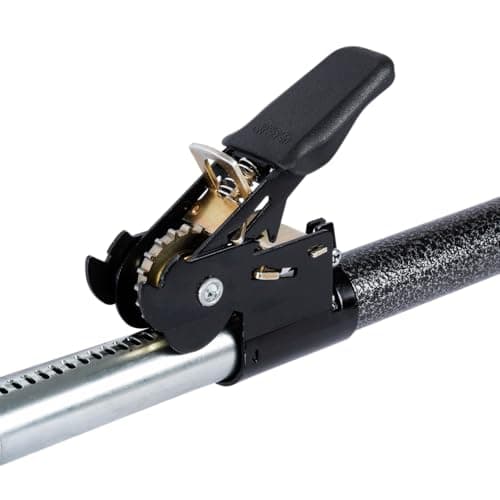
Featured here: the Keeper Adjustable Ratcheting Cargo Bar, 40-70 in.
Heads up: we earn an Amazon commission when you buy through our links, at no extra cost to you. Prices are pulled live from Amazon and were last checked November 12, 2026; when we cannot verify a price we say so rather than print an old one. How this site is funded.
How we know:Owner-report-verifiedSpec-verifiedWhat these mean
Top pick9.3/10★★★★★
Keeper
Keeper Adjustable Ratcheting Cargo Bar, 40-70 in
A 40-70 in ratcheting bar that braces across the bed and holds a load against the tailgate.
$50.9915% off · Price as of November 12, 2026. #ad
Your truck's bed can hold whatever its payload rating allows, minus everything already in and on the truck — and that payload figure is printed on the vehicle certification label in the driver's door opening, not in the brochure. It is specific to your truck with your options, it is usually several hundred pounds lower than the maximum the model advertises, and it covers passengers and cargo together. That sticker is the only number that applies to you.
This matters on a work truck more than on any other kind, because a work truck is a vehicle whose payload gets spent twice: once on the accessories that make it useful, and once on the load. A drawer system, a crossover box, a rack and a cover together consume a meaningful fraction of a half-ton's payload before a single tool goes in. Nobody warns you about that, and it is the reason a truck that feels empty can be over its rating.
Read the door-jamb sticker. Subtract the accessories you have fitted, subtract the people who will be in the cab, and what remains is the bed's working capacity. That is a smaller number than you think, and it is the one that matters legally and mechanically.
Where the real number lives
Open the driver's door and look at the B-pillar or the door frame.
Find the yellow label. It reads along the lines of: the combined weight of occupants and cargo should never exceed a stated figure. NHTSA requires this label and its load-carrying capacity statement on passenger vehicles.
That figure is payload. Not bed capacity — payload. People in the cab come out of it too.
Do not use a brochure number. The advertised maximum belongs to the lightest configuration of the model: regular cab, two-wheel drive, no options. Your crew cab four-wheel drive with a sunroof is not that truck.
What your accessories already cost you
Every item on this site has a weight, and that weight is permanent payload. Here is the order in which the big ones spend it.
Relative, not absolute: individual products vary and we are not publishing weights the makers do not. The order is what matters.
Accessory
Where the weight goes
Still useful?
Drawer system
The heaviest single accessory most trucks carry
Yes — but it is a real payload decision
Crossover tool box
Substantial, and it sits high at the bulkhead
Yes
Steel ladder rack
Substantial, and it sits highest of all
Yes
Hard folding cover
Moderate, spread along the rails
Yes
Bed liner or mat
Modest
Yes
Running boards
Modest, outside the frame
Yes
Cargo bar and straps
Almost nothing
The best payload value on the truck
The pattern in that table is the whole argument of the best work truck accessories page: the cheap items are also the light items, and the heavy items are the ones that need a deliberate decision. A drawer system is worth its weight on a tool truck and is the wrong purchase on a truck that hauls material.
The limits that are not payload
Payload is the headline, and three other numbers can bite first.
GVWR. The maximum the whole loaded vehicle may weigh. Payload is derived from it, and it is published on the same label.
Rear axle rating. A load concentrated at the tailgate loads the rear axle more than the same weight at the bulkhead. This is why where you put the load matters, not just how much.
Tire load rating. Printed on the sidewall. A truck can be inside its payload and outside its tires, especially on a set of aftermarket wheels.
Tongue weight, if towing. It comes out of payload. A trailer does not get its own budget.
Where to put the weight
Position changes how the truck behaves at the same total weight, and the rule is simple enough to remember in a parking lot.
Heaviest items forward, against the bulkhead and between the wheel wells. This puts the load over the axle rather than behind it.
Low, not stacked. A high centre of gravity makes a loaded truck feel vague long before it becomes dangerous.
Centred side to side. An unbalanced load loads one tire and one spring.
Secured in all four directions. Forward is the one everybody forgets, and a hard stop is the commonest way a load moves. A ratcheting cargo bar is the cheapest fix on the truck.
What to buy once you know the number
Securement hardware, not capacity. None of these raise your payload — they stop the load you are legally carrying from moving.
KeeperOwner-report-verified
Keeper Adjustable Ratcheting Cargo Bar, 40-70 in
Best for: Stopping the load sliding to the bulkhead
$50.9915% off · Price as of November 12, 2026. #ad
A 40-70 in ratcheting bar that braces across the bed and holds a load against the tailgate. It is the cheapest piece of kit on this site and it stops more rattling, sliding and scratched paint than anything else you can buy for the money.
Build
9.2
Capacity
8.8
Install
9.8
Day-to-day access
9.7
Value
9.7
Why we picked it
+Costs less than a tank of fuel
+Ratchet tension holds without tools
+Stores flat behind the seat when not in use
Good to know. It is a brace, not a wall. It does not partition the bed into compartments and it will not hold a heavy load on its own.
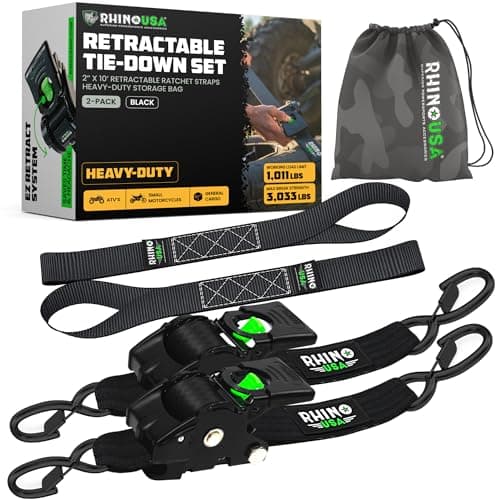
2 in webbing, 10 ft, published 3,033 lb break strength, and the strap retracts into the housing when you release it. The retraction is the feature: loose webbing in a bed is how straps get lost, frayed and run over.
Build
9.5
Capacity
9.5
Install
9.8
Day-to-day access
9.7
Value
9.2
Why we picked it
+Published break strength rather than a vague claim
+Retraction keeps the tail out of the dirt
+2 in webbing is the right width for real loads
Good to know. Retractable housings are bulkier than a plain strap and the mechanism is another thing to fail. For strapping down a load once a year, plain ratchet straps are fine.
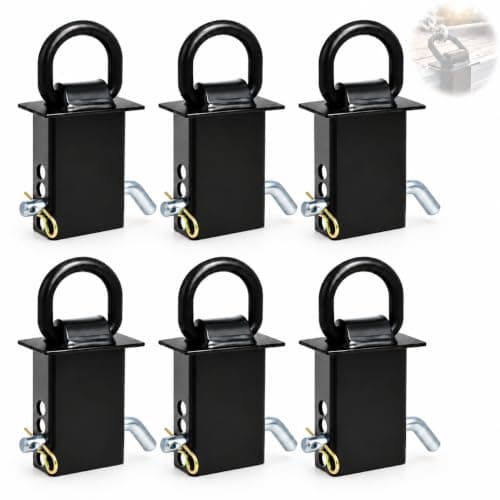
Drops into the factory stake pocket, published at 16,200 lb, and lifts straight out when you are done. No drilling, no sealed holes, and a rating that is in a completely different league from a bolt-on ring.
Build
9.4
Capacity
9.7
Install
9.7
Day-to-day access
9.5
Value
9.5
Why we picked it
+No drilling at all
+Very high published rating
+Removable, so the pocket is free again when you need it
Good to know. Your truck has to have usable stake pockets. Many newer trucks have them covered by bed rail caps, and some have none at all.
Trucks and trailers with open, sound stake pockets
✗ Does not fit
Trucks without stake pockets
Beds with pockets covered by bonded rail caps
The questions people ask next
Can I stand on the tailgate? The tailgate is rated separately by the manufacturer and the figure is published per truck. It is not covered by the payload sticker.
Can I load the tool box to its own rating? Only if the truck has the payload for it — truck tool box weight capacity covers the box side.
Can I load the rack to its rating? Same answer, and the rack is worse because the weight sits high. Ladder rack weight limits.
What about long material? Weight is one limit, overhang is another, and the flag rule is separate from both. How to haul lumber in a pickup.
Where we would start, in one sentence
Go and read the yellow sticker in your driver's door opening now, write the number on the inside of the fuel flap, and subtract from it every time you bolt something to the truck.
Questions people actually ask
How much weight can a truck bed hold?
As much as the payload figure on the vehicle certification label in your driver's door opening allows, minus the accessories already fitted and the people in the cab. That label figure is specific to your truck and its options, and it is usually well below the maximum the model advertises.
Where do I find my truck's payload capacity?
On the yellow load-carrying-capacity label in the driver's door opening, which NHTSA requires. It states the combined weight of occupants and cargo that should never be exceeded. Do not use a brochure figure — that belongs to the lightest configuration of the model.
Do tool boxes and racks count against payload?
Yes, permanently. A drawer system, a crossover box, a steel rack and a cover together consume a meaningful fraction of a half-ton truck's payload before you load anything. That is why the light accessories are such good value.
Does it matter where in the bed I put the weight?
Yes. The same weight at the tailgate loads the rear axle far more than it does at the bulkhead, and a high stack makes the truck feel vague. Heaviest items forward, low, centred, and secured against forward movement as well as backward.
Is payload the same as towing capacity?
No, and they interact. Trailer tongue weight comes out of payload, so a loaded trailer reduces what the bed can carry. The two figures are published separately by the manufacturer and both appear on the vehicle's documentation.
Last reviewed October 17, 2026. Think a figure here is wrong? Tell us at contact@toolboxandtruck.com and we will check it, fix it and date the correction — see our editorial policy.