Work truck gear, ranked for the people who load it every morning.
Tool boxes
The best stainless steel truck tool boxes
Stainless costs roughly twice what painted steel costs for the same box. On a truck that works salted roads that is a sound purchase, and on a truck that does not it is money gone. Six boxes, and the honest version of the material argument.
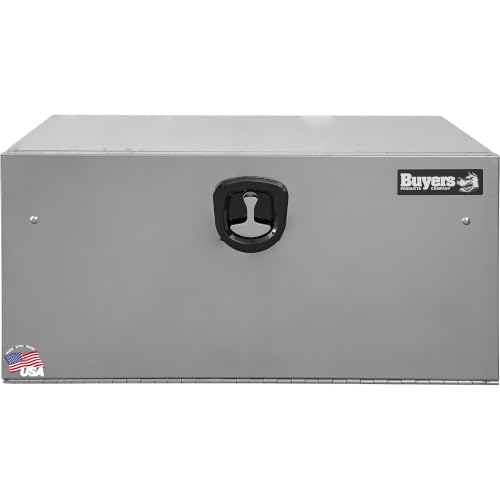
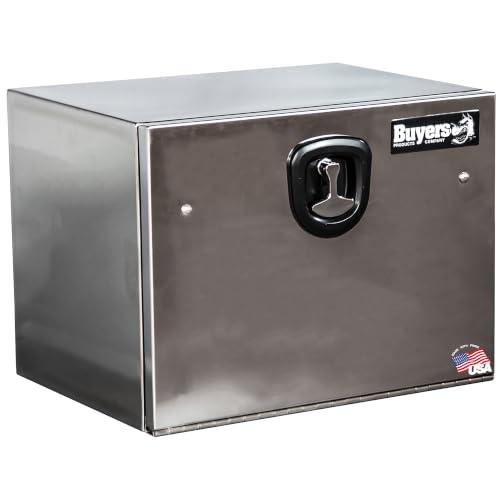
Our top pick: the Buyers Products 1702660 Stainless Underbody Box, 18 x 18 x 48 in.
Heads up: we earn a commission when you buy through our links, at no extra cost to you — from Amazon Associates, and from brand partner programs we have joined directly through the Impact network. Amazon prices are pulled live and were last checked November 28, 2026; a brand list price carries the date we read it off the maker’s own page. When we cannot verify a price we say so rather than print an old one. How this site is funded.
Buyers Products 1702660 Stainless Underbody Box, 18 x 18 x 48 in
16 gauge polished stainless with a locking T-handle compression latch, and the only box here whose listing publishes both mounting orientations — underbed or flat mount.
Tap any row for the full write-up. Prices come straight from Amazon and are never typed in by hand.
If you want stainless and you have 48 inches of clear rail, the box to buy is the Buyers Products 1702660: 16 gauge polished stainless, a locking T-handle compression latch and a published gasket, mountable underbed or flat. On a pickup frame rail, where 48 inches of uninterrupted run is rare, the 1702655 is the same box in 36 inches and is the one most trucks can actually take. And if you want the material where it matters without paying for it where it does not, the 1702705 puts a stainless door on a 14 gauge painted steel body for appreciably less.
One thing to get out of the way first, because it shapes the whole page: stainless in truck tool boxes is effectively one manufacturer. A catalog search on 2026-11-27 for stainless crossover boxes and stainless chests returned nothing — the material exists in this category only as Buyers Products' underbody and under-deck line. That is not a brand preference on our part. It is what is on the shelf, and we would rather say so than pretend the field is wider than it is.
Stainless is not a general upgrade. It is a specific answer to a specific problem: a box mounted below the rocker line, in the wheel spray, on roads that get salted. In that one position the painted-steel box is on a clock and the stainless one is not. Anywhere else on the truck, aluminum does the same job for less weight and less money, and painted steel does it for less again.
What stainless actually buys you
An underbody box lives in the worst environment on the truck. It hangs below the bed in everything the tires throw forward and up, and in the salt belt that mixture is brine for five months of the year. The FHWA reports millions of tons of salt and chemical deicer going onto US highways every winter, and a box in that spray is in a continuous salt-fog test.
A painted steel box defends against that with a film. 14 gauge steel under a powder coat is a strong box right up to the first stone chip, and then it is a rust site, because the corrosion spreads under the coating from the break outward and you do not see it until the coating lifts. Stainless has no film. It resists corrosion because of what the metal is, so a scratch in stainless is a scratch and stays one.
The cost of that is real money and real weight. Across the six boxes here, all-stainless runs roughly two thirds more than the comparable painted-steel part at the same size, and stainless is heavy enough that mounting is a two-person job with something holding the box while you set the brackets. Aluminum against steel for a truck tool box carries the three-way version of this argument, including the case for aluminum, which is lighter than both and does not rust either.
How we ranked these
Five criteria, scored 0-10 and published on every card. This is the only product group on the site where a maker publishes a gauge, so gauge carries real weight here in a way it cannot on the budget pages.
Published gauge and material. Buyers states 16 ga on the polished stainless boxes and 14 ga on the painted steel body of the hybrid, and does not publish a gauge on the 24 inch stainless box or the aluminum barn-door box. Where the figure is not published, the card says so instead of implying one.
Latch and seal. Every box here uses a locking compression latch rather than a plain T-handle, which is the meaningful difference: a compression latch pulls the door onto its gasket as it closes rather than just holding the door against it. On a box that spends its life in spray, that is the thing keeping water out.
Length against a real frame rail. 48 inches of clear, uninterrupted frame rail is a flatbed or service-body figure. On a crew-cab pickup with a spare tire winch, an exhaust hanger and often a DEF tank, the usable run is often under 36 inches. Boxes that fit a real pickup rail score higher here than boxes that fit a catalog.
Access. A deep underbody box with a lift lid has a back third you reach by lying down. Barn doors solve that and cost you a second seal path. Both answers are on this page and the scores reflect which problem each one solves.
Value against the live price. Volume and documentation per dollar, read against the current Amazon price.
The picks, ranked
Prices come from Amazon when you load this page. Where no live price is available the button says check price rather than showing you a number we cannot stand behind.
No. 1Buyers ProductsSpec-verified
Buyers Products 1702660 Stainless Underbody Box, 18 x 18 x 48 in
16 gauge polished stainless with a locking T-handle compression latch, and the only box here whose listing publishes both mounting orientations — underbed or flat mount. On a flatbed in a salt state the material is the whole decision, because a painted steel box in the spray zone is on a clock.
Build
9.7
Capacity
9.5
Install
8.5
Day-to-day access
9.2
Value
9.0
Why we picked it
+Stainless body does not rely on a paint film for corrosion defense
+Compression latch pulls the lid onto the seal rather than just holding it shut
+Listing publishes flat-mount as well as underbed mounting
+Buyers latch and hinge parts are available off the shelf
Good to know. It is the most expensive box on this page and stainless is heavy. If the truck works in a dry climate, painted steel does the same job for a lot less money.
16 gauge polished stainless, 18 x 18 x 36 in, with the same locking T-handle compression latch and gasket seal as the 48 inch box and a foot less length to find. On a pickup rather than a flatbed, 36 inches is usually the longest clear run you have.
Build
9.7
Capacity
9.3
Install
8.7
Day-to-day access
9.2
Value
9.1
Why we picked it
+Published gauge — 16 ga — which almost nothing else in this category states
+Compression latch pulls the door onto the gasket rather than just latching it
+36 in fits a pickup frame rail where 48 in does not
+Buyers latch, hinge and seal parts are stocked by truck equipment dealers
Good to know. It is still stainless money for a mid-size box. In a dry climate the same 36 inch box in 14 gauge powder-coated steel costs a lot less and lasts about as long.
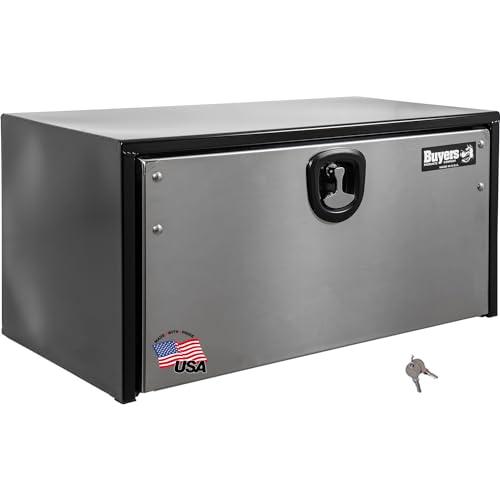
A 14 gauge black powder-coated steel body with a polished stainless door, a locking compression latch, and a published made-in-USA build. The door is the part that gets opened, splashed, leaned on and scratched, so putting the stainless there and painting the rest is the sensible compromise rather than a cheap one.
Build
9.5
Capacity
9.3
Install
8.7
Day-to-day access
9.2
Value
9.4
Why we picked it
+Published 14 ga body — a heavier gauge than the 16 ga stainless boxes
+Stainless on the door, which is the surface that takes the abuse
+Costs appreciably less than all-stainless at the same size
+Published as made in USA, with Buyers hardware behind it
Good to know. The body is still painted steel, and a painted steel body in a salt-belt wheel spray is on a clock no matter how good the door is. If the truck plows or works gritted roads all winter, buy the all-stainless box.
$589.997% off · Price as of November 28, 2026. #ad
The same 16 gauge polished stainless body, compression latch and gasket as the longer boxes in a 30 inch length. On a crew-cab pickup with a spare tire winch, an exhaust hanger and often a DEF tank, 30 inches is frequently all the uninterrupted rail there is.
Build
9.7
Capacity
9.0
Install
8.8
Day-to-day access
9.3
Value
9.0
Why we picked it
+Fits a clear rail run a 36 or 48 in box will not
+Published 16 ga stainless rather than an unstated thickness
+Compression latch and gasket, the same hardware as the flagship
+18 in of height and width means full-size volume despite the short length
Good to know. 30 inches of stainless costs more than 48 inches of painted steel. If the truck does not see salt, you are paying for a material advantage you will never collect on.
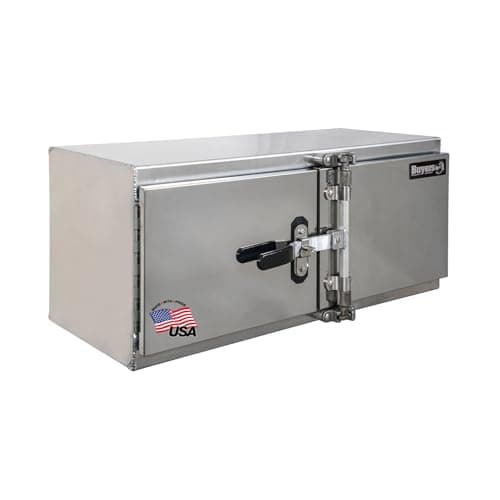
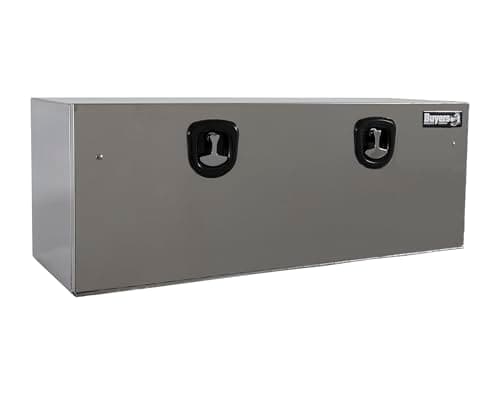
An aluminum 36 inch underbody box with stainless double barn doors on padlock-ready cam hardware and a weather-resistant seal. Barn doors are the reason to buy it: a deep underbody box with a lift lid means lying under the truck to reach the back of it, and doors mean you open them and look in.
Build
9.6
Capacity
9.2
Install
8.5
Day-to-day access
9.7
Value
8.9
Why we picked it
+Barn doors make the back of a deep box reachable
+Aluminum body plus stainless doors — no paint film anywhere to fail
+Padlock-ready cam hardware rather than a fixed barrel lock
+Buyers documentation and parts availability
Good to know. It is the most expensive box in this range and two doors means two seal paths and two hinge sets instead of one. If a lift lid has room to open where you are mounting it, a lift lid is simpler.
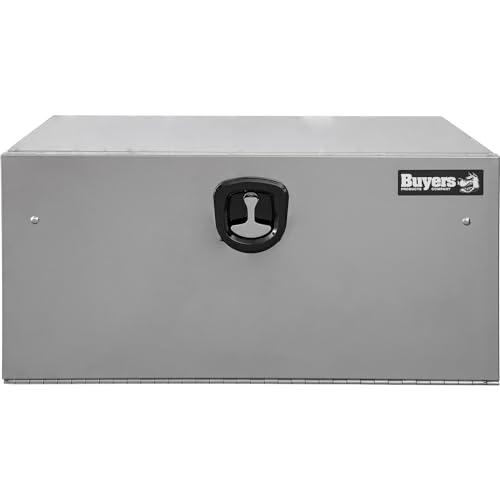
Polished stainless in a 24 inch length, with the locking compression latch, the gasket seal and a published door support. It is the entry point to the stainless line and the only one of these boxes that costs less than a mid-range painted box of the same size.
Build
9.6
Capacity
8.8
Install
9.0
Day-to-day access
9.4
Value
9.4
Why we picked it
+Lowest price in the stainless line by a wide margin
+Same compression latch and gasket as the expensive boxes
+24 in fits almost any clear rail run
+Published door support, so the door does not hang on the latch
Good to know. 24 x 18 x 18 in is a small box for the money, and its own listing does not state a gauge where the longer boxes state 16 ga. If you have the rail for a longer box, buy the longer box.
Second boxes alongside a longer box on the opposite rail
✗ Does not fit
Anyone with the rail for a 36 in box
Buyers who need a published gauge
Bulky-item storage
What Buyers actually publishes
Published figures only. Note that Buyers publishes these as height by width by length, where most budget boxes publish length first — two boxes described as 18 x 18 x 36 and 36 x 18 x 18 are the same box.
Model
Dimensions (H x W x L)
Body
Door
Published gauge
1702660
18 x 18 x 48 in
Polished stainless
Polished stainless
16 ga
1702655
18 x 18 x 36 in
Polished stainless
Polished stainless
16 ga
1702705
18 x 18 x 36 in
Black powder-coated steel
Polished stainless
14 ga body
1702653
18 x 18 x 30 in
Polished stainless
Polished stainless
16 ga
1762600
36 in length published
Aluminum
Stainless barn doors
Not published
1702650
18 x 18 x 24 in
Polished stainless
Polished stainless
Not published
Two things in that table are worth a second look. First, the gauge numbers cross over: the painted-steel hybrid body is 14 gauge, which is thicker metal than the 16 gauge stainless boxes. Thicker steel and more corrosion resistance are different virtues and this range genuinely makes you choose between them. Second, the dimension ordering. Buyers leads with height; the budget aluminum boxes on our chests under $200 page lead with length. A buyer comparing the printed numbers in order will conclude two identical boxes are different sizes.
Measuring for an underbody box
Stainless or not, the purchase is decided by four measurements taken under the truck, on level ground, with the tape held square along the rail rather than angled.
Clear length. The longest run of rail with nothing bolted to it, welded to it or hanging off it. Measure between obstructions, not from the cab, and subtract about an inch at each end for mounting brackets. A 38 inch clear run is a 36 inch box, not a 48.
Vertical drop. From the underside of the rail to the lowest point you will accept. An 18 inch tall box plus bracket height that hangs below the rocker line will eventually find a curb, a ramp or a rut. This is the measurement that most often rules out the 24 inch tall boxes.
Tire swept path. At full lock a front tire sweeps further inboard than people expect, and a rear tire moves through its suspension travel. Leave real clearance, not a quarter inch.
Door or lid swing. A lift lid needs vertical room above it. Barn doors need horizontal room outboard. Under a flat deck there is often no lid clearance at all, and that is the entire reason the barn-door box is on this page.
Stainless, painted steel, or aluminum
The honest decision tree is short, and it is mostly about where the truck works rather than what it costs.
Buy stainless if
The truck works roads that get salted or air that carries salt, the box is mounted below the bed in the spray, and you intend to keep the truck for years. That combination is where the premium pays, and it is the only one where it reliably does. A plow truck, a utility truck in the upper Midwest or the Northeast, anything working a coastal road.
Buy the stainless door if
Conditions are wet but not salted all winter. The door is the surface that gets opened with dirty gloves, splashed, leaned on and scratched, so a stainless door on a 14 gauge painted body puts the material where the abuse is and keeps the thicker steel where the strength is. It is the best value on this page and it is also a genuine compromise, not a free lunch: a painted body in heavy salt will still rust from a chip.
Skip both if
The truck lives in a dry state, or the box is going in the bed rather than under it. In a dry climate a painted steel underbody box lasts long enough that the stainless premium never comes back, and in the bed itself aluminum is lighter, cheaper and does not rust either. The main underbody roundup covers the painted-steel and aluminum options at every size, and small underbody boxes covers the 24 to 30 inch end where most crew-cab pickups actually land.
What we would actually buy
On a flatbed or a service body with the rail to take it: the 1702660, 48 inches of 16 gauge polished stainless. It is the most expensive box here and it is the one you stop thinking about. Buyers publishes both mounting orientations, the latch and hinge parts are stocked by truck equipment dealers rather than being a single-vendor mystery, and that matters more at year six than at purchase.
On a pickup: the 1702655, the same box at 36 inches. This is the pick for most readers, because most readers are measuring a pickup frame rail and not a flatbed. Check your clear run before you order — 38 inches of rail, not 36, once brackets are allowed for.
On a wet-but-not-salted truck, or on a budget: the 1702705. A 14 gauge body with a stainless door for appreciably less than all-stainless, and the thicker body steel is a real advantage against impact. This is the one we would put on our own truck in a mild climate.
The budget pick is the 1702650, the 24 inch stainless box, which is the cheapest route into the material by a wide margin and fits almost any clear rail run. Two caveats stated plainly: it is a small box for the money, and its listing does not publish a gauge where the 30 and 36 inch boxes publish 16 ga. If you have the rail for a longer box, the longer box is the better buy.
Two specific cases close this out. If the box goes under a flat deck with no room for a lid to swing up, the 1762600 with stainless barn doors is the only answer here, and the deep-box access it gives you is worth the second seal path on its own. And if 30 inches is all the clear rail your crew cab has, the 1702653 exists for exactly that truck — it is the most expensive box per inch on the page and it is the one that goes on. Tool boxes for a flatbed truck covers the larger under-deck options alongside these.
Questions people actually ask
Is a stainless steel truck tool box worth the money?
In road salt, yes. A stainless box mounted under the bed resists corrosion because of what the metal is rather than because of a coating, so a stone chip stays a scratch instead of becoming a rust site that spreads under the paint. In a dry climate it is not worth it: painted 14 gauge steel lasts long enough there that the roughly two thirds premium never comes back, and aluminum is lighter and cheaper again.
What gauge is a stainless steel truck tool box?
Buyers publishes 16 gauge on its polished stainless underbody boxes at 30, 36 and 48 inches. The 24 inch stainless box and the aluminum barn-door box do not publish a gauge, and the cards here say so rather than assuming one. Note the crossover: the painted-steel body with a stainless door is published as 14 gauge, which is thicker metal than the stainless boxes.
Does stainless steel rust on a truck?
It corrodes, but differently. Polished stainless in constant road salt will tea-stain, and surface rust can appear where carbon steel brackets or fasteners touch it. What it does not do is rust through from a chip the way powder-coated steel does, because there is no coating to break. Use stainless or coated hardware against a stainless box, and rinse the underside of the truck during a thaw.
Are there stainless steel crossover tool boxes?
Not that we can find currently on sale. A catalog search on 2026-11-27 for stainless crossover boxes and stainless chests returned none — stainless exists in this category only as Buyers Products' underbody and under-deck line. For a rail-mounted box the real material choice is heavy-wall aluminum against powder-coated steel, and the crossover and chest pages cover that.
What is a compression latch and why does it matter?
It is a latch that pulls the door onto its gasket as it closes rather than simply holding the door against the gasket. On a box that spends its life in wheel spray that is the mechanism keeping water out, and every box on this page has one. A plain T-handle on a worn seal lets water past; a compression latch keeps loading the seal as the gasket ages.
How much clear frame rail do I need for a 36 inch underbody box?
About 38 inches of uninterrupted rail, because you lose roughly an inch at each end to the mounting brackets. Measure between obstructions rather than from the cab, and check the vertical drop below the rail and the tire's swept path at full lock as well. On a crew cab with a spare tire winch and a DEF tank, the usable clear run is often shorter than owners expect.
Last reviewed November 27, 2026. Think a figure here is wrong? Tell us at contact@toolboxandtruck.com and we will check it, fix it and date the correction — see our editorial policy.